President Trump signed an executive order reinstating 10% global tariffs after the Supreme Court overturned his 2025 tariff policy, triggering market volatility and raising constitutional questions about presidential authority.
President Trump signed an executive order late Thursday imposing 10% global tariffs on imported goods, directly contradicting a Supreme Court ruling earlier that day which declared his signature 2025 tariff policy unconstitutional. The order specifically continues suspension of the de minimis exemption – a provision allowing duty-free importation of goods valued under $800 – despite the Court's finding that Trump lacked statutory authority for such sweeping trade measures.
The de minimis exemption has been crucial for tech companies importing small-batch components, prototype hardware, and low-value electronics. Its suspension means tariffs now apply to previously exempt shipments including semiconductor samples, development kits, and replacement parts. The Supreme Court's 7-2 decision explicitly rejected the legal theory underpinning Trump's 2025 tariffs, stating Congress never delegated such broad authority to the executive branch.
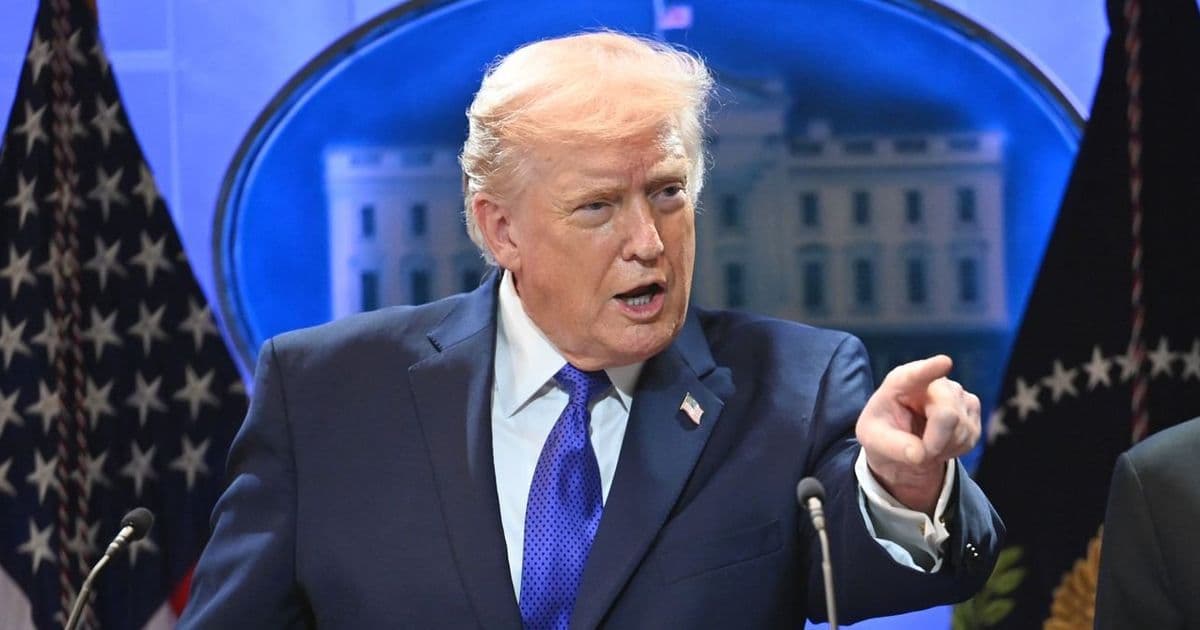
Tech stocks initially rallied 2-3% after the Court's ruling, as manufacturers anticipated relief from tariff pressures. Shares quickly retreated when the White House announced the replacement executive order. "The disgraceful justices who overturned American workers' protection will be remembered as traitors to our manufacturing independence," Trump stated during the signing ceremony.
Legal scholars immediately questioned the order's viability. "This is an extraordinary defiance of judicial authority," said Georgetown law professor Heather Hughes. "The Court already ruled the underlying statutory authority doesn't exist. An EO can't magically create it." The administration cites national security provisions in the Trade Expansion Act of 1962 as justification, though legal experts note this provision was historically limited to specific industries like steel.
For hardware manufacturers, the impact is immediate and material. Companies like Apple, Dell, and Cisco previously leveraged the de minimis rule for expedited prototyping and small-batch production. Industry group ITI estimates the new tariffs will add $3.2 billion annually in compliance costs alone. "When every Raspberry Pi or sensor module gets hit with paperwork and duties, innovation velocity suffers," said supply chain analyst Maya Rodriguez.
The administration's focus appears aimed at Chinese tech imports, but the global application creates collateral damage. European semiconductor firms like ASML and STMicroelectronics face new barriers when shipping evaluation kits to U.S. research facilities. Meanwhile, tariffs on finished consumer electronics remain unchanged at 25% for Chinese goods and 10% for others.
Market reactions highlight the uncertainty. Tech stocks ended Friday with a net 0.8% gain after volatile trading, while industrial stocks fell 1.4%. Treasury Secretary Steven Chu stated the administration will "vigorously defend" the order against expected legal challenges. Multiple business coalitions are preparing lawsuits, arguing the administration is attempting an end-run around both Congress and the judiciary.
This confrontation sets up a constitutional crisis with profound implications for tech supply chains. As Stanford legal scholar David Engstrom noted: "Either we're witnessing an unprecedented expansion of unilateral trade powers, or this order gets struck down within weeks. There's no middle ground."
Comments
Please log in or register to join the discussion