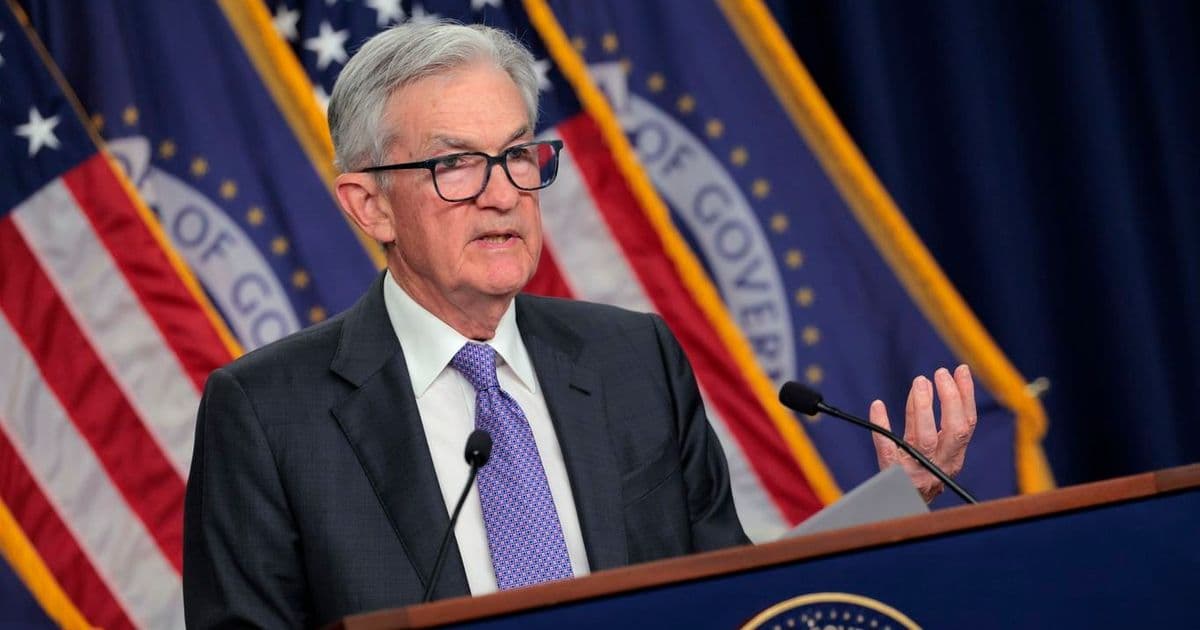
The Justice Department has opened a criminal investigation into Federal Reserve Chair Jerome Powell regarding alleged misleading statements about the central bank's $2.5 billion headquarters renovation project, escalating political tensions over Fed independence and spending oversight.
The Justice Department's criminal division has launched an investigation into Federal Reserve Chair Jerome Powell concerning his congressional testimony about the central bank's $2.5 billion headquarters renovation, according to multiple reports. The probe focuses on whether Powell made false statements to Congress about cost overruns and project scope, which could constitute a violation of federal law.
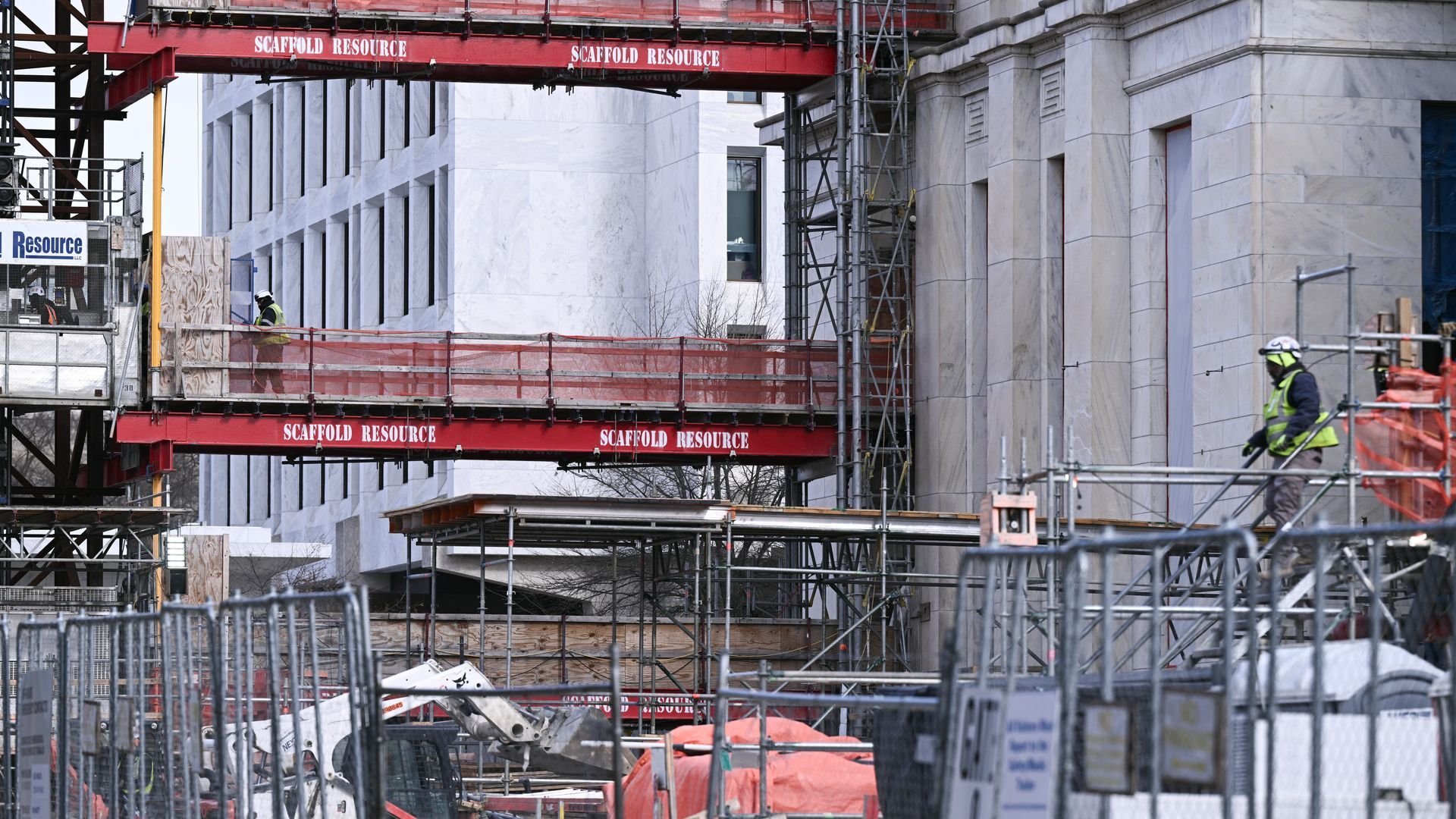
The investigation stems from a referral by the Department of Government Efficiency, a Trump-era oversight body that has been scrutinizing federal building projects. The renovation, which began in 2021 and includes the historic Eccles Building on Constitution Avenue, has seen its budget balloon from an initial estimate of $1.2 billion to over $2.5 billion. Project details include modernizing century-old infrastructure, adding secure communications facilities, and expanding underground space.
Republican lawmakers have been questioning Powell about the renovation since 2023, when the Fed first disclosed significant cost increases. During a Senate Banking Committee hearing in March 2024, Powell stated the project was "on time and on budget," a characterization that now appears at odds with internal Fed documents showing substantial delays and additional expenses.
The political implications are significant. Powell, appointed by Trump in 2018 and reappointed by President Biden in 2022, has faced mounting criticism from both parties over interest rate policy, but this investigation represents the first criminal probe of a sitting Fed chair in modern history. The investigation could test the central bank's operational independence and create uncertainty around monetary policy leadership at a critical economic juncture.
Financial markets are watching closely. The Fed chair's position is considered critical for maintaining credibility in inflation fighting and economic stability. Any indication that Powell might step down or be removed could trigger volatility in bond markets and affect interest rate expectations. The 10-year Treasury yield has already shown sensitivity to news about Fed leadership stability.
Legal experts note that proving criminal intent in congressional testimony requires demonstrating Powell knowingly misled lawmakers, not simply provided optimistic projections that later proved inaccurate. The Department of Justice will need to establish whether Powell had access to information showing the project was significantly over budget when he testified.
The renovation project itself reflects broader challenges facing federal agencies. The Fed headquarters, completed in 1937, required extensive updates to meet modern security standards after the 9/11 attacks exposed vulnerabilities. The project includes blast-resistant windows, upgraded HVAC systems, and expanded underground facilities for secure operations. These enhancements are standard for critical financial infrastructure but have escalated costs.
Democratic defenders of Powell argue the investigation represents political retaliation for the Fed's independent monetary policy decisions, including interest rate increases that Trump publicly opposed. They point to the timing, coming after Powell resisted pressure to cut rates during Trump's presidency and maintained restrictive policy into 2024.
The investigation also raises questions about congressional oversight of the Federal Reserve. While the Fed is independent in its monetary policy decisions, its budget comes from its own earnings, not direct congressional appropriations. However, the Fed chair must still testify before Congress and provide accurate information about operations.
If charges were filed, they would likely center on 18 U.S.C. § 1001, which criminalizes false statements to federal officials. The statute has been used in high-profile cases but requires proof of materiality and intent. Powell's legal team would likely argue his testimony reflected good-faith assessments based on information available at the time.
The investigation's outcome could affect future Fed transparency. Central bank officials might become more cautious in public communications, potentially reducing market clarity. It could also influence the selection of future Fed chairs, with candidates potentially facing heightened scrutiny over their testimony and public statements.
For now, Powell continues to lead the Federal Reserve as the investigation proceeds. The central bank's next Federal Open Market Committee meeting in September will be closely watched not just for policy decisions, but for any signs of distraction or leadership uncertainty at the top of the institution.
Comments
Please log in or register to join the discussion