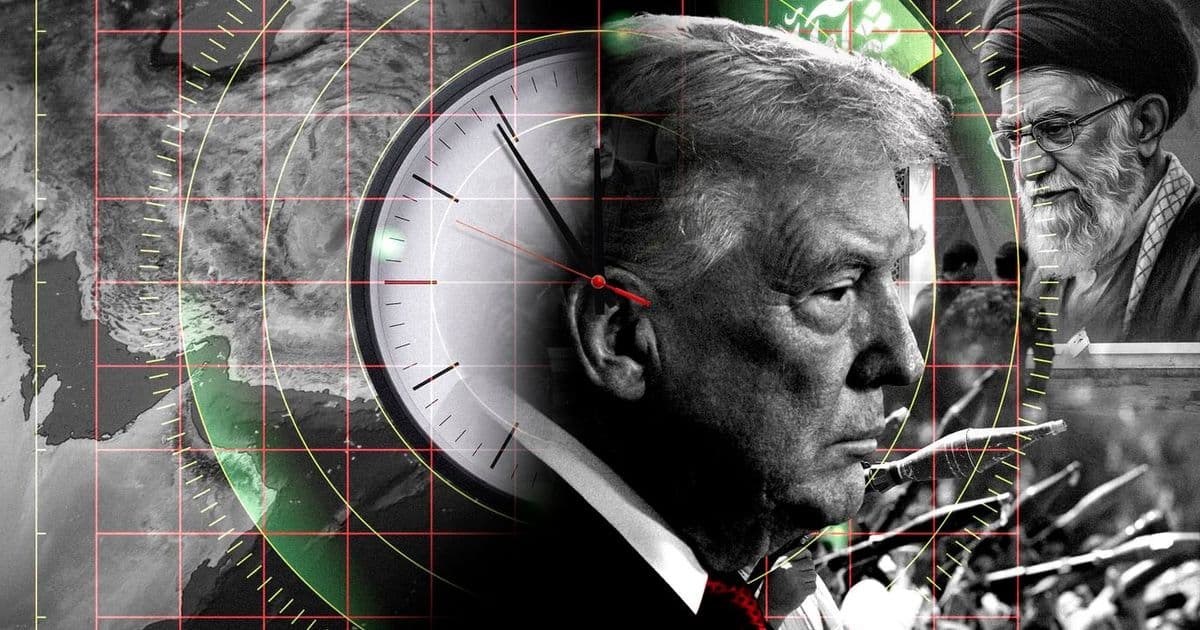
President Trump faces a critical decision on Iran policy as tensions escalate, with advisors split between military strikes on nuclear facilities and renewed diplomatic engagement.
President Trump is at a crossroads in his Iran policy, facing mounting pressure from advisors who are divided between two starkly different approaches: launching military strikes on Iran's nuclear infrastructure or pursuing renewed diplomatic negotiations.
The internal debate within the administration has intensified following recent escalations in the region. Senior officials are weighing the potential consequences of military action against the prospects of a diplomatic breakthrough that could address long-standing concerns about Iran's nuclear program and regional activities.
Military Option Gains Traction
A faction of Trump's national security team is advocating for targeted strikes on Iranian nuclear facilities, arguing that this would set back Iran's weapons program by years and demonstrate American resolve. This group points to intelligence suggesting Iran has accelerated uranium enrichment activities beyond previous limits established under the 2015 nuclear deal.
However, military planners have cautioned that any strikes would likely trigger Iranian retaliation through proxy forces across the Middle East, potentially destabilizing the region further. The Pentagon has reportedly prepared multiple strike scenarios, but officials acknowledge the risks of escalation into a broader conflict.
Diplomatic Path Emerges
Opposing the military hawks, a coalition of diplomats and economic advisors is pushing for a renewed diplomatic initiative. They argue that sanctions and economic pressure have brought Iran to a vulnerable position where negotiations could yield meaningful concessions without the risks of military action.
This diplomatic faction has been working on a framework that would offer Iran limited sanctions relief in exchange for verifiable limits on its nuclear program and missile development. The proposal would also address Iran's support for regional proxy groups, though this remains one of the most contentious elements.
Regional Implications
Israel and Saudi Arabia, two of America's closest regional allies, have expressed divergent views on the approach. Israeli officials have privately urged military action, citing concerns about Iran's nuclear progress and regional influence. Saudi leaders, while also concerned about Iran, have emphasized the economic risks of military conflict, particularly given their ongoing efforts to stabilize oil markets.
European allies have been largely unified in their opposition to military action, instead advocating for a return to the diplomatic process. The European Union has offered to facilitate renewed talks, though their influence has been limited since the U.S. withdrawal from the nuclear agreement in 2018.
Economic Considerations
The economic dimension of the Iran dilemma cannot be overstated. Oil markets remain sensitive to any escalation, with prices spiking during periods of heightened tension. The Strait of Hormuz, through which roughly 20% of global oil passes, would be a likely flashpoint in any military confrontation.
Additionally, the potential for cyber warfare between the U.S. and Iran adds another layer of complexity. Both nations have demonstrated sophisticated cyber capabilities, and any conflict could quickly spill into the digital realm, affecting global financial systems and critical infrastructure.
The Clock is Ticking
Intelligence assessments suggest Iran is approaching a "breakout time" - the period needed to produce enough fissile material for a nuclear weapon - that is shrinking rapidly. This technical reality is adding urgency to the administration's deliberations.
Trump's decision will likely come in the coming weeks, with advisors presenting him with detailed briefings on both the military and diplomatic options. The president has historically vacillated between these approaches, sometimes expressing openness to talks while also threatening military action.
Global Stakes
The outcome of this internal debate will have ramifications far beyond the Middle East. A military strike could reshape the global geopolitical landscape, potentially driving Iran closer to Russia and China while straining U.S. relationships with European allies. Conversely, successful diplomacy could provide a model for addressing other nuclear proliferation challenges.
As the administration weighs these options, the world watches closely. The choice between military action and diplomacy represents not just a policy decision, but a fundamental question about how the United States will engage with adversaries in an increasingly complex international environment.
The coming weeks will be critical as Trump navigates this pivotal moment in U.S.-Iran relations, with the potential to either escalate tensions to dangerous levels or open a new chapter in diplomatic engagement.
Comments
Please log in or register to join the discussion