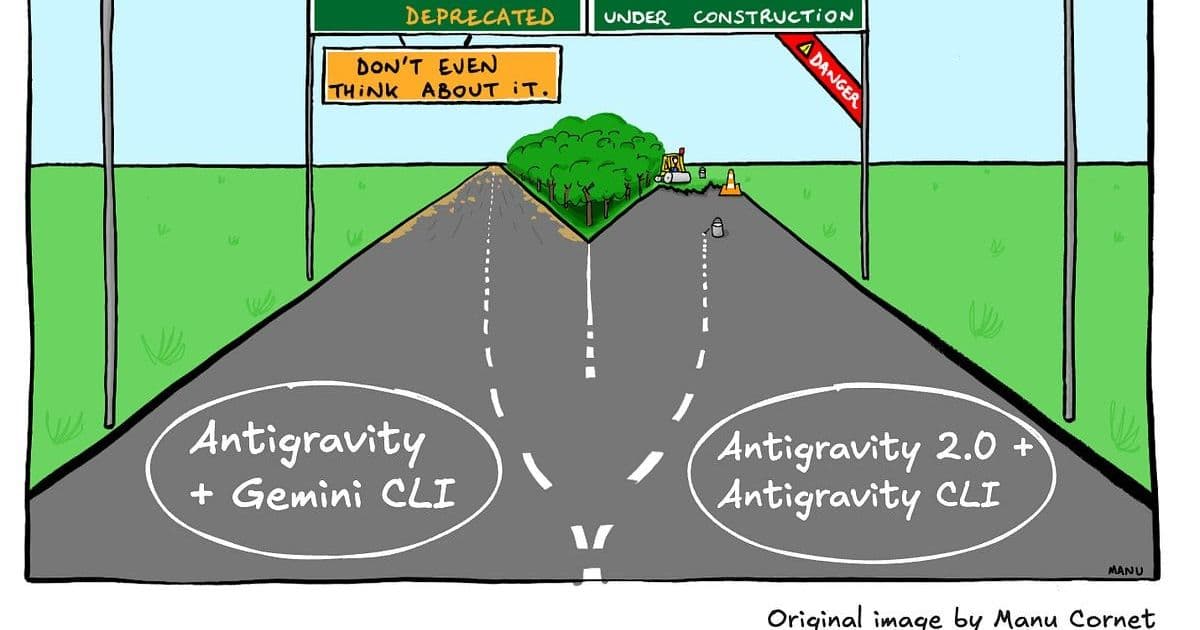
Google's latest iteration of its AI-powered IDE, Antigravity 2.0, is receiving overwhelmingly negative feedback from developers who report bugs, poor user experience, and excessive token consumption, raising questions about Google's approach to developer tools.
Google's Antigravity 2.0, the latest iteration of its AI-powered integrated development environment, is facing significant backlash from the developer community since its release. The redesigned platform, which aims to integrate more deeply with Google's Gemini AI models, has been criticized for numerous issues that developers say make it less effective than previous versions.
What Changed in Antigravity 2.0
Antigravity 2.0 represents a fundamental shift in Google's approach to IDE design. The most notable change is the de-emphasis of traditional IDE functionality in favor of AI-assisted development. The new interface reduces conventional code editing capabilities in favor of AI-powered features like code generation, explanation, and refactoring.
"They've taken the 'IDE' out of their IDE," said one senior developer who has been testing the beta. "The focus has shifted so heavily toward AI features that basic coding functionality has become cumbersome."
The platform now requires a constant connection to Google's Gemini API for many core functions, which has raised concerns about offline development capabilities and dependency on Google's infrastructure.
Why the Backlash
Developer feedback on platforms like Hacker News and Reddit has been overwhelmingly negative, with several key complaints emerging:
1. Performance Issues
Many users report significant performance degradation compared to the original Antigravity IDE. The AI-powered features, while novel, come at a cost:
- Slow response times for code completion
- Laggy interface when working with larger codebases
- High CPU and memory usage even for simple tasks
2. Excessive Token Consumption
One of the most significant complaints is the rate at which Antigravity 2.0 consumes Gemini API tokens. Developers estimate that even moderate usage can burn through their free tier allocation quickly:
"I went through my monthly free token limit in three days of regular use," reported a freelance developer. "The AI features are constantly running in the background, even when I'm not actively using them."
3. Poor Implementation of AI Features
While AI-powered development tools hold promise, developers feel that Google's implementation in Antigravity 2.0 falls short:
- Inaccurate code suggestions that often don't match the project's context
- Limited understanding of niche programming languages and frameworks
- Over-reliance on AI explanations for basic concepts
4. Regression in Core IDE Functionality
Perhaps most frustrating for users is the apparent regression in core IDE capabilities:
- Limited syntax highlighting support
- Weaker debugging tools
- Reduced customization options
- Inferior version integration compared to competitors
Why This Matters
Antigravity 2.0 represents more than just a product update—it reflects Google's strategic direction for developer tools. The company has been heavily investing in AI-powered development, with executives positioning it as the future of coding.
The negative reception to this redesign raises several important questions:
Is Google over-indexing on AI at the expense of core functionality? The backlash suggests that developers value a solid foundation of traditional IDE features first.
What does this mean for the future of AI-assisted development? If Google's flagship AI IDE is struggling to gain acceptance, it may indicate that the market isn't ready for such a radical shift.
How will this impact Google's developer ecosystem? Antigravity is a key component of Google's cloud and developer platform strategy. A poorly received IDE could affect adoption of other Google services.
The Broader Context: Google's Chaotic Product Ecosystem
The Antigravity 2.0 backlash doesn't exist in a vacuum. It's part of a pattern of inconsistent product direction that has characterized Google's approach to developer tools for years.
Developers have grown accustomed to Google announcing innovative new tools only to see them discontinued or radically altered after a short period. This "product graveyard" includes:
- Google's original AI coding assistant, which was retired
- Several iterations of Google's Cloud IDE offerings
- The abrupt shutdown of Google's Flutter IDE support
"Google seems to have a pattern of building something promising, then either abandoning it or changing it beyond recognition," noted a developer with experience across multiple Google tools.
How Developers Are Responding
In response to the issues with Antigravity 2.0, developers are exploring several alternatives:
Sticking with Antigravity 1.x: Some users are refusing to upgrade, continuing to use the previous version which lacks AI features but offers a more stable experience.
Switching to Competitors: Popular alternatives include GitHub Copilot (which uses OpenAI's models), Cursor, and traditional IDEs like VS Code with AI extensions.
Hybrid Approaches: Many developers are using Antigravity 2.0 alongside other tools, leveraging its AI features while handling core development in more established environments.
What Google Should Consider
For Google to salvage Antigravity 2.0 and restore developer confidence, several changes would likely be necessary:
Make AI features optional: Allow developers to disable AI-powered functionality to reduce token consumption and improve performance.
Restore core IDE capabilities: Prioritize fixing fundamental coding features before enhancing AI capabilities.
Improve token efficiency: Optimize how the platform consumes API tokens, perhaps by making AI interactions more explicit and less background.
Better communication: Provide clearer roadmap information and more transparent communication about development priorities.
The Future of AI-Driven Development Tools
Despite the current challenges, the concept of AI-powered development tools remains promising. The key lesson from Antigravity 2.0 may be that such tools need to enhance—not replace—traditional development workflows.
As one developer put it: "I want an AI assistant that helps me code better, not one that tries to code for me while making the basic process harder."
Google has an opportunity to course-correct with Antigravity, but it will require listening to developer feedback and finding a better balance between innovation and usability. The future of AI-assisted development may depend on it.
For developers interested in trying Antigravity 2.0 or providing feedback, the official Google Cloud blog and the Antigravity feedback forum are the best starting points.
Comments
Please log in or register to join the discussion