
Microsoft has enhanced Dragon Copilot to support clinical conversations in dozens of languages while generating English documentation, enabling more inclusive healthcare delivery and reducing administrative burden for physicians.
Microsoft has announced significant enhancements to Dragon Copilot, expanding its multilingual capabilities to support clinical conversations across dozens of languages while maintaining English documentation output. This development represents a substantial advancement in healthcare technology, addressing the critical need for language-inclusive clinical documentation in increasingly diverse healthcare environments.
What Changed: Enhanced Multilingual Support
The updated Dragon Copilot now supports recording clinical conversations in over 70 languages, including Afrikaans, Arabic, Armenian, Azerbaijani, Bengali, Bosnian, Bulgarian, Catalan, Chinese (Mandarin), Chinese (Cantonese), Croatian, Czech, Danish, Dutch, English, Estonian, Filipino (Tagalog), Finnish, French, Galician, German, Greek, Hebrew, Hindi, Hungarian, Icelandic, Indonesian, Italian, Japanese, Kannada, Kazakh, Korean, Latvian, Lithuanian, Macedonian, Malay, Marathi, Nepali, Norwegian, Persian, Polish, Portuguese, Punjabi, Romanian, Russian, Serbian, Slovak, Slovenian, Spanish, Swahili, Swedish, Tamil, Thai, Turkish, Ukrainian, Urdu, Vietnamese, and Welsh.
This comprehensive language coverage enables physicians to conduct natural clinical conversations in a patient's preferred language while maintaining consistent documentation workflows. The system captures ambient speech during patient encounters, applies language identification, performs speech recognition, and processes clinical understanding to transform free-flowing dialogue into structured clinical notes in English.

Technical Implementation and Validation
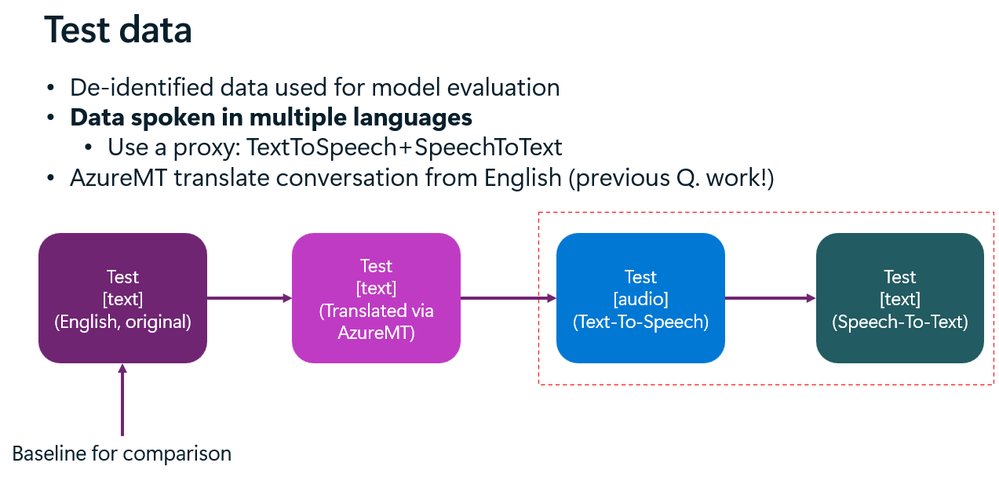
Microsoft developed and tested this multilingual capability through a rigorous methodology that prioritized clinical accuracy and safety. The testing process began with clinical encounters in English, which served as baseline measurements. Researchers then transcribed each encounter into target languages, generated spoken audio, and processed it through Dragon Copilot's multilingual workflow.
The system produced English clinical notes that were compared against the original English reference to measure how well clinical meaning is preserved across languages. This evaluation focused not merely on transcription accuracy but on the quality and clinical relevance of the final documentation output.
The technical architecture behind this capability involves several sophisticated components:
- Advanced language identification algorithms that detect the language being spoken in real-time
- Speech recognition models trained on medical terminology across multiple languages
- Clinical understanding that extracts relevant medical information regardless of the input language
- Structured documentation generation that produces standardized English clinical notes
Business Impact and Clinical Benefits
The expanded multilingual support delivers significant business and clinical benefits:
Enhanced Patient Experience: Physicians can engage more naturally with diverse patient populations, building trust through communication in the patient's preferred language.
Improved Clinical Accuracy: By allowing clinicians to practice in languages they are comfortable with, the system reduces potential misunderstandings that could arise from forced communication in unfamiliar languages.
Operational Efficiency: The automation of documentation reduces administrative burden, allowing clinicians to spend more time on patient care rather than documentation tasks.
Inclusive Healthcare Delivery: The language support enables healthcare organizations to serve diverse communities more effectively, potentially expanding their patient base and improving health outcomes in underserved populations.
Compliance and Standardization: Despite multilingual input, the consistent English output helps maintain documentation standards required for regulatory compliance and interoperability.
Strategic Considerations for Healthcare Organizations
Healthcare organizations considering implementation of Dragon Copilot's multilingual capabilities should evaluate several factors:
Workflow Integration: The tool should be integrated seamlessly into existing clinical workflows to maximize adoption and minimize disruption.
Clinician Training: Proper training is essential to ensure clinicians understand both the capabilities and limitations of the multilingual functionality.
Language Proficiency Considerations: Microsoft emphasizes that clinicians should use the product only in languages they are comfortable practicing in, reinforcing that the tool is not a substitute for professional language skills.
Documentation Review Processes: While automation reduces documentation burden, robust review processes remain critical to ensure clinical accuracy and completeness.
Cost-Benefit Analysis: Organizations should evaluate the return on investment considering potential improvements in patient throughput, clinician satisfaction, and reduced administrative costs.
Future Directions and Limitations
As Dragon Copilot continues to evolve, Microsoft indicates that multilingual support will remain focused on clarity, safety, and usability. However, the current implementation has important limitations that healthcare providers should understand:
- The system does not provide real-time translation or interpretation services
- Clinicians remain responsible for reviewing and validating all clinical content
- Performance may vary across different languages and dialects
- The tool is designed to supplement, not replace, professional clinical judgment
The development team continues to refine the multilingual capabilities based on real-world clinical feedback and ongoing testing. Future iterations may expand language support further, improve accuracy across languages with limited training data, and potentially offer additional language-related features.
Conclusion
Dragon Copilot's expanded multilingual support represents a significant advancement in clinical documentation technology, enabling more inclusive healthcare delivery while maintaining standardized documentation workflows. By allowing physicians to conduct natural conversations in patients' preferred languages while generating English documentation, the tool addresses critical challenges in diverse healthcare environments.
Healthcare organizations that implement this technology strategically stand to benefit from improved patient experiences, enhanced clinical accuracy, and reduced administrative burden. However, successful implementation requires careful consideration of workflow integration, clinician training, and clear understanding of the tool's capabilities and limitations.
As healthcare continues to evolve in increasingly diverse settings, technologies like Dragon Copilot that bridge language barriers while maintaining clinical standards will play an increasingly important role in delivering equitable, efficient care to all patients.
Comments
Please log in or register to join the discussion