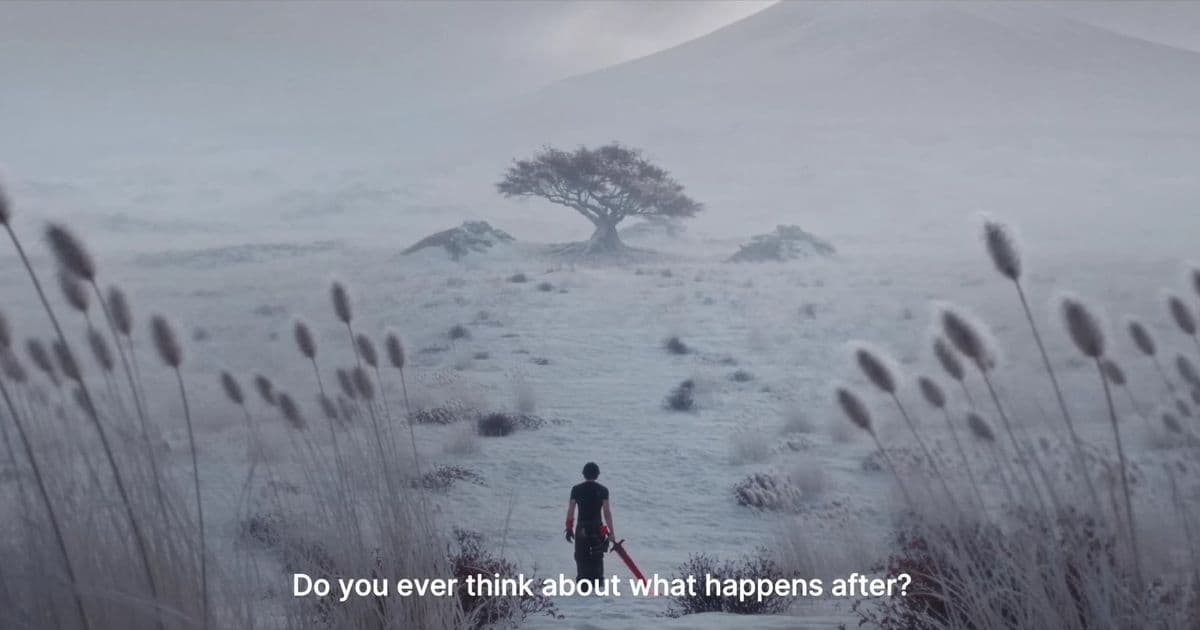
ByteDance's Volcengine platform showcased its Seedance 2.0 AI model at the Cannes Film Festival with the premiere of 'Hell Grind,' a 95-minute AI-generated feature film that demonstrates the rapid advancement of generative AI in long-form storytelling.
At the 79th Cannes Film Festival, where cinematic storytelling has never been in short supply, one of this year's biggest surprises came from artificial intelligence. On Thursday, ByteDance's cloud platform Volcengine brought its Seedance 2.0 model to the prestigious event, hosting an AI film showcase and premiering Hell Grind, a 95-minute AI-generated feature film billed as the world's first full-length AI movie.
The production team behind the feature film comes from the US-based AI company Higgsfield, while its core video generation model is Seedance 2.0, developed by ByteDance. This was not merely a 15-second AI clip or a proof-of-concept demo. Hell Grind arrived as a complete, theater-scale narrative feature — a clear sign of how rapidly generative AI is moving from experimental content creation into long-form cinematic storytelling.

What sets this achievement apart is that long-form video generation has been one of AI filmmaking's most significant technical bottlenecks. Most mainstream AI video tools today can only generate clips lasting between 15 and 30 seconds. Building a feature-length film typically requires stitching together tens of thousands of fragmented shots, which often leads to inconsistent faces, unstable scenes, and broken visual continuity. The resulting output has been difficult to integrate into professional production pipelines.
Seedance 2.0 appears to have pushed past many of those limitations, enabling the creation of a coherent, feature-length narrative. The film follows four street kids named Roko, Jaxx, Lulu, and Rein, who stumble upon a mysterious artifact during an exploration of a museum. The discovery awakens a dark force and also grants them superpowers. They are forced to join forces to confront the emerging evil and fight for survival in a world where reality and illusion begin to blur.
After watching an early cut of the film, director Chuck Russell reportedly said the project made him genuinely empathize with the characters, something he described as rare in AI-generated cinema. This suggests that Seedance 2.0 may be achieving a level of emotional depth that previous AI-generated content has struggled to capture.
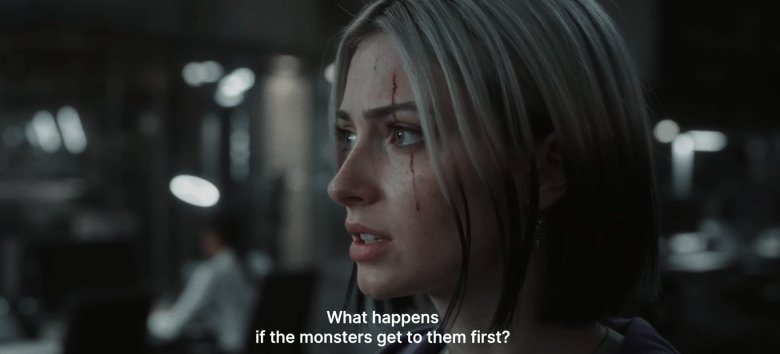
The production numbers are equally striking. The film was reportedly completed by a 15-person team in just 14 days, with a total budget under $500,000. A traditionally produced film of similar scale could easily cost tens of millions of dollars and require hundreds of crew members working for months. This dramatic reduction in both time and resources points to a potential paradigm shift in how films might be produced in the future.
At the Cannes summit, Alex Mashrabov, co-founder of Higgsfield, argued that the technical infrastructure for AI-native filmmaking is already mature enough to bring ambitious cinematic ideas to life at a fraction of the cost of traditional production. This sentiment was echoed by industry leaders who recognize the potential of this technology to democratize content creation.

The impact of this technology extends beyond just Hell Grind. Luc Besson's SEEN studio is reportedly preparing to use Volcengine's Seedance 2.0 to develop an AI animated film titled The Furious Five, with Besson reportedly attached as director. The project is described as one that combines live-action performance with AI generation. It removes the need for motion-capture studios and green screens and enables everyday shooting setups to feed directly into animation production.
If these capabilities prove scalable, the implications go beyond production efficiency. A 95-minute AI-generated feature film suggests that narrative-scale generation may no longer be the primary constraint in filmmaking, shifting the bottleneck toward creative direction rather than budget or team size. For independent creators, this would significantly lower the barrier to entry and expand access to feature-length storytelling that was previously only available to well-funded studios.
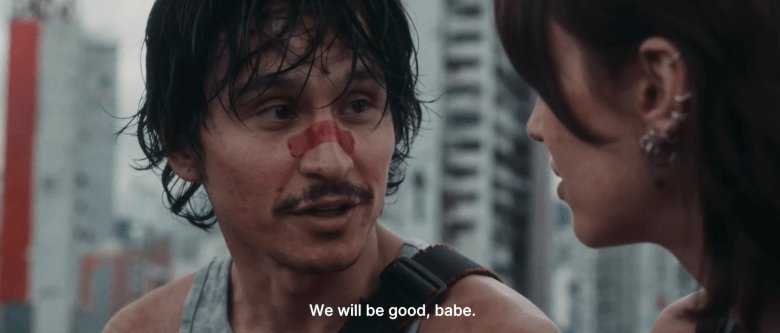
At the same time, the shift raises structural questions for the film industry. If a feature film can be produced in roughly two weeks at a fraction of traditional budgets, parts of the mid- and low-tier production workforce could face displacement pressure. The industry may need to adapt by focusing more on creative direction, artistic vision, and higher-level storytelling rather than technical execution.
There is also a deeper debate emerging around authorship: whether AI-generated emotional impact reflects genuine artistic intent or optimized patterning of human responses. As generative systems become more capable of producing coherent, emotionally resonant narratives, the role of human creators may shift further toward defining intent, taste, and meaning, even as the tools themselves increasingly shape what is considered effective storytelling.
The emergence of Seedance 2.0 and Hell Grind represents not just a technical achievement but a potential inflection point in how we conceive of film production. As the technology continues to evolve, we may see a new ecosystem of content creation that values different skills and offers new opportunities for storytellers worldwide. The Cannes premiere of an AI-generated feature film may be remembered as the moment when long-form AI storytelling moved from theoretical possibility to practical reality.
Comments
Please log in or register to join the discussion