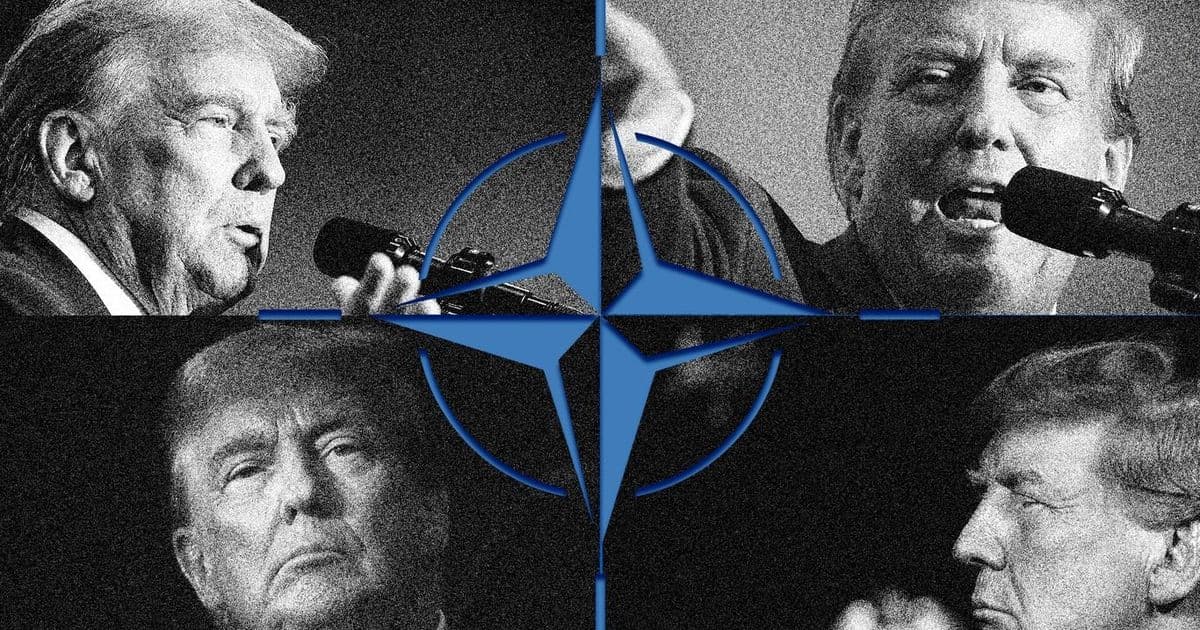
Former President Trump cannot unilaterally withdraw the US from NATO, but he has multiple tools to weaken the alliance through funding cuts, diplomatic pressure, and strategic ambiguity.
Former President Donald Trump's recent threats to withdraw the United States from NATO have sent shockwaves through European capitals and defense establishments worldwide. While such a dramatic move would require congressional approval and face significant legal hurdles, Trump's history and stated intentions reveal a more nuanced strategy that could effectively undermine the alliance without formal withdrawal.
The Legal Reality of NATO Withdrawal
The North Atlantic Treaty, which established NATO in 1949, includes Article 13, which allows member states to withdraw after a one-year notice period. However, this process is not as simple as a presidential decree. The treaty was ratified by the Senate, making it federal law that cannot be unilaterally altered by executive action alone. Any attempt to withdraw would require either Senate consent or a formal abrogation process that would face immediate legal challenges.
This constitutional constraint means that even if Trump were to win a second term, he would face significant institutional barriers to executing a clean break from NATO. The military, diplomatic corps, and much of Congress remain committed to the alliance, creating a complex web of checks on presidential power.
The "Cost-Sharing" Pressure Campaign
Instead of formal withdrawal, Trump is likely to revive and intensify his "cost-sharing" campaign, which he used extensively during his first term. This approach involves publicly criticizing NATO allies for not meeting the 2% of GDP defense spending target, threatening to withhold U.S. support, and creating uncertainty about American commitment to collective defense.
During his presidency, Trump frequently berated allies at NATO summits, suggesting that the U.S. might not defend members who failed to meet spending targets. This strategy creates a credibility gap that weakens the alliance's deterrent effect. When adversaries like Russia or China perceive uncertainty about U.S. commitment, they may be emboldened to test NATO's resolve.
Strategic Ambiguity as a Weapon
Trump's rhetoric about NATO has always contained an element of strategic ambiguity. By suggesting that the U.S. might not honor Article 5 (the collective defense clause), he creates doubt among both allies and adversaries. This uncertainty can be more damaging than outright withdrawal because it undermines the fundamental psychology of deterrence that NATO relies upon.
When NATO was formed, its strength came not just from military capabilities but from the certainty that an attack on one member would trigger a unified response. Trump's approach systematically erodes this certainty, potentially encouraging adversaries to probe for weaknesses or test NATO's resolve in regional conflicts.
The Economic Leverage Approach
Beyond diplomatic pressure, Trump has multiple economic tools at his disposal to influence NATO policy. The United States provides significant funding for NATO operations, intelligence sharing, and command structures. A president with sufficient congressional support could dramatically reduce or redirect these funds, effectively starving the alliance of resources while remaining technically within the alliance framework.
Additionally, Trump could use trade policy as leverage, threatening economic consequences for allies who resist his NATO demands. This approach aligns with his broader "America First" economic nationalism and could create rifts between the U.S. and key European partners.
The European Response and Strategic Autonomy
European leaders have already begun preparing for the possibility of reduced U.S. commitment to NATO. France has long advocated for "strategic autonomy," and other European nations are increasing defense spending and exploring alternative security arrangements. The European Union has accelerated plans for a coordinated defense policy that could eventually operate independently of NATO structures.
This European pivot represents both a challenge and an opportunity. While it demonstrates NATO's resilience, it also signals a potential long-term shift in the transatlantic relationship that could fundamentally alter the global security architecture.
The Broader Geopolitical Implications
Trump's approach to NATO reflects a broader skepticism about multilateral institutions that has gained traction among certain segments of the Republican Party. This skepticism is not limited to NATO but extends to trade agreements, climate accords, and other international frameworks that Trump views as constraining American sovereignty.
However, the practical implications of weakening NATO extend far beyond alliance politics. NATO has been instrumental in maintaining stability in Europe for over 70 years, deterring Russian aggression, and providing a framework for collective security. Undermining this structure could create power vacuums that adversaries would seek to exploit.
The Path Forward
While Trump cannot unilaterally withdraw the United States from NATO, his ability to create dysfunction, uncertainty, and pressure within the alliance should not be underestimated. The combination of diplomatic pressure, economic leverage, and strategic ambiguity creates a powerful toolkit for someone determined to reshape America's role in global security arrangements.
The real question is not whether Trump can withdraw from NATO, but whether he can effectively hollow out the alliance from within, reducing its credibility and effectiveness while maintaining formal membership. This approach would be more difficult to challenge legally while potentially achieving similar strategic objectives.
As the 2024 election approaches, NATO allies are watching closely, preparing contingency plans, and reconsidering their security dependencies. Whether Trump wins or loses, his impact on the alliance has already begun reshaping how European nations think about their security arrangements and the reliability of American commitments.
The stakes extend beyond alliance politics to the fundamental question of whether the post-World War II international order can survive another period of American ambivalence toward its traditional security commitments. The answer will have profound implications for global stability, European security, and America's role in the world for decades to come.
Comments
Please log in or register to join the discussion