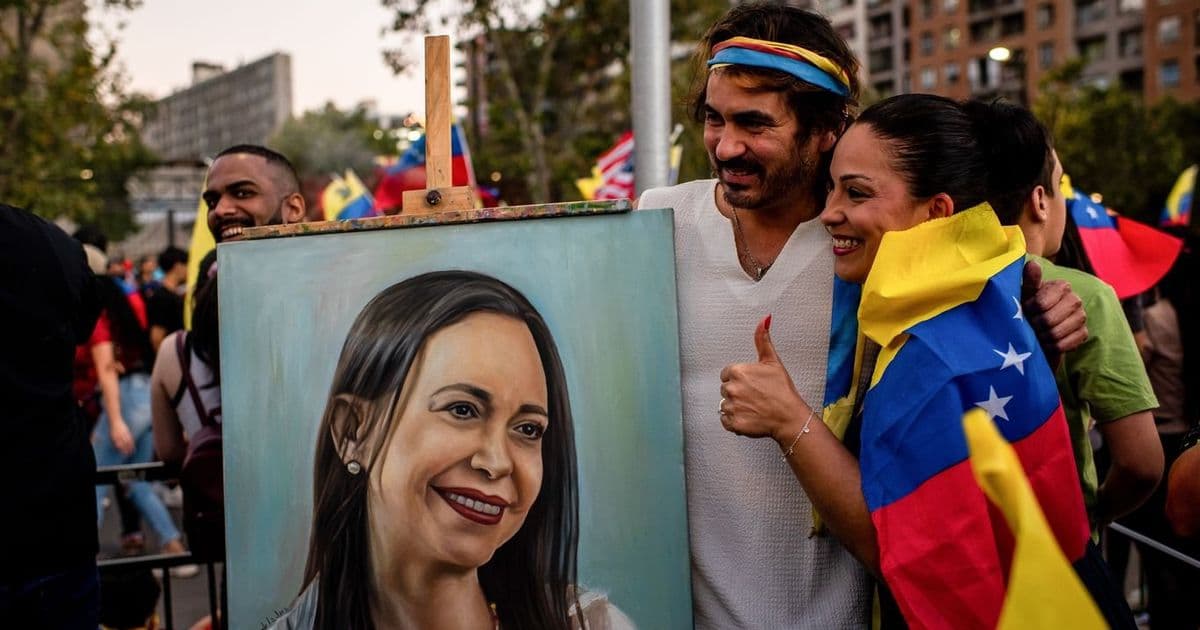
Former President Trump's deliberate non-endorsement of María Corina Machado reveals a calculated foreign policy approach prioritizing U.S. energy interests and diplomatic flexibility over ideological alignment with the Venezuelan opposition.
Former President Donald Trump has maintained conspicuous silence regarding María Corina Machado's leadership of Venezuela's opposition movement, a strategic omission that reflects complex geopolitical calculations rather than ideological disagreement. Machado, who won Venezuela's 2024 opposition primary with 93% of the vote, has been systematically blocked from appearing on the presidential ballot by the Maduro regime, yet Trump's team has avoided formal endorsement despite her clear pro-U.S. stance.
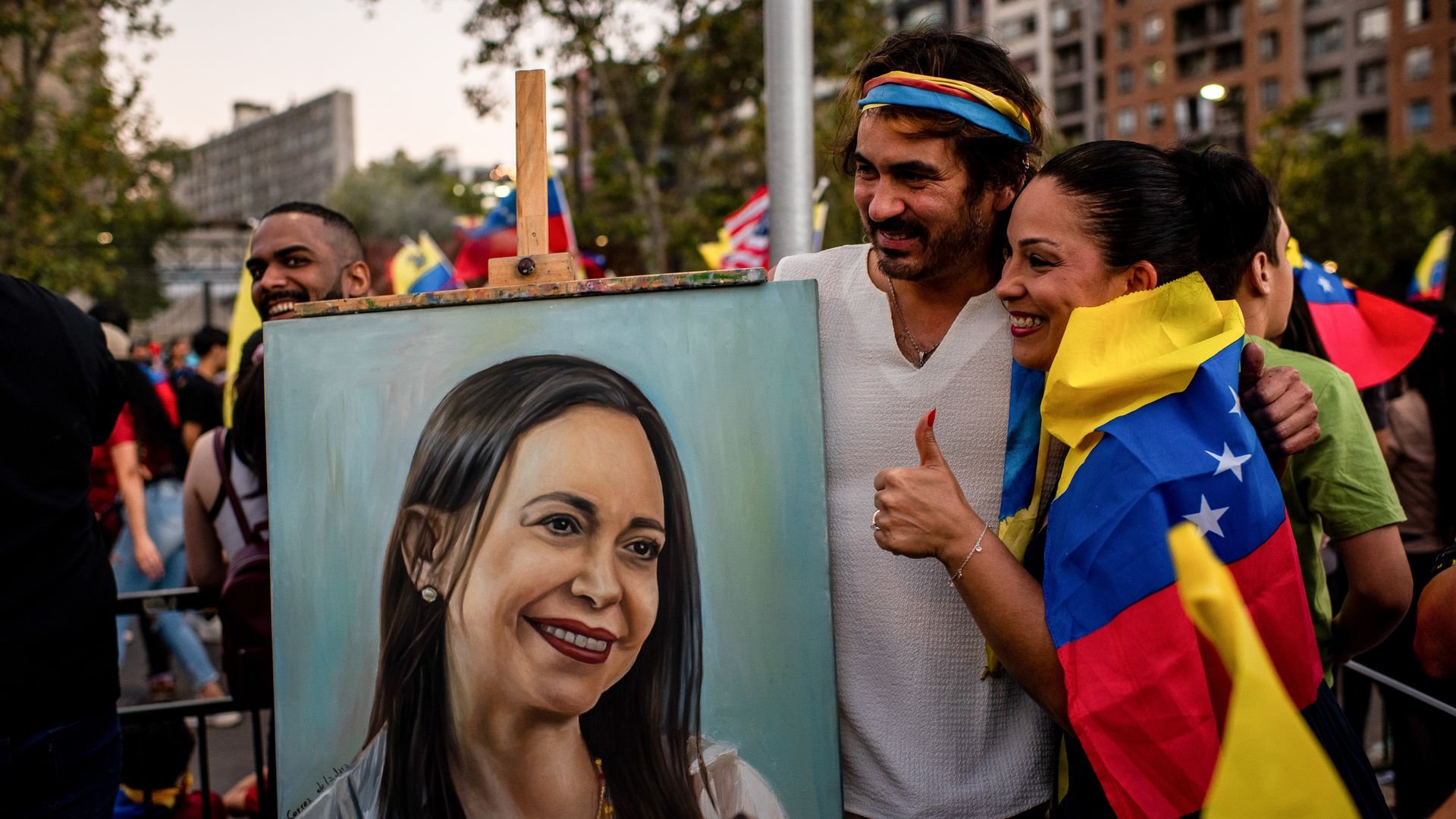
The decision represents a departure from Trump's earlier hardline approach toward Nicolás Maduro. During his presidency, Trump imposed sweeping sanctions on Venezuela's oil sector, recognized Juan Guaidó as interim president, and offered a $15 million reward for information leading to Maduro's arrest. However, his current position appears calibrated for potential second-term governance rather than campaign rhetoric.
Energy Market Realities
Trump's energy advisors have emphasized the practical implications of regime change in Venezuela. The country holds approximately 300 billion barrels of proven oil reserves—more than Saudi Arabia—and currently produces around 800,000 barrels daily, down from 3.5 million barrels in 1998. A successful opposition government could theoretically flood global markets with discounted crude, potentially lowering U.S. gasoline prices by an estimated 15-20 cents per gallon according to energy analysts at RBC Capital Markets.
However, this potential benefit comes with significant risks. Venezuela's oil infrastructure has deteriorated after years of underinvestment and sanctions. The country's refineries operate at approximately 30% capacity, and its primary export grade, Merey 16, requires specialized upgrading equipment that most U.S. Gulf Coast refineries lack. Rebuilding production to pre-sanctions levels would require an estimated $200-300 billion in investment and 5-7 years, according to industry estimates from IHS Markit.
Diplomatic Flexibility
Trump's silence preserves negotiating leverage with both Caracas and Beijing. China has invested over $60 billion in Venezuela through oil-for-loan agreements since 2007, while Russia maintains a $17 billion debt relationship and provides military support. A formal endorsement of Machado would complicate potential diplomatic channels with these strategic competitors.
The former president's team has privately discussed a "Venezuela First" approach that prioritizes American economic interests over ideological support for opposition figures. This mirrors Trump's transactional approach to other foreign policy challenges, including his 2019 meeting with Kim Jong Un and his willingness to negotiate with the Taliban.
Machado's Position and Limitations
María Corina Machado represents the most organized and popular opposition figure since the Chávez era began in 1999. Her coalition, the Unitary Platform, controls municipal governments representing 40% of Venezuela's population despite being barred from national office. She has promised to restore private property rights, attract foreign investment, and normalize relations with the United States.
However, her movement faces structural disadvantages. The Maduro regime controls the military, the electoral council, and state media. International observers from the Carter Center and European Union have documented systematic disqualifications of opposition candidates, vote buying, and intimidation tactics. Without international pressure, Machado's path to power remains unclear.
Historical Precedent and Risk Assessment
Trump's advisors have studied the outcomes of U.S. interventions in the Middle East, particularly Iraq and Libya, where regime change created power vacuums and prolonged instability. Venezuela's ethnic and political divisions—between the urban middle class, the military, and the poor who benefited from Chávez's social programs—could lead to similar fragmentation.
The former president's silence also reflects domestic political calculations. While Venezuelan-American voters in Florida supported Trump in 2020, the broader electorate shows limited appetite for foreign military engagements. A 2023 Gallup poll found that 65% of Americans believe the U.S. should focus on domestic issues rather than "solving problems in other countries."
Economic Sanctions' Mixed Results
Current U.S. sanctions have reduced Venezuela's oil exports from 1.5 million barrels daily in 2018 to approximately 500,000 barrels today, but they have not forced political change. Maduro has deepened ties with Iran, Russia, and China, while the sanctions have contributed to a humanitarian crisis that has driven over 7 million Venezuelans to leave the country.
The Biden administration has maintained most Trump-era sanctions while granting limited licenses to U.S. companies for humanitarian trade. This continuity suggests that regardless of the 2024 election outcome, a complete reversal of Venezuela policy is unlikely.
Strategic Implications
Trump's non-endorsement of Machado signals a potential shift from ideological confrontation to pragmatic engagement. Should he return to office, his administration might pursue a negotiated transition that includes guarantees for U.S. energy companies, debt restructuring for Chinese and Russian loans, and amnesty for regime officials—similar to the 1989 Panama invasion that removed Manuel Noriega but preserved U.S. business interests.
For Machado, this means operating without the full-throated U.S. support that Juan Guaidó received in 2019. Her movement must rely on European and Latin American allies, while navigating the complex reality that America's next president may prioritize economic interests over democratic ideals in Venezuela.
The silence from Mar-a-Lago speaks volumes about the evolving nature of U.S. foreign policy in an era of energy transition and great power competition. Whether this represents strategic patience or indifference will become clear if Trump returns to the White House.
Comments
Please log in or register to join the discussion