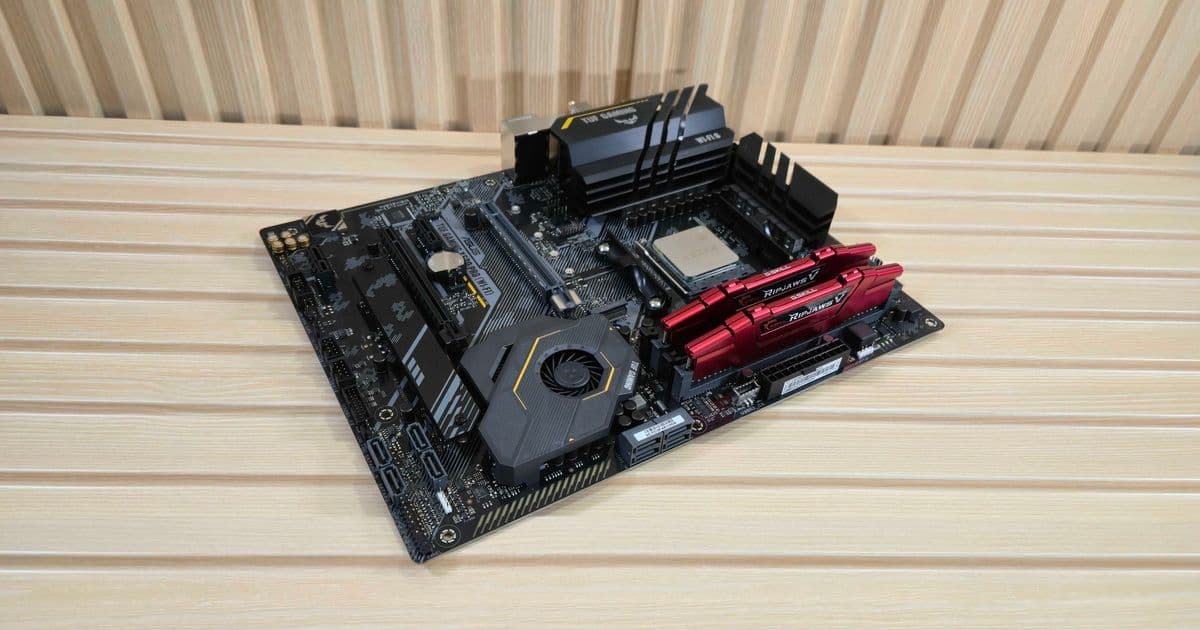
With DDR5 memory prices at historic highs, building a new PC around DDR4 platforms offers substantial cost savings. This analysis examines two complete build configurations—one Intel, one AMD—leveraging last-generation chipsets to deliver strong 1080p and 1440p gaming performance for under $1,300, while providing context on the diminishing platform support and strategic upgrade paths.
The semiconductor memory market is currently experiencing a severe pricing correction, with DRAM and NAND flash prices reaching unprecedented levels. This has fundamentally altered the economics of PC building, making a full DDR5-based system prohibitively expensive for many consumers. In this environment, DDR4-based builds have re-emerged as a compelling value proposition, particularly for users with existing DDR4 memory kits from previous systems.
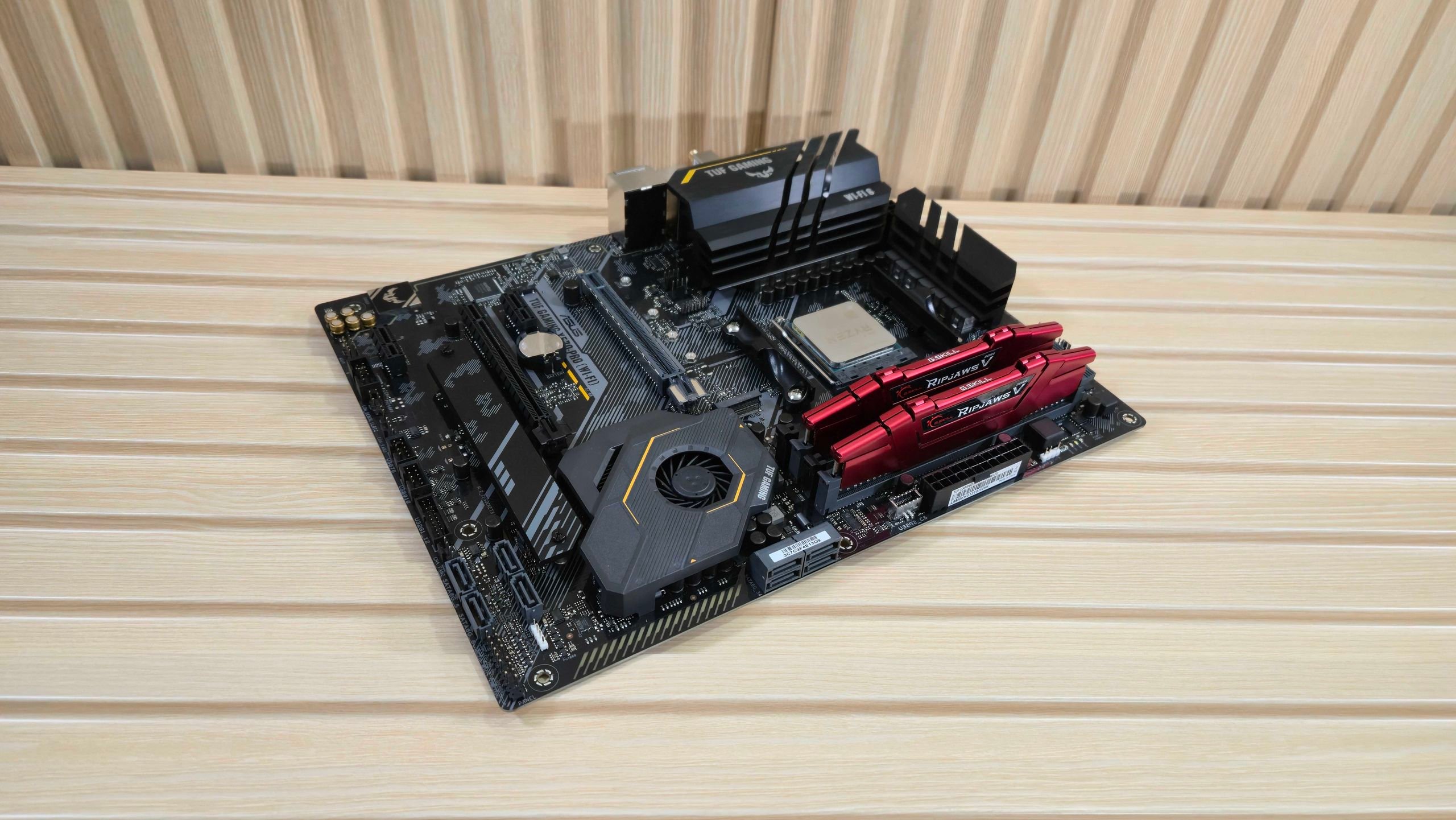
The cost differential is stark. A comparable DDR5 system requires a minimum investment of $200 more for the memory alone, with high-performance kits often costing $250-$300 for 32GB. This price delta directly impacts component selection, forcing trade-offs between memory capacity, storage, or GPU quality. For budget-conscious builders, this creates a clear decision matrix: adopt DDR4 and allocate funds toward a more powerful graphics card or faster storage, or accept a lower-tier component to afford DDR5.
Intel Platform: Raptor Lake Refresh with DDR4 Support
Intel's 12th through 14th-generation Core processors (Alder Lake through Raptor Lake Refresh) uniquely supported both DDR4 and DDR5 memory controllers on the same silicon. This architectural decision, initially made to ease the transition for OEMs and consumers, has become a significant advantage in the current market. The LGA1700 socket and 600/700-series chipsets provide a mature, stable platform with extensive motherboard availability.
Processor Selection: Core i5-14600KF The Core i5-14600KF represents the sweet spot for DDR4 builds. This 14-core (6P+8E) processor features a 5.3 GHz boost clock and 24MB of L3 cache. In gaming workloads at 1080p, it delivers within 6% of the more expensive Core i7-14700K, making the performance penalty minimal for most users. The "F" designation indicates the lack of integrated graphics, a sensible omission for a discrete GPU build.
Motherboard Constraints: The B760 Dilemma The choice of a B760 chipset motherboard (MSI Pro B760-P WiFi DDR4) highlights a platform limitation: Intel's B-series chipsets do not support CPU overclocking. While the Core i5-14600KF is unlocked, its overclocking potential is inaccessible on this platform. Z790 motherboards with DDR4 support exist but command prices exceeding $250, negating the cost savings of the DDR4 approach. This represents a calculated trade-off: accept a locked platform to maintain the DDR4 cost advantage.
Memory Configuration: 32GB DDR4-3200 The Patriot Viper Steel 32GB DDR4-3200 CL16 kit ($173) provides optimal capacity for modern gaming and multitasking. DDR4-3200 represents the performance sweet spot, offering significant bandwidth over slower 2400-2666 MHz kits while maintaining low latency. The performance delta between DDR4-3200 and higher-frequency DDR4-3600/4000 is typically 2-5% in gaming, making the cost premium difficult to justify in a value-focused build.
Complete Intel Build Configuration:
- CPU: Intel Core i5-14600KF ($229)
- Motherboard: MSI Pro B760-P WiFi DDR4 ($160)
- GPU: Gigabyte RTX 5060 Ti Windforce OC 16G ($450)
- RAM: Patriot Viper Steel 32GB DDR4-3200 ($173)
- Storage: Crucial P310 1TB PCIe 4.0 NVMe ($107)
- Case: Montech XR-B Mid-Tower ($75)
- PSU: ASRock Steel Legend SL-850G 850W 80+ Gold ($90)
- Cooler: Thermalright Peerless Assassin 120 SE ($35)
- Total: $1,319
This configuration delivers strong 1080p gaming performance, capable of handling modern AAA titles at high settings with frame rates well above 60 FPS. The 16GB VRAM buffer on the RTX 5060 Ti provides headroom for 1440p gaming and future title requirements.
AMD Platform: Zen 3 on AM4
AMD's transition to DDR5 began with Zen 4 (Ryzen 7000 series) on the AM5 platform. The final DDR4-supporting generation, Zen 3 (Ryzen 5000 series), remains available but faces supply constraints and pricing volatility. The Ryzen 7 5800XT, a late-cycle refresh of the 5800X, represents the pinnacle of AM4 gaming performance.
Processor Selection: Ryzen 7 5800XT The Ryzen 7 5800XT features 8 cores and 16 threads with a 4.8 GHz boost clock and 32MB of L3 cache. While not the fastest AM4 processor (that title belongs to the 5800X3D), it offers excellent multi-threaded performance and strong gaming capabilities. However, pricing has become problematic: the 5800XT currently sells for $220, up from its historical low of $125, due to sustained demand for AM4 upgrades.
The 5800X3D, with its 3D V-Cache technology, commands extreme premiums—over $600 from third-party sellers, compared to its $450 launch MSRP. This pricing distortion makes the 5800XT the pragmatic choice for DDR4 AMD builds.
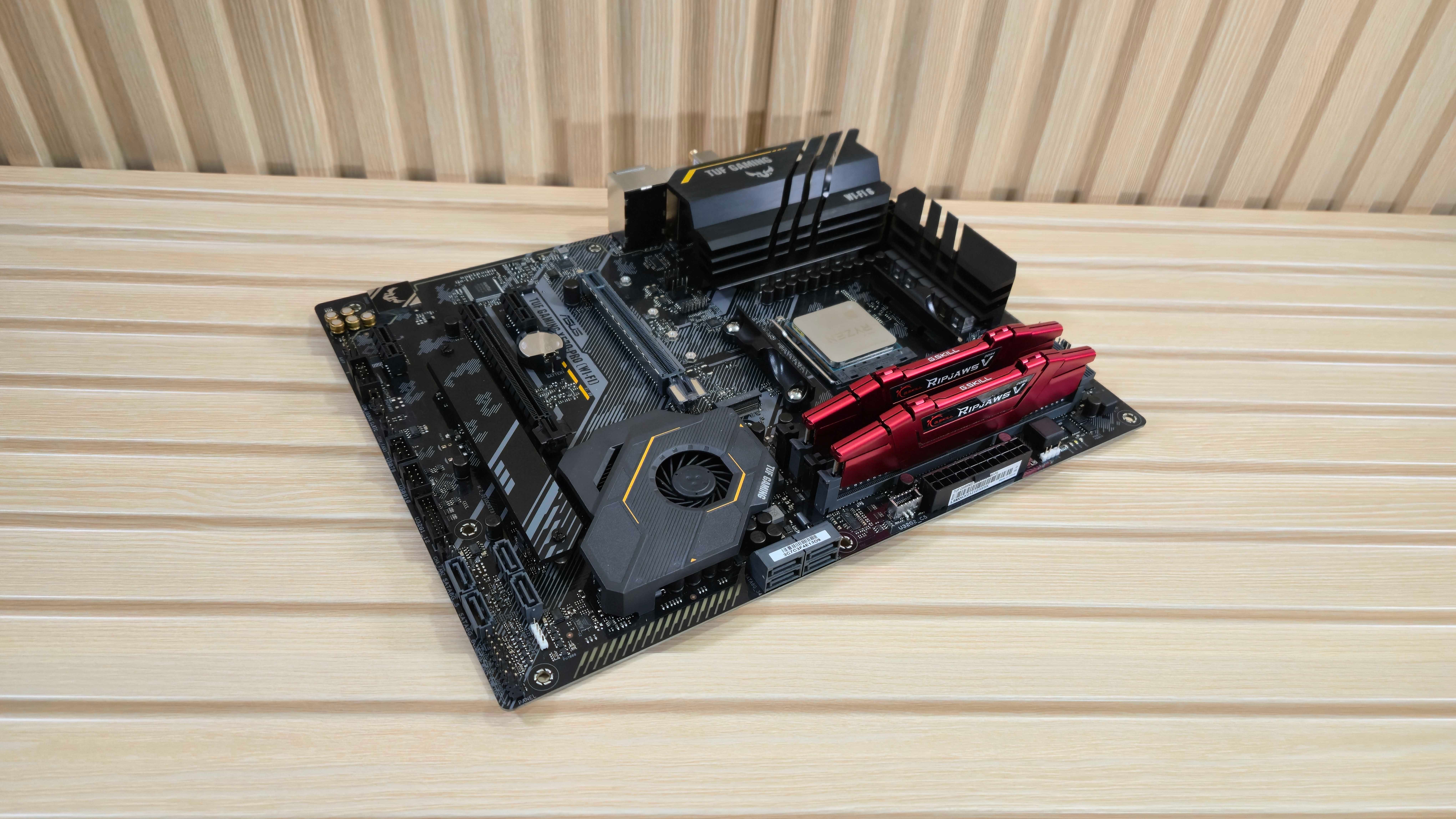
Motherboard: B550 Platform The Asus TUF Gaming B550-Plus WiFi II ($120) provides PCIe 4.0 support for both GPU and primary NVMe storage, dual M.2 sockets, and robust power delivery for all AM4 processors. Connectivity includes 2.5 GbE Ethernet, Wi-Fi 6E, and comprehensive USB options including a 10 Gbps Type-C port. The B550 chipset represents the optimal balance of features and cost for AM4 builds.
Memory: Consistent DDR4-3200 Using the same Patriot Viper Steel 32GB DDR4-3200 kit ensures platform parity and simplifies component sourcing. AMD's Zen 3 architecture benefits from low-latency memory, making CL16 timings ideal. While Infinity Fabric scaling allows for higher memory frequencies (up to DDR4-3600-4000), the performance gains in gaming are marginal and rarely justify the cost premium.
Complete AMD Build Configuration:
- CPU: AMD Ryzen 7 5800XT ($220)
- Motherboard: Asus TUF Gaming B550-Plus WiFi II ($120)
- GPU: Gigabyte RTX 5060 Ti Windforce OC 16G ($450)
- RAM: Patriot Viper Steel 32GB DDR4-3200 ($173)
- Storage: Patriot Viper VP4300 1TB PCIe 4.0 NVMe ($140)
- Case: Montech X3 Mesh Mid-Tower ($70)
- PSU: ASRock Steel Legend SL-850G 850W 80+ Gold ($90)
- Cooler: Included with CPU ($0)
- Total: $1,263
The AMD build saves approximately $56 compared to the Intel configuration, primarily due to the included CPU cooler and slightly lower motherboard cost. Performance in gaming is comparable, with the 5800XT maintaining slight advantages in multi-threaded workloads while the 14600KF leads in single-threaded performance.
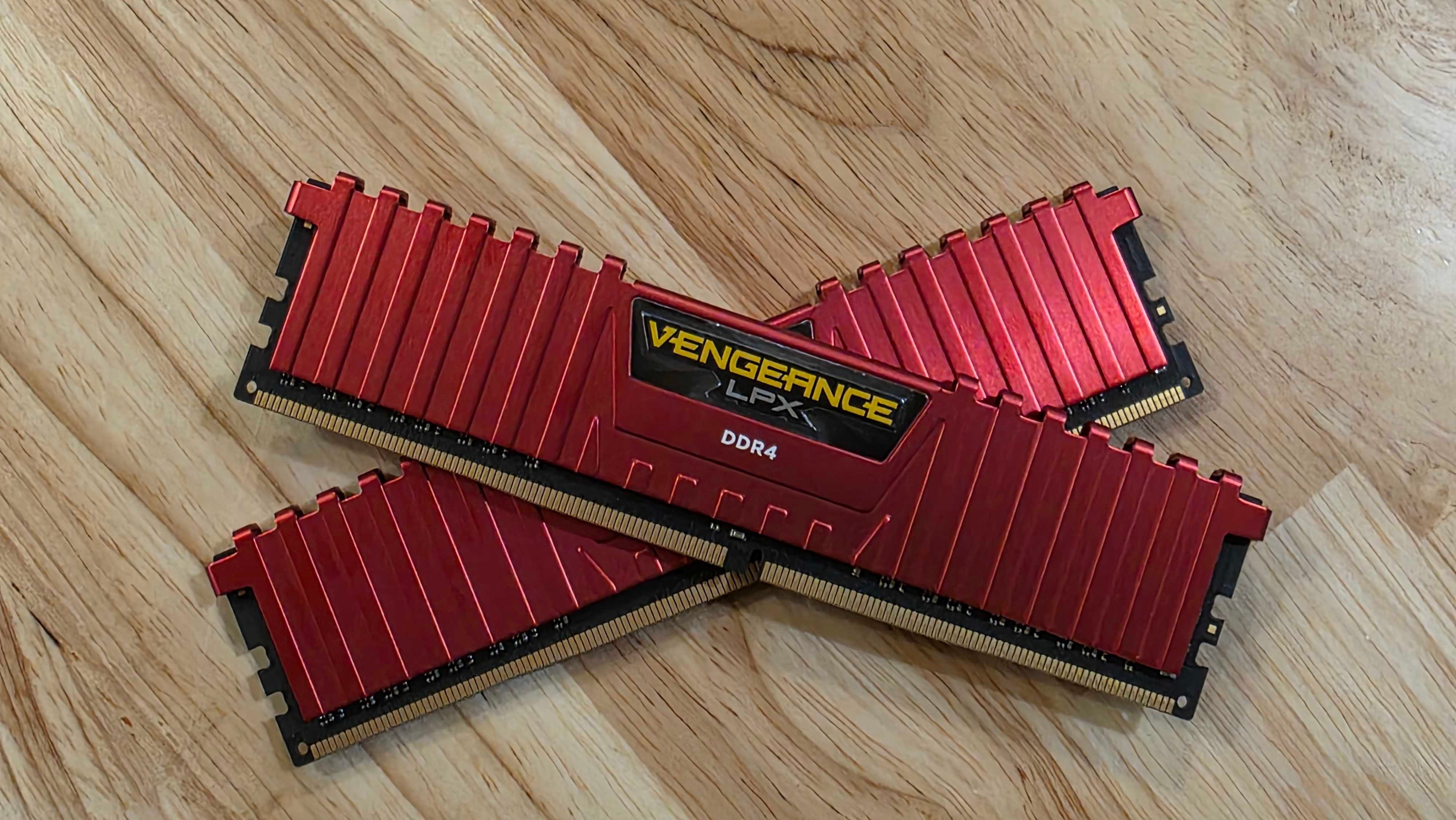
Platform Longevity and Upgrade Path Considerations
Both DDR4 platforms represent technological dead ends. AMD has fully transitioned to AM5 with DDR5 support, and Intel's LGA1700 socket is sunsetted with the 14th generation. This has critical implications for future upgrades:
CPU Upgrades: Neither platform supports next-generation processors. The 5800XT is the fastest AM4 CPU available, and the 14600KF is near the top of the LGA1700 stack.
Memory Ceiling: DDR4 support is capped at the current generation. No future CPUs will support DDR4.
Platform Features: PCIe 5.0, DDR5, and newer connectivity standards (USB4, Thunderbolt 5) are absent from these platforms.
However, this limitation creates a strategic advantage: the non-memory components (GPU, storage, case, PSU) remain fully viable for a future platform upgrade. When DDR5 prices normalize, builders can migrate the RTX 5060 Ti, NVMe storage, and power supply to a new motherboard and CPU platform.
Performance Analysis: DDR4 vs. DDR5
Quantifying the DDR4 performance penalty requires examining specific workloads:
Gaming: At 1080p, DDR4-3200 typically trails DDR5-5600 by 3-7% in average frame rates, depending on the title and CPU. The gap narrows at 1440p and 4K as the GPU becomes the bottleneck. For the RTX 5060 Ti at 1080p, the difference is often within the margin of error.
Productivity: Memory-sensitive workloads like video editing, 3D rendering, and scientific computing show larger penalties, often 10-15% with DDR4. However, the cost savings can be redirected toward a more powerful CPU or additional RAM capacity, potentially offsetting the frequency deficit.
Platform Stability: DDR4 platforms are mature, with BIOS updates and driver support stabilized. DDR5, while faster, still experiences occasional compatibility issues and higher latency in early implementations.
Market Context and Timing
The current memory price surge stems from multiple factors: supplier consolidation, production cuts during the pandemic downturn, and surging demand from AI server deployments. Industry analysts project DRAM prices will remain elevated through at least Q2 2025, with gradual normalization expected in the second half of 2025.
For builders with existing DDR4 memory, the value proposition is exceptionally strong. A 32GB DDR4 kit can be repurposed, saving $170-$200 immediately. For those building from scratch, the DDR4 path still offers $200+ in total system savings compared to equivalent DDR5 configurations.
Strategic Recommendations
For Upgraders: If you possess DDR4 memory from a previous system, the Intel build offers the most balanced performance. The Core i5-14600KF provides excellent gaming capabilities with minimal platform limitations.
For New Builders: The AMD build at $1,263 offers slightly better value, particularly for users who prioritize multi-threaded performance. The included CPU cooler and lower motherboard cost contribute to savings.
Component Flexibility: Both builds allow for component substitution based on availability and personal preference. The GPU can be swapped for AMD's RX 9070 XT (currently $500-$550) for better 1440p performance, or the RTX 5070 for a mid-range upgrade. Storage can be scaled down to 512GB for additional savings, though 1TB is recommended for modern game installations.
Future-Proofing the PSU: The ASRock Steel Legend SL-850G is ATX 3.1 and PCIe 5.1 compliant, supporting next-generation GPUs with native 12V-2x6 connectors. This 850W unit provides ample headroom for future GPU upgrades and carries a 10-year warranty, making it a sound long-term investment.
Conclusion
DDR4-based PC builds in 2026 represent a pragmatic response to abnormal market conditions rather than a technological regression. The performance delta between DDR4 and DDR5 is modest for most users, while the cost savings are substantial—enough to elevate GPU tier or storage capacity significantly.
Both the Intel and AMD configurations deliver compelling 1080p and 1440p gaming performance for under $1,300, with the AMD build offering slightly better value for new builders and the Intel platform providing more upgrade headroom for users with existing DDR4 memory.
The strategic value lies in component selection: investing in a quality PSU, GPU, and storage that will outlive the DDR4 platform, creating a clear upgrade path when memory prices normalize and new platforms mature. For builders facing today's market, DDR4 is not a compromise—it's a calculated optimization of the performance-per-dollar equation.

Comments
Please log in or register to join the discussion