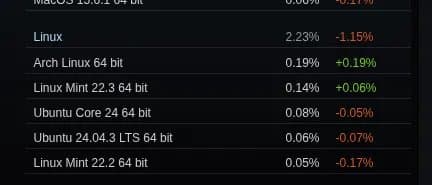
The latest Steam hardware and software survey for February 2026 shows Linux gaming marketshare plummeting from 3.38% in January to just 2.23%, a 1.15 percentage point drop that appears linked to reporting anomalies involving Simplified Chinese users.
The latest Steam hardware and software survey for February 2026 reveals a dramatic shift in the Linux gaming ecosystem, with the operating system's marketshare dropping from 3.38% in January to just 2.23% this month - a decline of 1.15 percentage points that has caught the attention of the Linux gaming community.
This sudden drop follows a period of steady growth for Linux on Steam. The platform had reached an all-time high of 3.2% back in November 2025, climbed to 3.58% in December, and then settled at 3.38% in January. The February figures represent a significant reversal of this upward trend.
Valve, the company behind Steam, has not yet commented on the accuracy of these February figures. However, historical patterns suggest this may be a reporting anomaly rather than an actual decline in Linux gaming adoption. Similar dramatic drops in Linux marketshare have occurred in the past, and Valve has subsequently released corrected data.
One key indicator pointing to a potential reporting issue is the dramatic increase in Simplified Chinese language usage on Steam. The February survey shows Simplified Chinese use running up by 30% month over month. This pattern has appeared in previous instances where Linux marketshare experienced unusual declines, suggesting the two metrics may be connected through a reporting or data collection issue.
Valve typically updates the Steam Survey data when anomalies are identified, so the Linux gaming community is awaiting potential corrections to these February figures. The company has a history of revising survey results when data inconsistencies are discovered, particularly when there are significant discrepancies in language usage patterns.
The Steam Survey remains one of the most comprehensive sources of data on gaming hardware and software trends, with millions of users participating each month. The survey provides valuable insights into which operating systems, graphics cards, processors, and other components are most popular among PC gamers.
For Linux users and developers, the Steam Survey serves as an important barometer of platform health and growth. Despite the February anomaly, Linux gaming has shown consistent growth over the past several years, driven by improvements in compatibility layers like Proton, increased support from game developers, and the overall maturation of the Linux desktop ecosystem.
The current February numbers can be viewed on SteamPowered.com, Valve's official website for Steam-related information and announcements. The site provides detailed breakdowns of hardware configurations, operating system usage, and other metrics that help developers and gamers understand the current state of the PC gaming landscape.
While the February figures are concerning for Linux gaming advocates, the historical context suggests this may be a temporary data issue rather than a genuine decline in Linux adoption among Steam users. The Linux gaming community will be watching closely for any updates or corrections from Valve in the coming weeks.
The Steam Survey continues to be an essential tool for understanding gaming trends, and its monthly releases generate significant discussion within the gaming and open-source communities. Whether the February figures stand or are corrected, they highlight the importance of accurate data collection and the challenges of measuring platform usage across a global user base with diverse language preferences and technical configurations.
As the situation develops, Linux gaming enthusiasts and developers will be hoping for clarification from Valve and, ideally, a return to the growth trajectory that Linux gaming has enjoyed in recent months. The platform's long-term prospects remain strong, supported by ongoing improvements in compatibility, performance, and developer support.
Comments
Please log in or register to join the discussion