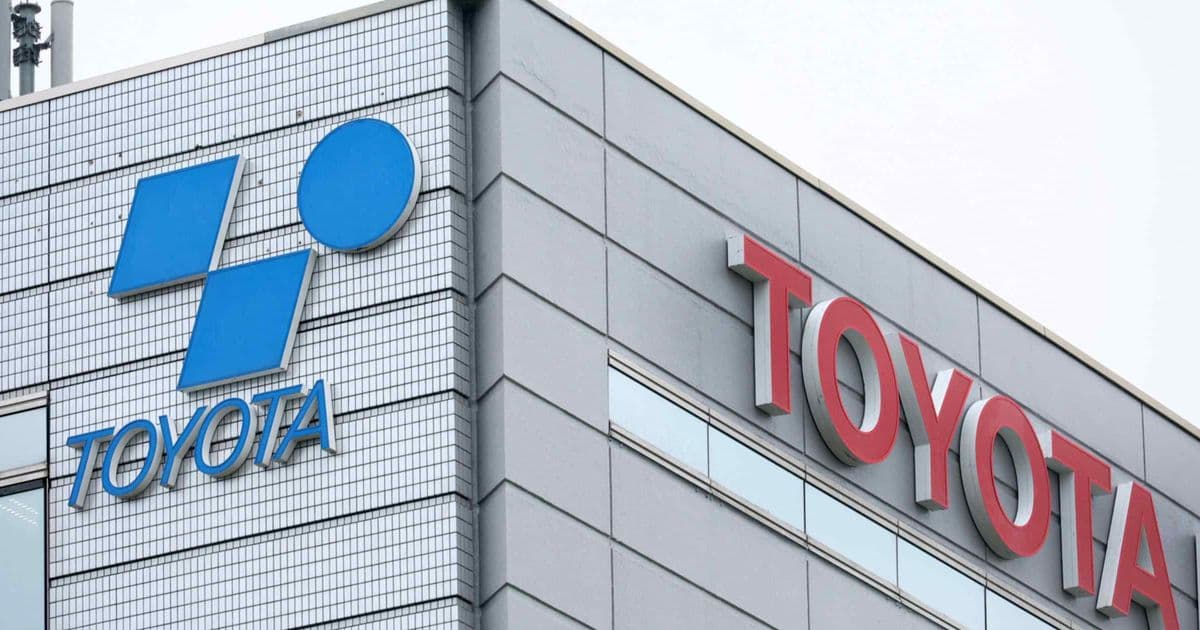
Toyota Group has increased its tender offer for Toyota Industries to $38 billion after activist investor Elliott Investment Management agreed to accept the new terms, resolving a high-stakes corporate battle over the founding company of the automotive giant.
Toyota Group has raised its tender offer price for Toyota Industries to $38 billion, successfully securing the support of activist investor Elliott Investment Management and moving forward with its plan to take the founding company private. The increased offer represents a significant victory for Toyota's leadership in navigating complex shareholder dynamics while pursuing strategic consolidation within the automotive group.
The Deal and Its Evolution
The tender offer, initially valued at $35 billion, faced resistance from Elliott Investment Management, which argued that the original price undervalued Toyota Industries. The activist fund, known for its aggressive investment strategies, pushed for a higher valuation that would better reflect the company's strategic importance to the Toyota Group.
Under the revised terms, Toyota Group has increased the offer price sufficiently to gain Elliott's acceptance. The deal values Toyota Industries at a premium that reflects both its standalone business performance and its critical role as a key supplier to Toyota Motor and fellow group member Denso.
Strategic Importance of Toyota Industries
Toyota Industries serves as the founding company of the Toyota Group, with deep historical ties to Toyota Motor's origins. The company produces a diverse range of products including automotive air conditioning systems, textile machinery, and industrial equipment. However, its most significant contribution lies in its role as a key supplier to Toyota Motor's automotive operations.
The acquisition represents Toyota Group's effort to consolidate control over its supply chain and strengthen internal coordination. By taking Toyota Industries private, the group aims to enhance operational integration and secure long-term supply relationships that are crucial for automotive manufacturing.
Elliott's Position and Market Impact
Elliott Investment Management's involvement highlights the growing influence of activist investors in major Japanese corporate transactions. The fund's willingness to negotiate and ultimately accept the revised offer demonstrates a pragmatic approach to achieving value for shareholders while acknowledging the strategic rationale behind Toyota's bid.
The resolution of this dispute avoids a potentially protracted battle that could have delayed the transaction and created uncertainty for both companies' operations. Elliott's support provides crucial validation for the deal's terms and helps ensure a smoother completion process.
Timeline and Next Steps
The tender offer extension indicates that Toyota Group is committed to completing the transaction despite initial opposition. The revised timeline allows remaining shareholders to consider the improved terms while maintaining momentum toward the deal's closure.
Industry analysts suggest that the successful resolution of activist opposition could serve as a model for future Japanese corporate transactions involving strategic buyers and activist investors. The case demonstrates how companies can navigate shareholder activism while pursuing long-term strategic objectives.
Broader Automotive Industry Context
The Toyota Industries deal occurs against a backdrop of significant transformation in the global automotive industry. As manufacturers invest heavily in electric vehicles, autonomous driving technology, and digital services, control over key supply chain components becomes increasingly strategic.
For Toyota Group, consolidating ownership of Toyota Industries provides greater flexibility to coordinate development efforts across the automotive ecosystem. This vertical integration could prove particularly valuable as the industry transitions toward new propulsion technologies and manufacturing processes.
Financial Implications
The $38 billion valuation represents a substantial premium over Toyota Industries' standalone market value, reflecting both the company's intrinsic worth and the strategic benefits of integration. The transaction will likely be financed through a combination of Toyota Group's cash reserves and potentially new debt issuance.
Credit rating agencies and financial analysts will closely monitor the impact of this acquisition on Toyota Group's overall financial position. The scale of the transaction and its strategic importance suggest that Toyota's leadership views the consolidation as critical to maintaining competitive advantage in the evolving automotive landscape.
What This Means for Japanese Corporate Governance
The successful negotiation with Elliott Investment Management may signal a shift in how Japanese companies approach activist investors. Rather than viewing activist involvement as purely adversarial, Toyota Group's willingness to engage and adjust its offer demonstrates a more collaborative approach to shareholder relations.
This case could encourage other Japanese companies to consider more flexible approaches to shareholder engagement, particularly when pursuing strategic transactions that may initially face resistance from certain investor groups.
Looking Ahead
With Elliott's support secured, Toyota Group can now focus on executing the integration of Toyota Industries into its broader operations. The successful completion of this transaction will likely be viewed as a significant milestone in Toyota's ongoing efforts to strengthen its position in the global automotive market.
The deal also highlights the complex interplay between strategic corporate objectives, shareholder interests, and the evolving dynamics of Japanese corporate governance. As the automotive industry continues to transform, similar transactions may become more common as manufacturers seek to consolidate control over critical supply chain components and technological capabilities.
For Toyota Industries shareholders, the increased offer provides a premium exit opportunity, while for Toyota Group, the acquisition represents a strategic investment in the company's future competitiveness. The resolution of activist opposition through negotiation rather than confrontation may prove to be one of the most significant aspects of this high-profile transaction.
Comments
Please log in or register to join the discussion