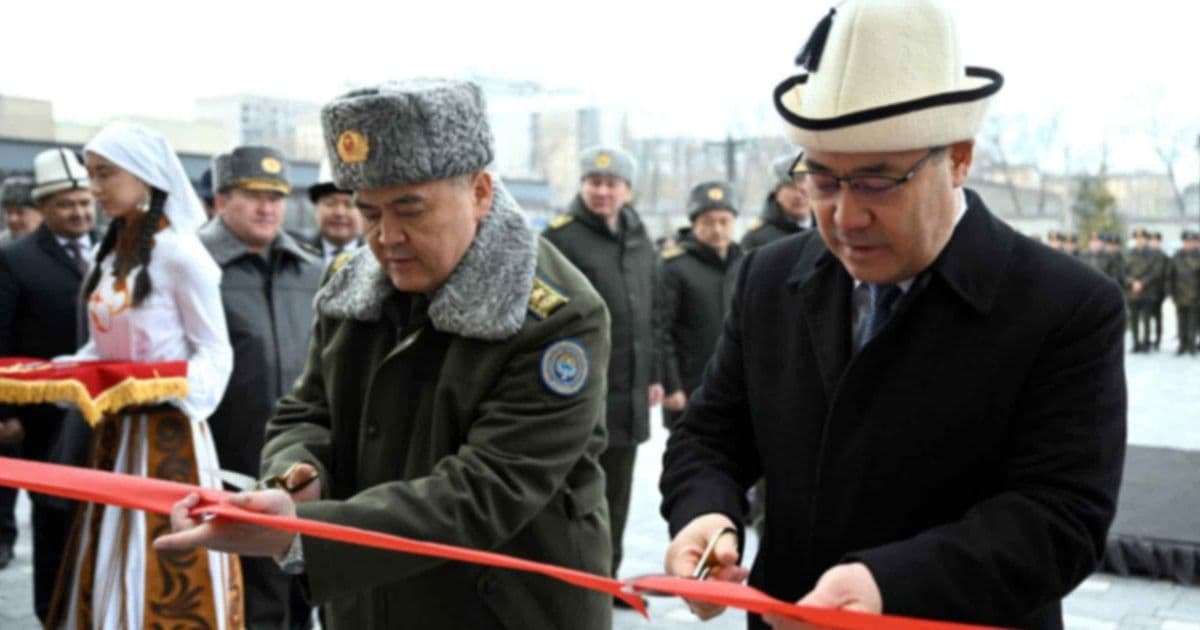
The indictment of Kamchybek Tashiev, Kyrgyzstan’s former security chief and a key ally of President Sadyr Japarov, raises the risk of political upheaval ahead of the January 2027 presidential election, prompting analysts to reassess the country’s fragile power balance and its impact on the economy.
Kyrgyzstan’s indictment of former security chief clouds 2027 election outlook
Kyrgyzstan’s prosecutor‑general office announced on June 1 that Kamchybek Tashiev, the former head of the State Committee for National Security (GKNB) and a longtime confidant of President Sadyr Japarov, has been formally charged with attempting to orchestrate a coup against the president. The indictment cites evidence of secret meetings with opposition figures and the alleged procurement of weapons intended for a violent power grab.
Market context
The political shock arrives at a time when Kyrgyzstan’s economy is still riding the tailwinds of a post‑pandemic rebound. Real GDP grew 5.8 % in 2025, driven by a surge in remittances, a 12 % jump in construction activity, and a modest rise in copper exports from the Kumtor mine. Foreign direct investment (FDI) inflows hit $820 million in 2025, the highest level since 2019, largely thanks to Chinese infrastructure projects and a handful of European renewable‑energy pilots.
However, the country’s fiscal position remains tight. The 2025 budget deficit stood at 4.2 % of GDP, financed by a $250 million International Monetary Fund (IMF) standby arrangement. Any escalation of political risk could jeopardize the next tranche of IMF funding, which is scheduled for disbursement in Q3 2026 and is contingent on maintaining macro‑economic stability.
What it means for the election and the economy
Election timing and candidate field – The indictment is likely to force a reshuffle of the ruling coalition. Tashiev’s removal weakens the “Japarov‑Tashiev bloc,” which has dominated the Supreme Council (Jogorku Kenesh) since 2022. Potential challengers from the opposition Social Democratic Party and the Ata‑Meken party may now see a clearer path to fielding a credible presidential candidate, but they will also have to navigate a fragmented pro‑president camp.
Investor sentiment – Bloomberg’s Emerging Markets Index slipped 1.3 % on the news, and the Kyrgyz som fell 4.5 % against the US dollar in intra‑day trading. Regional investors are watching for signs of a crackdown or a power vacuum; a prolonged standoff could trigger capital outflows, raising the cost of sovereign borrowing. The upcoming sovereign bond issuance slated for October 2026 may see yields rise from the current 7.2 % to above 8.5 % if political uncertainty deepens.
Policy continuity – Japarov’s administration has pursued a mixed‑model economic strategy: liberalising the mining sector while maintaining state control over strategic utilities. If the indictment leads to a reshuffling of key ministries, policy continuity could be disrupted, affecting projects such as the $1.1 billion China‑Kyrgyzstan highway upgrade and the planned solar‑farm consortium backed by the European Bank for Reconstruction and Development (EBRD).
Security sector reforms – The charges against Tashiev may prompt a broader review of the GKNB’s role. International partners, including the United States and the European Union, have long urged Kyrgyzstan to increase civilian oversight of its intelligence services. A credible reform agenda could improve the country’s standing with the IMF and attract additional development assistance, but it also risks alienating hard‑line security elements who could resist reforms.
Strategic implications
- For regional powers – Russia and China, both maintaining military bases in Kyrgyzstan, will monitor the situation closely. A destabilised Kyrgyzstan could open space for increased Russian security involvement or a push by China to deepen its Belt‑and‑Road investments to secure its geopolitical foothold.
- For multinational corporations – Companies operating in the mining and construction sectors should reassess country‑risk models. Firms such as Kyrgyz Energy Corp and Silk Road Infrastructure Ltd. may need to renegotiate contract terms or consider insurance hedges against political disruption.
- For the electorate – Voter turnout is projected at 68 % for the January 2027 election, according to the Central Election Commission. The indictment may galvanise anti‑establishment sentiment, potentially boosting support for reform‑oriented candidates who promise to curb elite patronage networks.
Bottom line
The indictment of Kamchybek Tashiev injects a significant degree of uncertainty into Kyrgyzstan’s political calculus just months before a pivotal election. While the economy has shown resilience, any escalation of internal conflict could erode investor confidence, pressure the IMF program, and reshape the balance of power among regional actors. Stakeholders—from policymakers to multinational investors—will need to monitor developments closely and prepare contingency plans for a range of political outcomes.
Comments
Please log in or register to join the discussion