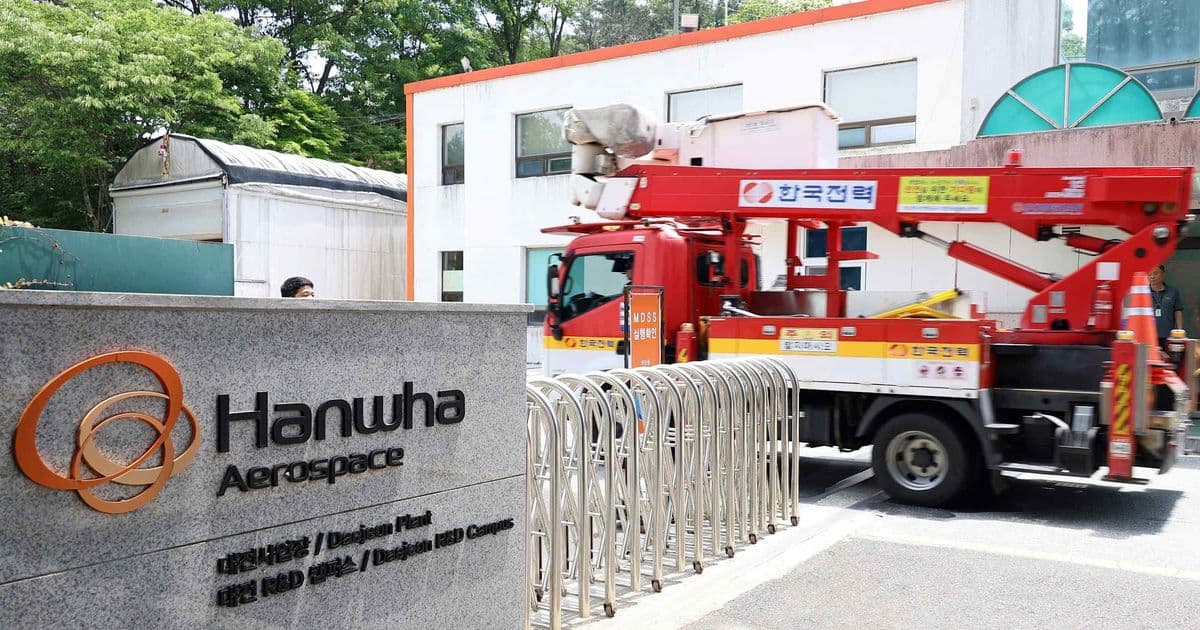
An explosion at Hanwha Aerospace’s Daejeon plant killed five workers, prompting investigations into safety protocols and raising questions about the financial impact on the company amid rising defense budgets driven by regional conflicts.
Business news
Five workers were killed and several others injured when a blast ripped through Hanwha Aerospace’s manufacturing facility in Daejeon, South Korea, on June 1, 2026. Local fire and police officials said the explosion occurred in a building that produces rocket engines and missile components for the Korean‑American joint defense market. Hanwha Aerospace, a subsidiary of the Hanwha Group, confirmed the tragedy in a brief statement and said it would cooperate fully with the investigation, which is being led by the Ministry of Employment and Labor and the Korea Occupational Safety and Health Agency.
The company halted production at the site and activated its emergency response plan, diverting orders to other plants in Changwon and Seosan. Shareholders received an emergency notice on the Korea Exchange (KRX) that trading in Hanwha Aerospace (KRX: 012450) would be suspended for two hours pending a detailed incident report. The suspension lifted after the market opened, and the stock fell 3.8 % to ₩68,200, the steepest decline since the 2022 missile‑engine fire at a rival firm.
Market context
Hanwha Aerospace is South Korea’s second‑largest defense contractor after Korea Aerospace Industries (KAI) and a key supplier to the U.S. Indo‑Pacific Command. In 2025 the company posted revenue of ₩13.2 trillion ($10.5 bn) and a net profit of ₩820 billion, driven by contracts for the K9 self‑propelled howitzer, the KAI‑K30 air‑defence system, and a series of joint development projects with Lockheed Martin on the next‑generation Patriot missile.
The incident arrives as Seoul’s defense budget is set to rise to 5.2 % of GDP for 2026, the highest share since the early 1990s. The increase is being funded by heightened security concerns over North Korea’s missile program, the ongoing war in Ukraine, and a series of maritime disputes with China. According to the Stockholm International Peace Research Institute (SIPRI), South Korea’s arms imports grew 12 % in 2025, reaching $9.3 bn, while domestic procurement rose 9 %.
Analysts at Bloomberg Intelligence estimate that the safety breach could shave 0.4 % off Hanwha Aerospace’s 2026 earnings guidance, translating to a potential earnings miss of roughly ₩30 billion. The company’s credit rating remains at BBB+ (S&P), but rating agencies are watching the situation closely because a repeat incident could trigger higher insurance premiums and stricter regulatory oversight.
What it means
Short‑term financial pressure – The immediate production slowdown is likely to delay deliveries of the K9A2 upgrade kits, which are slated for export to Poland and Indonesia. Late deliveries could invoke penalty clauses in contracts worth up to ₩150 billion, pressuring the company’s cash flow.
Regulatory scrutiny – South Korea’s Ministry of Trade, Industry and Energy has announced a sector‑wide safety audit for all defense manufacturers. Companies that fail to meet new occupational‑health standards could face fines of up to ₩500 million and temporary suspension of export licences.
Strategic realignment – Hanwha may accelerate its diversification into civilian aerospace and renewable‑energy propulsion systems, where the regulatory environment is less stringent. The firm recently announced a partnership with European engine maker Safran to develop hybrid‑electric aircraft engines, a market projected to reach €45 bn by 2035.
Investor sentiment – While the stock dip reflects immediate concerns, long‑term investors are weighing the company’s entrenched position in the U.S.–Korea defense supply chain. The firm’s joint‑venture with Lockheed on the THAAD missile‑defence system remains a multi‑year, $2.1 bn contract that should provide a revenue cushion.
Geopolitical implications – The incident underscores the vulnerability of critical‑military infrastructure in a region where supply‑chain resilience is becoming a national security priority. Seoul is likely to push for tighter standards across the defense industrial base, potentially reshaping how multinational projects are managed.
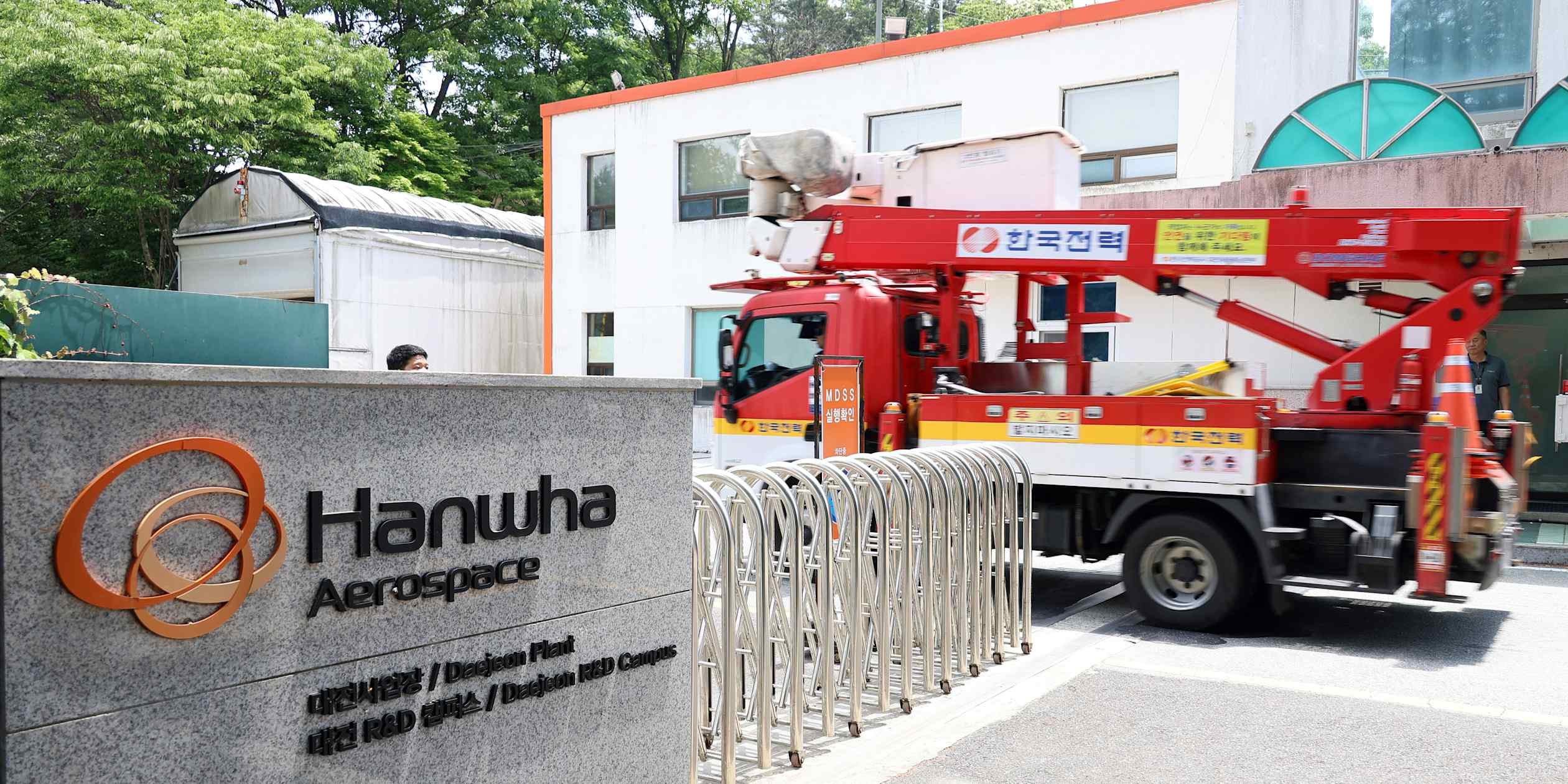
The tragedy at Hanwha Aerospace serves as a stark reminder that rapid defense‑spending growth must be matched by rigorous safety and risk‑management practices. How the company navigates the investigation, mitigates production delays, and adapts its strategic focus will shape its financial outlook and its role in South Korea’s expanding defence ecosystem.
Comments
Please log in or register to join the discussion