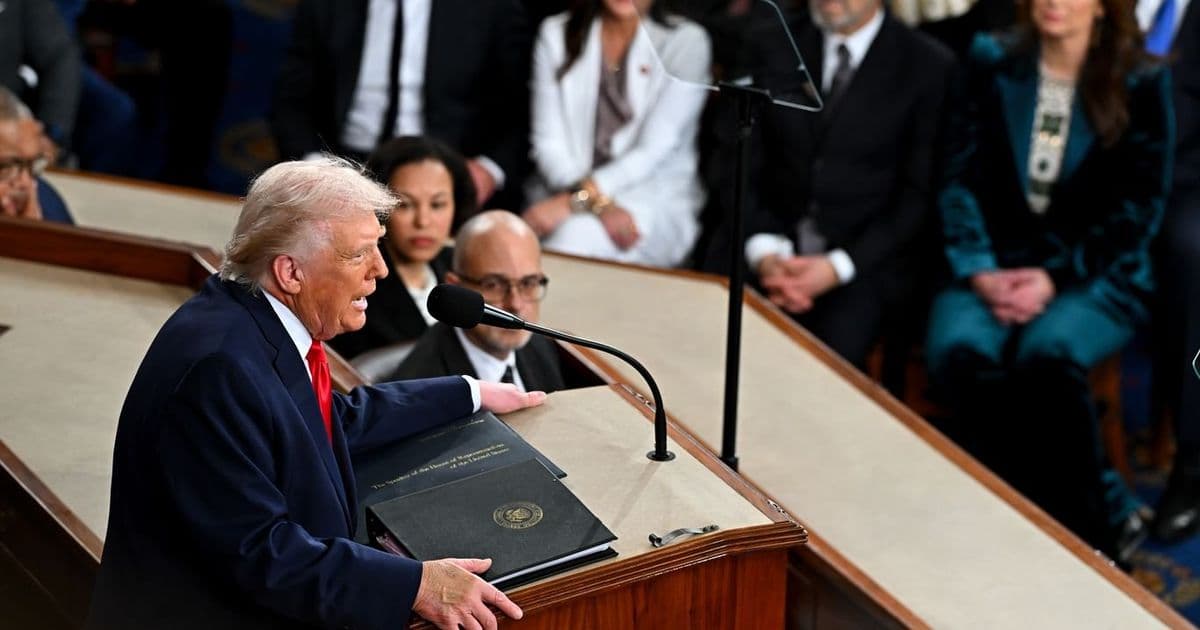
President Trump's proposal to replace income taxes with tariffs would require import duties exceeding 100% on all goods, creating massive economic disruption and higher consumer prices.
President Trump's State of the Union address reignited debate over his proposal to replace the federal income tax system with tariffs on imported goods. The idea, while politically appealing to some, faces severe mathematical and economic hurdles that make it practically impossible to implement without devastating consequences for American consumers and businesses.
The Numbers Don't Add Up
The federal government collected approximately $2.17 trillion in individual income taxes during fiscal year 2024. To replace this revenue entirely through tariffs would require import duties far beyond anything the United States has ever implemented.
Current U.S. tariffs average around 2-3% on most imported goods. Even if every single dollar of imports were subject to tariffs—which is impossible since many imports are intermediate goods used in American manufacturing—the duties would need to average over 100% to match current income tax revenue.
"The math simply doesn't work," says Dr. Sarah Chen, trade economist at the Peterson Institute for International Economics. "You'd need to more than double the price of virtually everything Americans buy from overseas, and that's before accounting for the fact that many imports are raw materials or components that go into products made in America."
The Consumer Impact
If implemented, Trump's tariff-only tax system would dramatically increase prices across virtually every consumer category. Clothing, electronics, automobiles, and household goods would see price increases of 50-100% or more.
Consider a typical middle-class family that spends $5,000 annually on imported goods. Under a tariff system replacing income taxes, that same shopping cart could cost $7,500 to $10,000, wiping out any tax savings from eliminating income taxes.
"The regressive nature of this proposal is staggering," notes Mark Richardson, tax policy analyst at the Tax Foundation. "Lower-income households spend a much higher percentage of their income on imported goods. They'd bear the brunt of these price increases while potentially seeing little benefit if they currently pay little or no income tax."
Global Trade Consequences
Implementing such high tariffs would likely trigger immediate retaliation from trading partners. The World Trade Organization allows counter-tariffs when countries violate trade agreements, and nations would almost certainly respond to protect their own industries.
The United States imported approximately $3.2 trillion in goods and services in 2024. If all imports faced 100%+ tariffs, trading partners would likely impose equivalent duties on American exports, potentially costing millions of jobs in export-dependent industries like agriculture, manufacturing, and technology.
Historical Precedent
Before the income tax was permanently established in 1913, tariffs did provide the majority of federal revenue. However, the economic context was dramatically different:
- The U.S. imported far less as a percentage of GDP
- Manufacturing was less dependent on global supply chains
- Consumer goods were a smaller portion of household spending
- The federal government's responsibilities were much more limited
"We're not comparing apples to apples," explains Dr. Robert Thompson, economic historian at Harvard University. "The Smoot-Hawley tariffs of 1930, which raised duties to historically high levels, contributed to the severity of the Great Depression. The global economy has evolved far beyond what tariffs alone can support."
The Political Reality
While the proposal generates headlines and appeals to protectionist sentiment, most economists across the political spectrum dismiss it as unworkable. The Tax Policy Center estimates that even a modified version with tariffs at 25-30% would fall hundreds of billions short of replacing income tax revenue.
Some Republican lawmakers have proposed hybrid systems combining lower tariffs with consumption taxes like a national sales tax or value-added tax. These approaches might generate sufficient revenue but would still face significant political opposition and implementation challenges.
What It Means for Businesses
For technology companies and other businesses dependent on global supply chains, the tariff-only proposal creates enormous uncertainty. Many tech products contain components from multiple countries, and determining appropriate tariff rates would be administratively complex.
"The tech industry thrives on global collaboration and just-in-time manufacturing," says Maria Gonzalez, technology sector analyst. "Disrupting these supply chains with blanket tariffs would increase costs, slow innovation, and potentially shift production away from the United States rather than bringing it back."
The Bottom Line
While replacing income taxes with tariffs makes for provocative political rhetoric, the economic reality makes it an impractical solution. The revenue gap is too large, the consumer price increases too severe, and the international trade consequences too damaging.
As the debate continues, businesses and consumers should prepare for continued discussion of trade policy changes, but not expect a complete overhaul of the tax system along these lines. The numbers simply don't add up, and the economic disruption would be too severe for even the most ardent supporters to accept.
Comments
Please log in or register to join the discussion