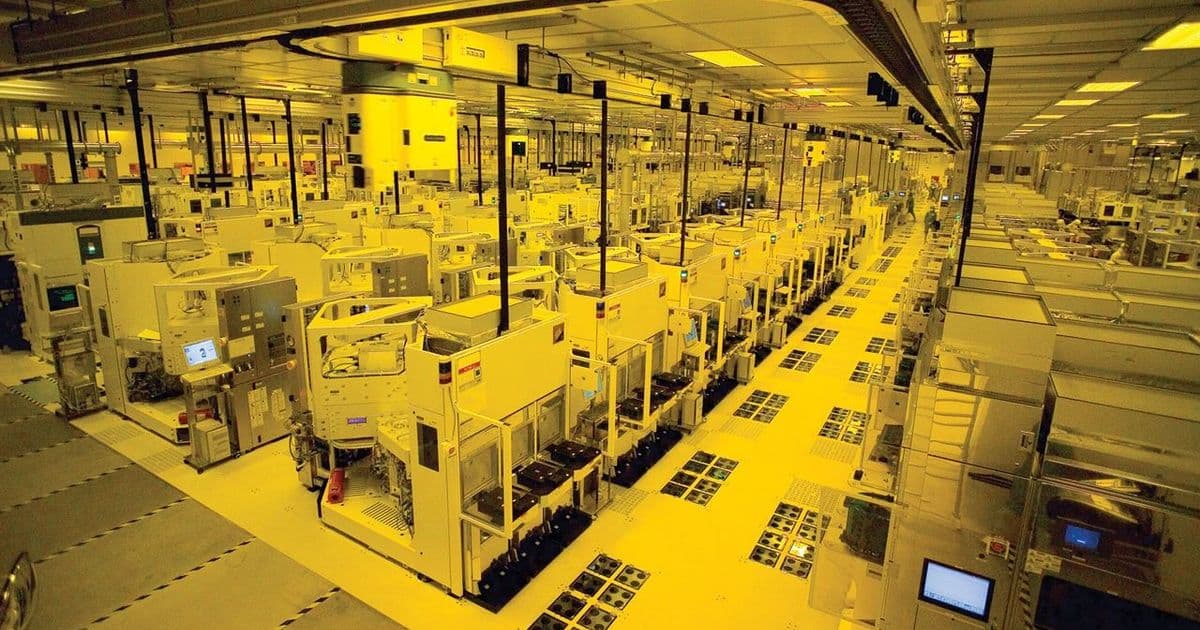
Bipartisan group calls for sweeping restrictions on semiconductor manufacturing equipment exports to China, targeting ASML lithography systems and other advanced tools.
A bipartisan group of U.S. lawmakers has escalated pressure on the Trump administration to implement comprehensive export controls on semiconductor manufacturing equipment destined for China, with particular focus on advanced lithography systems produced by Dutch company ASML.
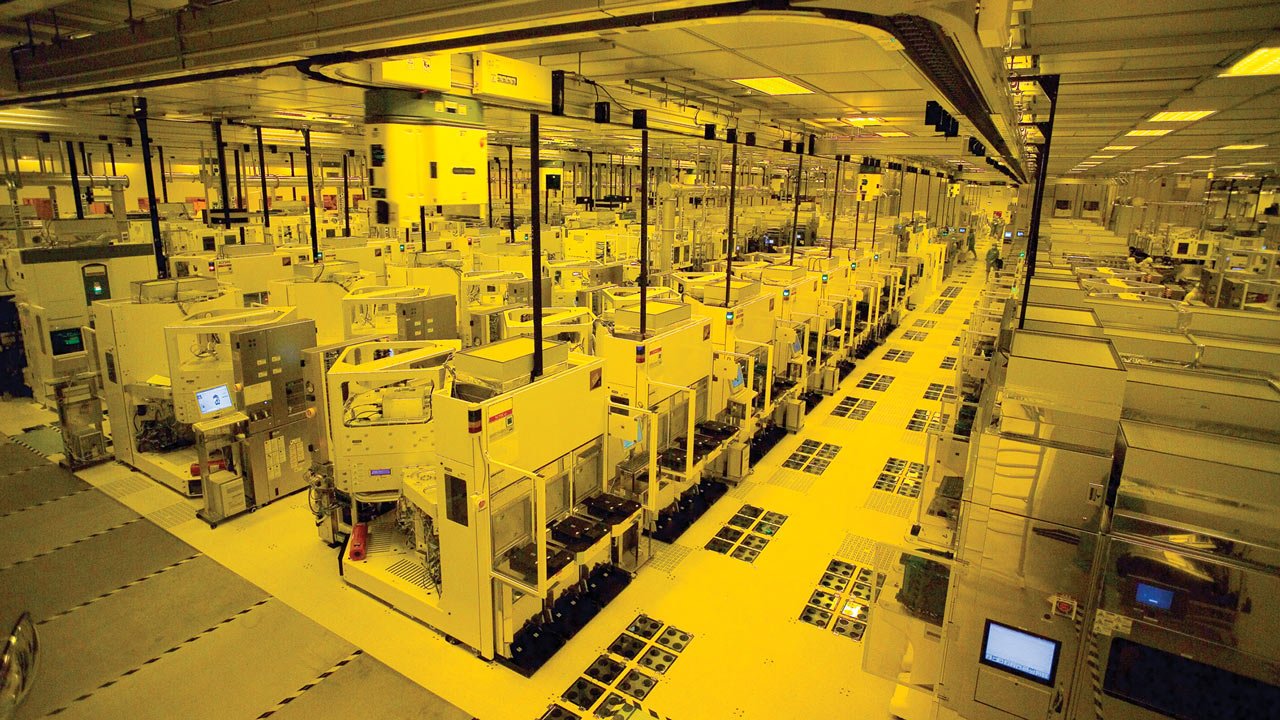
The letter, spearheaded by House Select Committee on China Chairman John Moolenaar and House Foreign Affairs Committee Chairman Brian Mast, was sent to Secretary of State Marco Rubio and Commerce Secretary Howard Lutnick. The lawmakers are demanding that the administration not only tighten existing restrictions but also leverage diplomatic channels to ensure allied nations adopt similar export policies.
Current Export Control Framework
Under existing regulations, American companies must obtain export licenses to ship wafer fabrication equipment (WFE) to Chinese entities. These controls currently restrict tools that can produce:
- Logic chips on 14nm/16nm manufacturing processes
- DRAM on 18nm-class half-pitch fabrication
- 3D NAND with 128 or more layers
However, the lawmakers argue these restrictions contain significant loopholes. American companies can still obtain licenses to supply these very tools to entities that formally do not produce the aforementioned advanced semiconductors, creating a regulatory gap that Chinese manufacturers have exploited.
Proposed Expansion of Controls
The new framework proposed by the bipartisan group would prohibit the sale of virtually all WFE to China-based entities, with the sole exception being tools that can be manufactured domestically within China. This represents a dramatic expansion from current targeted restrictions to broad country-level limitations.
The lawmakers specifically highlight several categories of equipment as critical chokepoints:
Advanced Lithography Systems ASML's extreme ultraviolet (EUV) lithography machines, which are essential for producing chips at 7nm and below, have been a particular focus of U.S. export controls. These systems, costing over $150 million each, represent the most sophisticated and difficult-to-replicate semiconductor manufacturing technology.
Etching and Deposition Tools Sophisticated etching systems and atomic layer deposition (ALD) tools from companies like Tokyo Electron are also identified as critical chokepoints that enable advanced semiconductor manufacturing.
Enforcement Challenges
The letter acknowledges significant enforcement difficulties under the current system. Verification visits to Chinese facilities require approval from Chinese authorities, which can take weeks or months to arrange and are conducted under supervision. This delay and oversight make it difficult to ensure compliance with export controls.
Chinese companies like Semiconductor Manufacturing International Corporation (SMIC) have continued to develop their process technologies using advanced manufacturing tools, while various entities funded by Huawei or even the federal government have reportedly engaged in reverse engineering efforts to build similar systems domestically.
Reverse Engineering Concerns
Beyond the direct export of complete systems, the lawmakers express concern about Chinese access to subcomponents of chipmaking equipment. This access not only enables Chinese companies to repair and maintain existing tools but also facilitates reverse engineering efforts to develop indigenous alternatives.
The letter emphasizes that without tighter export controls on spare parts and subcomponents, China could eventually replace foreign equipment with locally developed alternatives, potentially undermining the effectiveness of export controls over time.
Allied Coordination Strategy
The lawmakers are calling for aggressive diplomatic engagement with allied nations, particularly the Netherlands and Japan, which are home to critical semiconductor equipment manufacturers. The letter demands "clear and reasonable deadlines" for allied implementation of similar controls, with the threat that the United States may act unilaterally if necessary.
This approach reflects growing frustration with the pace of international coordination on semiconductor export controls. While the U.S. has implemented increasingly stringent restrictions, the ability of allied nations to continue supplying certain equipment to China has limited the effectiveness of these measures.
Servicing Restrictions
The letter also identifies equipment servicing as a potential area for tighter regulation. Currently, servicing rules adhere to export control regulations, meaning that certain restricted advanced systems can still be maintained as long as they are installed at approved buyers.
Since these systems require ongoing maintenance and technical support to remain operational, limiting servicing could effectively reduce the practical lifespan of already installed equipment, even if the hardware itself cannot be directly restricted.
Timeline and Implementation
The lawmakers have requested a briefing within the next month on the administration's strategy for securing allied cooperation on countrywide controls. This aggressive timeline underscores the urgency with which the bipartisan group views the challenge of maintaining U.S. semiconductor leadership.
"The window to secure America's semiconductor advantage is narrowing," the letter concludes, emphasizing the strategic importance of semiconductor manufacturing capabilities in the broader U.S.-China technological competition.
Industry Context
These proposed restrictions come against the backdrop of significant investment in domestic semiconductor manufacturing capacity in the United States, including the CHIPS Act, which provides over $52 billion in subsidies for domestic chip production.
However, equipment manufacturers like ASML, Applied Materials, and Tokyo Electron have expressed concerns about the impact of export controls on their global business operations and the potential for Chinese companies to accelerate indigenous development efforts in response to restrictions.
The debate reflects a fundamental tension in U.S. technology policy: balancing national security concerns about technological competition with China against the economic interests of American companies and the global nature of semiconductor supply chains.
The outcome of this legislative push could significantly reshape the global semiconductor equipment market and accelerate China's efforts to develop indigenous alternatives to Western manufacturing technology.
Comments
Please log in or register to join the discussion