
Uber engineers redesigned their mobile analytics architecture to solve fragmentation issues across iOS and Android apps, introducing standardized event instrumentation through shared UI components and centralized pipelines.
Uber's engineering team has fundamentally restructured how mobile analytics are captured across their rider and driver applications, addressing long-standing challenges with fragmented instrumentation that hampered data reliability. As Uber scaled, decentralized event logging led to inconsistent semantics, redundant implementations, and unreliable cross-platform metrics—ultimately impacting product decisions.
The Fragmentation Challenge
With over 40% of mobile events implemented as custom solutions by different feature teams, core issues emerged:
- Shared UI components lacked standardized analytics hooks
- Similar user interactions produced divergent event structures
- Cross-platform data comparisons became unreliable
- Metadata conventions varied across teams
This fragmentation eroded confidence in metrics used for critical product decisions and user experience measurement.
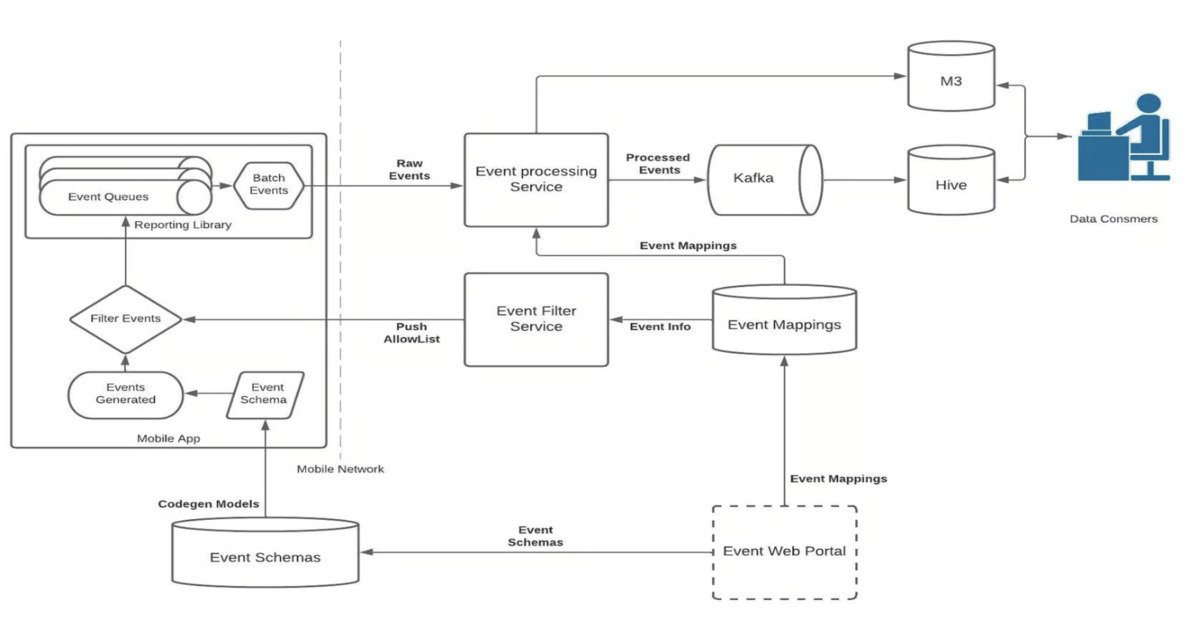
Platform-Led Standardization
The solution shifted instrumentation responsibility from feature teams to platform infrastructure:
- Standardized Event Taxonomy: Product, design, and data science teams defined core events (taps, impressions, scrolls) using shared schemas
- Code-Generated Instrumentation: Events are automatically generated from schemas and integrated into UI components
- Centralized Emission: All events flow through a unified reporting layer to Uber's analytics pipelines
- Automated Metadata: Contextual data (location, list positions, scroll direction) is attached systematically
Component-Centric Implementation
The breakthrough came from embedding analytics directly into UI components via AnalyticsBuilder classes. These builders handle:
- Event lifecycle management
- Metadata attachment
- Emission logic
- Cross-platform consistency
Performance testing confirmed the approach added no significant overhead—critical for resource-constrained mobile devices.
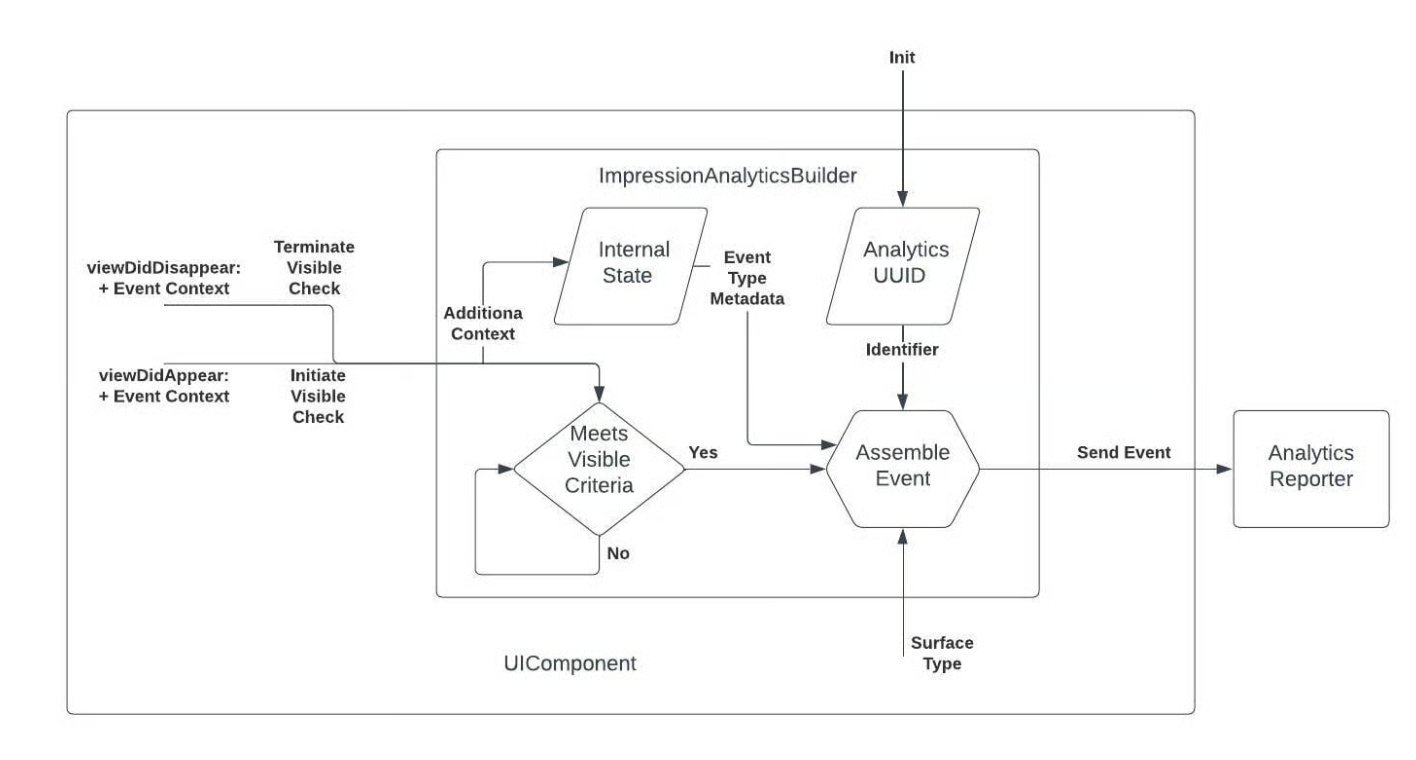 Data flow for ImpressionAnalyticsBuilder event generation (Source: Uber Blog Post)
Metadata Standardization
Uber implemented a hierarchical metadata model:
| Layer | Examples | Collection Method |
|---|---|---|
| App-level | Location, User IDs | Automatic attachment |
| Event-type | List indices, Scroll direction | AnalyticsBuilder capture |
| UI Surface | Button types, Container IDs | Thrift model standardization |
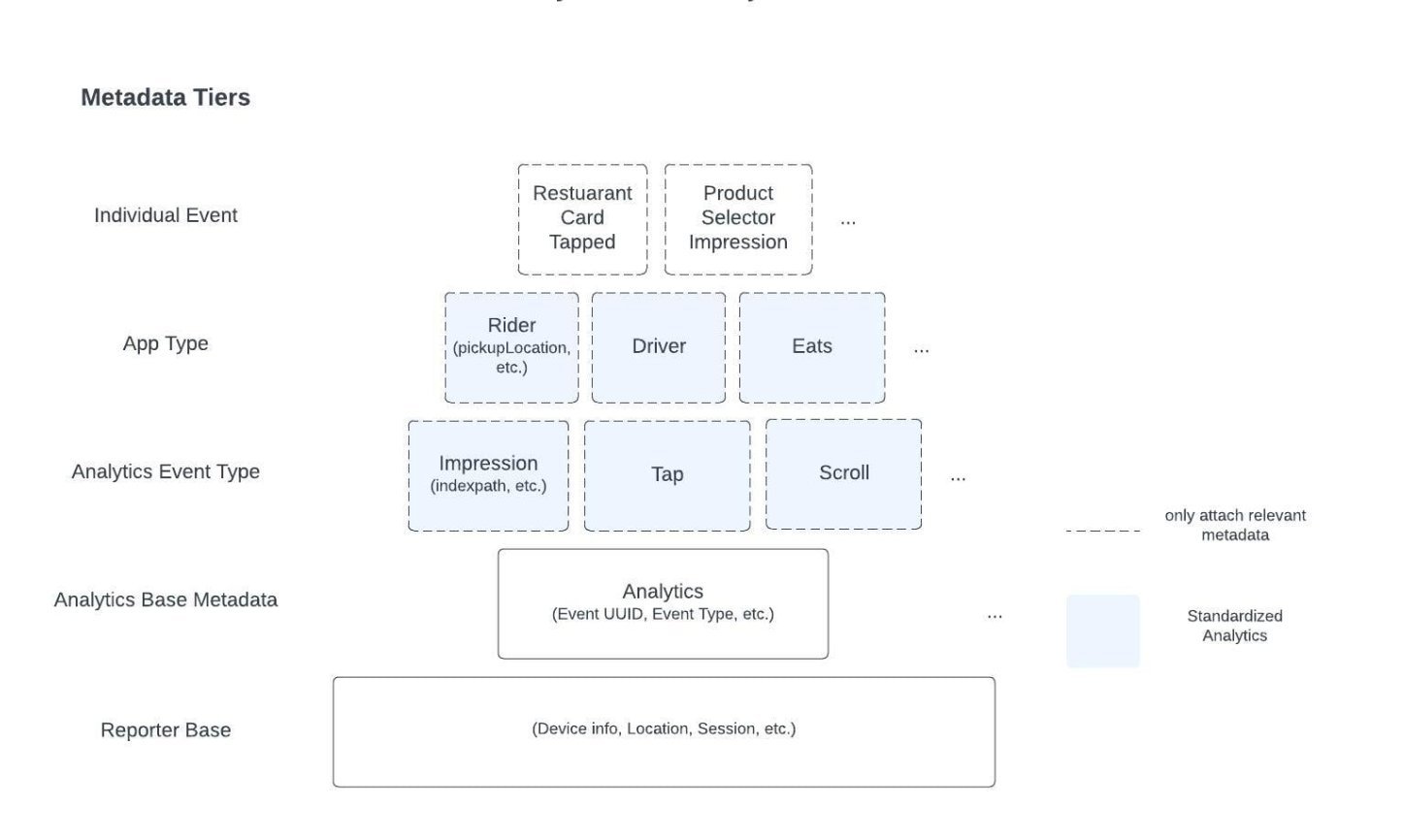 Analytics metadata pyramid (Source: Uber Blog Post)
Validation and Migration
Engineers ran a dual-emission pilot comparing legacy and new systems:
- Verified event volume parity across iOS/Android
- Validated metadata consistency
- Identified platform-specific discrepancies
- Discovered optimization opportunities (like consolidating row events)
The migration leveraged:
- Automated code scanning to identify migration candidates
- Linters blocking non-standard event implementations
- Platform team handling bulk migration
Outcomes and Future Direction
The standardized platform delivered:
- 90% reduction in custom event instrumentation
- Reliable cross-platform metric comparisons
- Consistent semantic definitions
- Out-of-the-box analytics for common UI patterns
Future work focuses on componentization—assigning unique IDs to UI elements for automatic event naming and further reducing developer effort.
This platform-first approach demonstrates how thoughtful standardization of instrumentation, combined with centralized infrastructure, can transform analytics from a fragmented burden into a consistent, trustworthy foundation for product decisions.
Explore Uber's detailed technical implementation in their engineering blog post.
Comments
Please log in or register to join the discussion