
The UK government is accelerating predictive policing tools and surveillance infrastructure under crime prevention rhetoric, raising concerns about precrime systems, biometric tracking, and protest suppression.

The Ministry of Justice's development of a 'murder prevention' system represents more than just another crime-fighting tool. This initiative aims to identify individuals deemed high-risk for committing lethal violence by aggregating data across social care, policing, and education systems. While framed as research for early intervention, its core methodology operates on predicting future behavior rather than responding to actual crimes—a concept uncomfortably reminiscent of Philip K. Dick's precrime fiction.
What makes this development notable is its emergence against contradictory evidence. Crime statistics from the Office for National Statistics show homicides in England and Wales have steadily declined, with only 594 recorded in the year ending March 2021—a fraction of peak early-2000s levels. Simultaneously, police forces face severe budget constraints, with the Metropolitan Police planning to cut 1,700 positions to address a £260 million deficit. Yet rather than scaling back, resources are being redirected toward algorithmic surveillance and anticipatory enforcement systems.
The Crime and Policing Bill 2025 accelerates this trajectory by granting police access to DVLA driver license records. Civil liberties organizations argue this effectively converts the database into a biometric identification tool, especially when integrated with facial recognition networks already deployed in shopping centers, housing estates, and transit hubs. Accuracy concerns persist: Multiple studies confirm these systems misidentify Black and Brown individuals at disproportionately high rates, yet deployment concentrates in working-class urban areas.
Prime Minister Keir Starmer's endorsement of live facial recognition technology following racist attacks in 2024 drew sharp criticism from advocacy groups. Statewatch coordinated an open letter signed by over two dozen organizations warning the UK risks becoming 'an outlier in the democratic world' by adopting technology lacking legal frameworks and proven discriminatory impacts. Critics noted the government's response focused not on root causes of violence but on expanding surveillance powers over already over-policed communities.
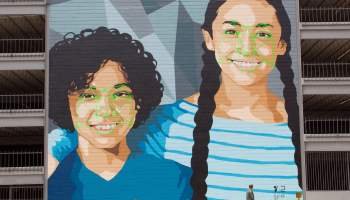
Parallel developments target protest and dissent management. Laws criminalizing slow marches, locking-on tactics, and infrastructure disruption—initially drafted in response to groups like Just Stop Oil—now provide broad authority to preemptively contain unrest. Surveillance tools originally justified for counter-terrorism increasingly monitor social movements. This legal framework arrives as military actions abroad increase risks of domestic retaliation, creating justification for further monitoring.
Counterarguments emphasize public safety benefits. Proponents suggest predictive systems could redirect resources toward individuals needing social support before crises occur. The Home Office maintains DVLA access remains separate from facial recognition initiatives, though concedes integration remains technically feasible. Government statements consistently frame these measures as necessary adaptations to evolving security challenges.
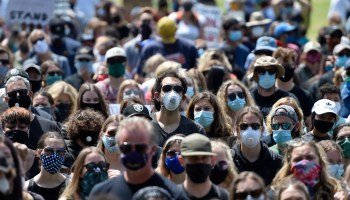
What emerges is an infrastructure designed for scalability: Risk-scoring algorithms, biometric surveillance, and protest restrictions form an architecture easily expanded to trade unionists, housing activists, or migrant organizers. The precrime logic—intervening based on statistical probability rather than criminal acts—fundamentally alters the relationship between state and citizen. As these systems embed deeper into legal frameworks and physical infrastructure, their application increasingly determines who gets monitored, restricted, or preemptively restrained based on algorithmic assessments of potential threat.
For further context on legal challenges to facial recognition, see Can I hide my face from facial recognition cameras? and analysis of protest restrictions in Face masks at protests: If not now, when?.
Comments
Please log in or register to join the discussion