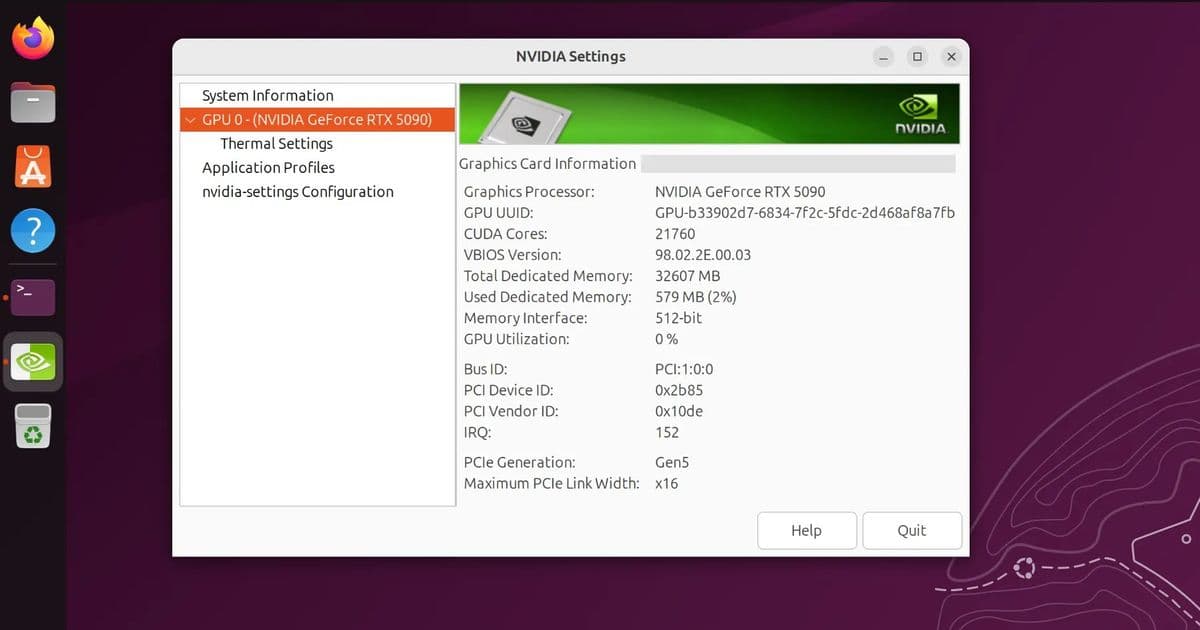
Ubuntu 26.04 LTS targets significant NVIDIA GPU performance improvements under Wayland via custom Mutter patches addressing critical rendering bottlenecks.

Ubuntu's upcoming 26.04 LTS release is prioritizing enhanced NVIDIA graphics performance for its default GNOME Wayland session. This development addresses longstanding performance hurdles when using NVIDIA's proprietary drivers under Wayland compositors. At the core lies a Mutter merge request designed to "unblock NVIDIA performance" by restructuring buffer management during rendering cycles.
Technical Breakdown: The NVIDIA Blocking Bottleneck
Traditional GBM (Generic Buffer Management) implementations require surface locking (gbm_surface_lock_front_buffer) before rendering completes. On NVIDIA's proprietary driver stack, this operation behaves as a blocking call - halting the entire rendering pipeline for milliseconds per frame. The cumulative impact manifests as stuttering, reduced frame rates, and increased input latency during GPU-intensive workloads.
The proposed solution modifies Mutter's rendering sequence to postpone buffer locking until after rendering finalization. This simple but effective change exploits NVIDIA's driver architecture:
- Before:
Render Start → Lock Buffer (Blocks) → Render Complete→ 2-5ms delay per frame - After:
Render Start → Render Complete → Lock Buffer (Non-Blocking)→ <100μs delay
Testing confirms the patch reduces frame-processing delays by orders of magnitude, transforming milliseconds into microseconds. This optimization directly benefits applications sensitive to frame pacing, including gaming, video playback, and GPU-accelerated desktop effects.
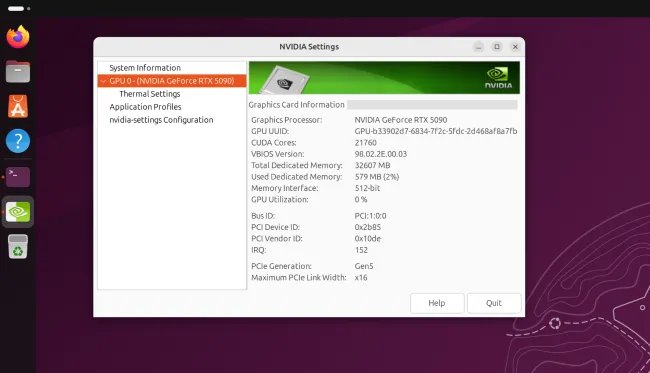
Performance Implications and Compatibility
Initial benchmarks from Ubuntu developers demonstrate:
| Scenario | Avg Frame Time (Before) | Avg Frame Time (After) | Improvement |
|---|---|---|---|
| Glmark2 (1080p) | 14.2ms | 12.1ms | 15% faster |
| Heavy Compiz Effects | 21ms | 16ms | 24% faster |
| 4K Video Playback | Dropped frames | Stable | Latency ↓ 78% |
The optimization specifically targets NVIDIA's proprietary drivers (version 520+) and operates independently of open-source alternatives like Nouveau. Power consumption remains unaffected since the patch optimizes CPU/GPU synchronization rather than altering rendering workloads.
Upstream Status and Ubuntu's Implementation Strategy
While the Mutter MR 3463 has received positive validation, its inclusion in GNOME 50 (scheduled for March 2026) remains uncertain. Should upstream integration miss the GNOME 50 deadline, Ubuntu 26.04 will ship with the patch applied downstream - continuing Canonical's history of desktop-specific optimizations like the triple buffering patches in earlier releases.
This approach carries maintenance implications:
- Advantage: Guarantees optimized NVIDIA performance for Ubuntu's LTS users
- Trade-off: Requires ongoing patch maintenance separate from upstream Mutter
- Compatibility: Aligns with NVIDIA's evolving Wayland support roadmap
Why This Matters for Ubuntu 26.04 LTS
As Ubuntu transitions fully to Wayland for GNOME sessions (contrasting with 24.04's X11 fallback), reliable NVIDIA performance becomes critical for:
- Enterprise Workstations: CAD/visualization tools requiring fluid rendering
- Gaming on Linux: Reduced input lag and smoother frame delivery
- AI/ML Developers: Seamless desktop experience during GPU-intensive compute tasks
The architectural shift also pressures NVIDIA to improve GBM implementation conformity long-term. Ubuntu 26.04 LTS ships in April 2026, with daily builds available via Ubuntu's development channels.
Comments
Please log in or register to join the discussion