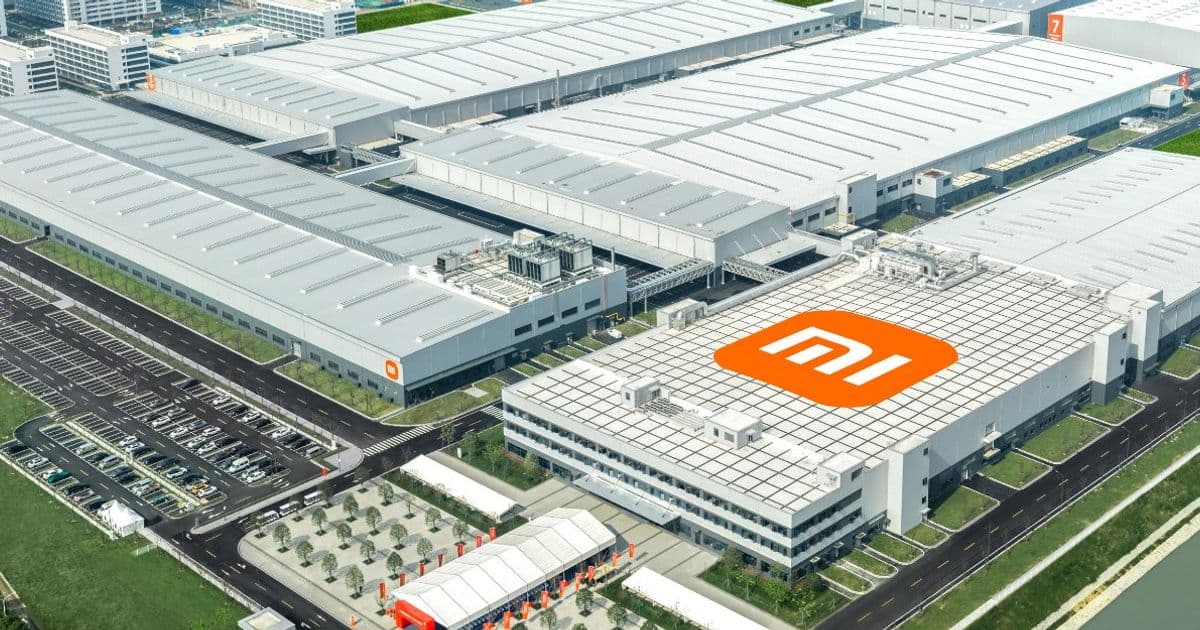
Xiaomi's humanoid robots begin trial operations at its automobile factory, leveraging vision-language-action AI to perform autonomous tasks as the company expands into advanced manufacturing.
Xiaomi Advances Humanoid Robots in Manufacturing, Targets Large-Scale Factory Deployment
Xiaomi has taken a significant step toward integrating humanoid robots into its manufacturing operations, with CEO Lei Jun announcing that the company's robots have begun trial operations at its automobile factory. The Chinese tech giant, best known for its smartphones, is now pushing aggressively into advanced manufacturing and robotics as it seeks new growth drivers beyond its core consumer electronics business.
From Smartphones to Smart Factories
The move represents a strategic pivot for Xiaomi as it diversifies beyond its traditional smartphone and consumer electronics markets. The company has been investing heavily in electric vehicles and now appears to be positioning itself as a player in the emerging field of humanoid robotics for industrial applications. This expansion comes as Xiaomi seeks to establish itself in emerging technologies where it can leverage its existing expertise in hardware, software, and AI.
Technical Foundation: Vision-Language-Action AI
At the heart of Xiaomi's humanoid robot initiative is its general-purpose vision-language-action (VLA) foundation model, dubbed Xiaomi-Robotics-0. This AI system integrates multimodal perception capabilities with reinforcement learning technologies, enabling the robots to process visual information, understand language commands, and execute physical actions in a coordinated manner.
The VLA approach represents a significant advancement in robotics, as it allows machines to operate more autonomously in complex, real-world environments. Rather than being limited to pre-programmed, repetitive tasks, these robots can adapt to variations in their surroundings and learn from experience—crucial capabilities for the dynamic conditions found in modern manufacturing facilities.
Initial Applications in Automobile Manufacturing
During the trial phase, Xiaomi's humanoid robots have been deployed to perform specific tasks at assembly stations within the company's automobile factory. The initial applications include loading self-tapping nuts during assembly processes and transporting material boxes between different areas of the production line. These tasks, while seemingly simple, require precise coordination, spatial awareness, and the ability to handle objects of varying shapes and sizes.
Lei Jun noted that the robots have achieved autonomous operation in these initial tasks, marking an important milestone in the technology's development. The ability to perform these functions without constant human oversight represents a significant step toward practical deployment of humanoid robots in industrial settings.
Performance Metrics and Continuous Improvement
According to Lei, the company is tracking key performance indicators to measure the robots' effectiveness in the factory environment. These metrics include mean time between failures (MTBF), which indicates the reliability and durability of the robotic systems, and single-task success rates, which measure the accuracy and consistency of the robots' performance in specific operations.
The CEO stated that these indicators are "steadily improving," suggesting that the company is in an iterative development phase where the robots are being refined based on real-world performance data. This continuous improvement approach is essential for building robust systems capable of operating reliably in industrial environments where downtime can be costly.
Five-Year Deployment Timeline
Perhaps most notably, Lei Jun announced plans to deploy "large numbers" of humanoid robots across Xiaomi's production facilities within the next five years. This aggressive timeline indicates the company's confidence in the technology's readiness and its commitment to transforming its manufacturing operations.
The five-year horizon aligns with typical industrial automation adoption cycles, providing sufficient time for technology maturation, workforce training, and integration with existing manufacturing systems. It also suggests that Xiaomi anticipates significant cost savings or productivity improvements that will justify the substantial investment required for large-scale deployment.
Strategic Implications for Xiaomi's Business Model
Xiaomi's push into humanoid robotics for manufacturing represents more than just an operational improvement—it signals a potential shift in the company's business model. By developing and deploying these advanced robotic systems in its own factories, Xiaomi gains valuable real-world experience that could position it to offer similar solutions to other manufacturers.
This approach mirrors strategies employed by other tech giants who have used their own operations as testing grounds before commercializing new technologies. If successful, Xiaomi could potentially expand from being a user of humanoid robots to becoming a provider of robotic solutions for the broader manufacturing industry.
The Broader Context of Industrial Automation
Xiaomi's initiative comes amid growing interest in humanoid robots for industrial applications. Companies worldwide are exploring how these versatile machines might address labor shortages, improve productivity, and reduce costs in manufacturing environments. The automotive industry, with its complex assembly processes and high-value production, has been at the forefront of this experimentation.
However, widespread adoption of humanoid robots in factories has been limited by technical challenges, high costs, and questions about return on investment. Xiaomi's systematic approach—starting with trials in its own facilities and setting clear deployment timelines—represents a pragmatic path toward overcoming these barriers.
Challenges and Considerations
While the announcement is promising, significant challenges remain in deploying humanoid robots at scale. These include ensuring consistent performance across diverse tasks, maintaining reliability in demanding industrial environments, and addressing potential workforce concerns about automation. Additionally, the economic viability of humanoid robots compared to specialized robotic systems or human workers will be a critical factor in determining the success of Xiaomi's initiative.
Looking Ahead
As Xiaomi continues to deploy and validate its humanoid robots across additional production stations, the industry will be watching closely to see whether the company can achieve its five-year deployment goals. Success could accelerate the adoption of humanoid robots in manufacturing and potentially establish Xiaomi as a leader in this emerging field.
The company's integration of advanced AI with practical manufacturing applications demonstrates how the convergence of artificial intelligence, robotics, and industrial processes is creating new possibilities for automation. Whether Xiaomi's ambitious timeline proves realistic remains to be seen, but the company's commitment to humanoid robotics in manufacturing is now clear and represents a significant bet on the future of industrial automation.
Comments
Please log in or register to join the discussion