
Unitree Technology, China's leading robotics manufacturer, has filed for an IPO on the Shanghai Stock Exchange, positioning itself as the 'first embodied intelligence stock' while navigating rapid growth and significant R&D investments.
Unitree Technology has formally submitted its initial public offering application to the Shanghai Stock Exchange, marking a significant milestone for China's robotics industry. The company, which claims to have shipped more humanoid robots globally than any other manufacturer in 2025, is positioning itself as a pioneer in the "embodied intelligence" sector as it seeks public funding to accelerate its technological development.
Financial performance reveals a dramatic growth trajectory. Between 2023 and 2025, Unitree's revenue surged from RMB 159 million to RMB 1.699 billion, achieving a compound annual growth rate of 226.78%. Perhaps more impressively, the company transformed from a net loss of RMB 18 million to a profit of RMB 591 million during the same period. This financial turnaround suggests that Unitree has successfully transitioned from a research-focused startup to a commercially viable enterprise.
However, the company's 2026 first quarter results present a more complex picture. While revenue grew by 68.49% year-on-year, net profit after deductions declined by 52.55%. This decrease was primarily attributed to a RMB 38.3 million increase in research and development expenses alongside significantly higher sales and marketing costs. The company appears to be deliberately investing heavily in technology development, accepting near-term profitability for long-term technological advancement.
Industry analysts view this strategic approach as reasonable given the capital-intensive nature of robotics development. The STAR Market, China's technology-focused stock exchange, has historically supported "hard-tech" enterprises with substantial R&D requirements, suggesting that Unitree's increased investment strategy may be well-received by potential investors.
Unitree's technological evolution has been remarkable. The company first gained public attention through high-profile demonstrations, including a performance during China's Spring Festival Gala. More recently, it has transitioned to practical applications, deploying robots at Tokyo's Haneda Airport and other real-world environments. Their product range spans quadrupedal robots to dual-arm semi-humanoid models, demonstrating versatility across different use cases.
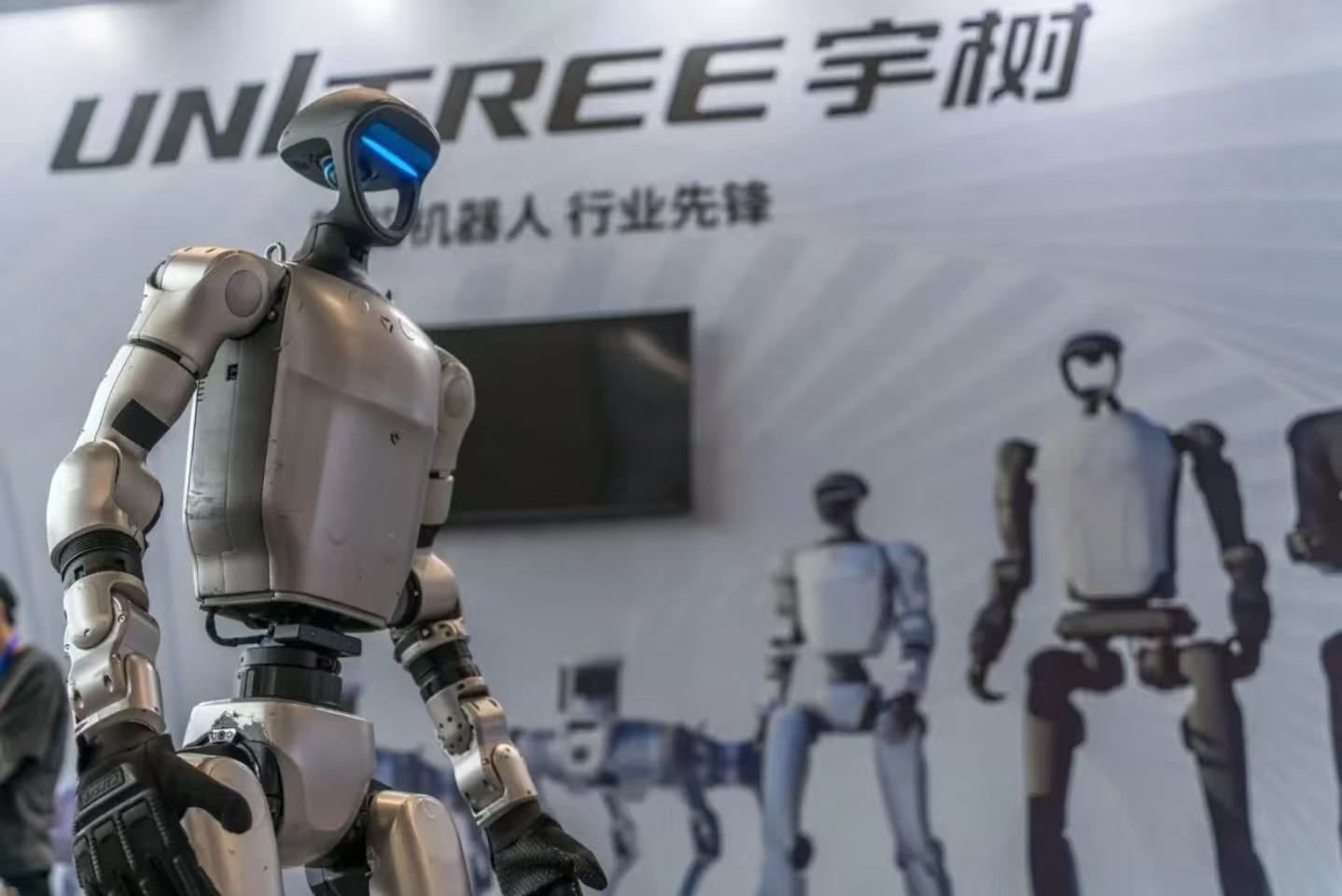
The company has developed a comprehensive ecosystem that includes component supply chains, application deployment frameworks, and investment networks. This vertical integration positions Unitree to capture value across multiple segments of the robotics industry, from manufacturing to implementation.
The timing of Unitree's IPO coincides with broader policy support for China's domestic robotics industry. With government backing and increasing capital market interest, the sector appears to be transitioning from a "theme-driven" investment phase to one based on "independent pricing" fundamentals. Unitree's listing could potentially catalyze a revaluation of the entire robotics supply chain, creating opportunities for component manufacturers, AI developers, and service providers.
If successful, this IPO would provide Unitree with significant capital for further research and capacity expansion. The company has indicated plans to use the funds to develop more advanced robotics technologies and expand production capabilities. Such investments could benefit the broader robotics supply chain, particularly in areas such as sensors, servo systems, and AI algorithms that form the core of modern robotic systems.
The potential listing of Unitree represents more than just a single company's public debut. It may signal a maturation of China's robotics industry, moving from laboratory demonstrations to commercial viability and market acceptance. As embodied intelligence continues to develop, companies like Unitree could play a crucial role in defining the next generation of human-robot interaction and automation.
However, significant challenges remain. The robotics industry faces technical hurdles in developing truly autonomous systems, market acceptance concerns, and intense competition both domestically and internationally. Unitree's ability to maintain its growth trajectory while transitioning to public market scrutiny will be closely watched by investors and industry observers alike.
For investors and industry stakeholders, Unitree's IPO filing represents a significant development in the robotics sector. The company's financial performance, technological capabilities, and market positioning suggest it has established itself as a major player in China's robotics landscape. Whether it can successfully navigate the transition to a publicly traded company while maintaining its technological edge remains to be seen, but the implications for the broader robotics industry could be substantial.
Comments
Please log in or register to join the discussion