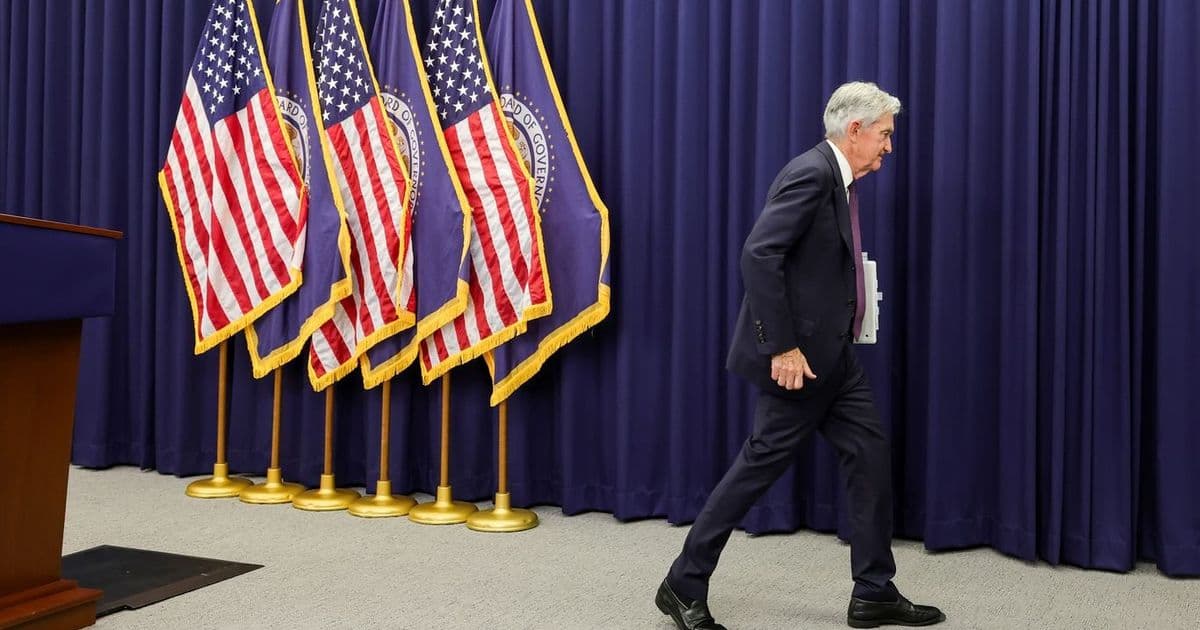
In his final weeks as Federal Reserve Chair, Jerome Powell issues a stark warning about the central bank's credibility amid persistent inflation and shifting market expectations, potentially setting the stage for a more aggressive monetary policy approach.
Federal Reserve Chair Jerome Powell has delivered a sobering assessment of the central bank's current standing, warning that the Fed's credibility is at risk as it continues to battle inflation that has proven more persistent than initially anticipated. This comes during Powell's final month as Fed chair before his term concludes in February 2026, marking a critical juncture in monetary policy history.
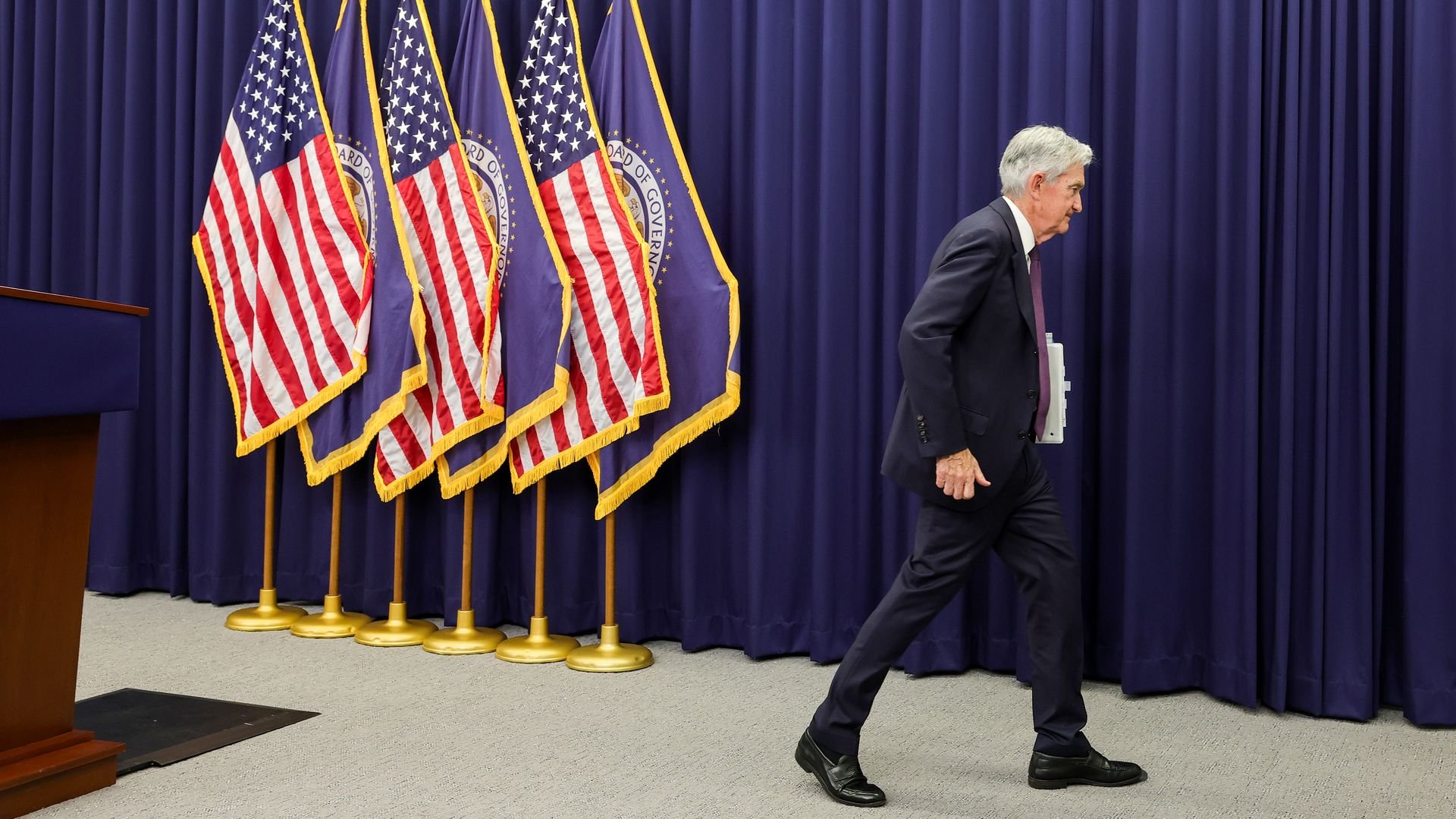
Powell's warning, delivered during a recent speech to the Economic Club of New York, represents a significant departure from the typically measured language used by central bankers. "Our credibility is our most valuable asset," Powell stated, "and we cannot afford to let it be eroded by inconsistent messaging or actions that fail to match our commitments."
The context for this warning stems from the Fed's struggle with inflation that has remained above the 2% target for an extended period. Since March 2022, the Fed has implemented eleven interest rate hikes, raising the federal funds rate from near zero to a range of 5.25-5.5%, the highest level in 22 years. Despite these aggressive measures, core inflation, which excludes volatile food and energy prices, stood at 4.1% in the most recent reading, well above the Fed's target.
"The market has grown increasingly skeptical about the Fed's ability to achieve its inflation target without causing a significant economic downturn," said Michael Feroli, chief U.S. economist at J.P. Morgan. "This skepticism is reflected in the yield curve, which remains inverted, suggesting that investors expect rate cuts to come sooner than the Fed's current projections."
The divergence between market expectations and Fed projections has widened in recent months. While the Federal Open Market Committee (FOMC) projects only three rate cuts in 2024, futures markets are currently pricing in approximately six cuts. This disconnect has created what some analysts are calling a "credibility gap" that Powell is now explicitly acknowledging.
"The Fed's communication strategy has been inconsistent," noted former Fed Governor Randy Kroszner. "When they initially projected a soft landing, the market bought into it. As inflation proved more stubborn, the Fed had to adjust its stance, but the market had already moved to different expectations. This creates a credibility challenge that takes time to rebuild."
The economic implications of this credibility challenge are significant. A credible Fed can influence market expectations with its statements alone, a phenomenon known as "forward guidance." When credibility is questioned, markets may require more concrete policy actions to be convinced, potentially leading to more volatile financial conditions.
"The yield curve inversion has persisted longer than most historical episodes, suggesting that the market is pricing in a higher probability of a recession," said David Kelly, chief global strategist at J.P. Asset Management. "If the Fed loses credibility, this could amplify the tightening of financial conditions beyond what the Fed intends, making the soft landing scenario more challenging to achieve."
Powell's warning comes at a time when the Fed faces several headwinds. The labor market, while showing some signs of cooling, remains stronger than expected, with unemployment at 3.7% and job creation remaining robust. This complicates the Fed's inflation-fighting efforts, as a strong labor market typically supports wage growth and consumer spending, both of which contribute to inflationary pressures.
"The Fed is walking a tightrope," said Diane Swonk, chief economist at KPMG. "They need to tighten enough to bring inflation down to target without overtightening and causing unnecessary unemployment. The credibility challenge makes this balancing act even more difficult, as the market may not respond as predictably to policy signals."
Looking ahead, Powell's successor will inherit these challenges. The Fed's next chair, likely to be current Governor Lisa Cook or former Treasury Secretary Janet Yellen, will need to rebuild credibility while navigating an economy that may be entering a period of slower growth.
"The Fed's credibility will be tested in the coming months," said former Fed Vice Chair Alan Blinder. "They need to demonstrate that they can achieve their inflation target without causing a deep recession. Powell's warning suggests he recognizes this challenge and is trying to prepare markets for a potentially longer period of restrictive policy than currently expected."
Financial markets have reacted to Powell's warning with increased volatility. The S&P 500 fell 1.2% in the two trading sessions following the speech, while Treasury yields rose across the curve. The CBOE Volatility Index (VIX), often referred to as the "fear index," jumped to its highest level since October 2023.
"Markets are beginning to price in a more hawkish Fed," said Quincy Krosby, chief global strategist at LPL Financial. "Powell's warning suggests that the Fed may need to keep rates higher for longer than the market currently anticipates, which has implications for valuations across all asset classes."
The international implications of this credibility challenge are also significant. A credible Fed helps maintain the dollar's status as the world's primary reserve currency. If the Fed loses credibility, it could lead to increased volatility in global currency markets and potentially accelerate the trend toward de-dollarization.
"The Fed's credibility is not just a domestic issue," said Eswar Prasad, a professor at Cornell University and former head of the IMF's China division. "It affects global financial stability and the international monetary system. Powell's warning should be taken seriously by policymakers around the world who rely on the Fed's commitment to price stability."
As Powell prepares to step down, his warning about the Fed's credibility serves as both a caution and a call to action. The central bank faces a critical period in which it must demonstrate its ability to achieve its dual mandate of maximum employment and price stability. The markets will be watching closely to see if the Fed can rebuild the credibility that Powell has now explicitly acknowledged is at risk.
For more information on Federal Reserve policy and statements, visit the Federal Reserve's official website. For the latest economic data and analysis, the Bureau of Labor Statistics and Bureau of Economic Analysis provide comprehensive information.
Comments
Please log in or register to join the discussion