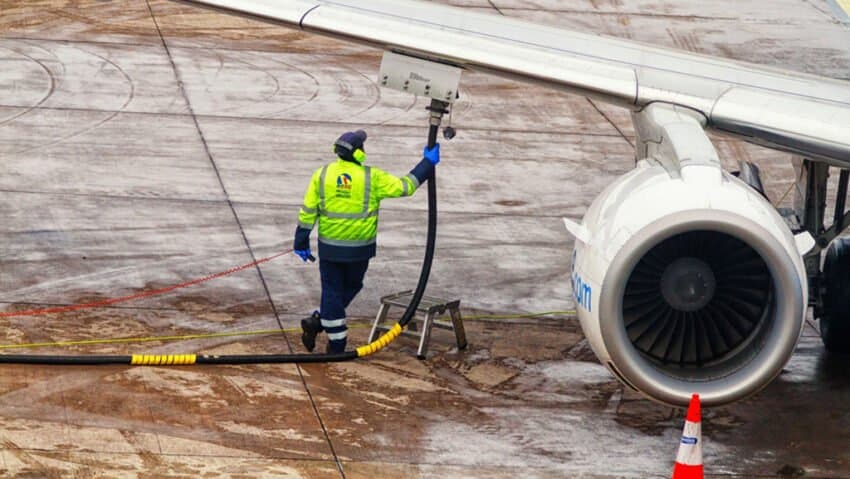
The United Kingdom faces a critical jet fuel shortage with Goldman Sachs identifying Britain as Europe's most vulnerable economy due to depleted stockpiles, heavy import dependence, and a weakened refining base, potentially leading to fuel rationing that would disrupt businesses and travel this summer.
The United Kingdom is emerging as the European economy most exposed to a deepening jet fuel crisis triggered by the prolonged closure of the Strait of Hormuz, with Goldman Sachs warning that commercial fuel inventories could fall to "critically low levels" within weeks. This development threatens to disrupt supply chains, increase travel costs, and potentially force rationing measures that would squeeze airlines, freight operators, and the thousands of small and medium-sized enterprises (SMEs) that depend on reliable air links to international markets.
Goldman Sachs analysts have identified three compounding weaknesses that make the UK particularly vulnerable: depleted stockpiles, an unusually high dependence on imported fuel, and a domestic refining base that has been significantly reduced over recent years. "The UK is the largest net importer of jet fuel in Europe, and it holds no strategic reserves, leaving commercial inventories as the primary buffer," the bank concluded in its assessment to clients.
The economic implications are already materializing. Jet fuel prices have doubled since hostilities erupted on February 28, while carriers worldwide have stripped approximately two million seats from this month's schedules in the past fortnight alone. With fuel accounting for up to 25% of an airline's operating costs, these increases are directly translating to higher ticket prices and freight rates. Major carriers including IAG (parent company of British Airways), Air France, and American Airlines have all indicated they will pass these costs to consumers, with Air France anticipating a $2.4 billion increase in its annual fuel bill and American Airlines expecting an additional $4 billion in costs.
For UK businesses, particularly SMEs, the crisis extends beyond holiday travel. Many small businesses rely on air cargo capacity in passenger aircraft holds to move time-sensitive goods to European and international markets. The prospect of reduced flights and higher freight costs threatens profit margins and international competitiveness. Michael O'Leary, chief executive of Ryanair, has warned that European rivals would "desperately" be looking to cut flights within weeks, further reducing available capacity.
The structural vulnerabilities in the UK's fuel supply system have been building for years. The closure of Grangemouth, Scotland's only oil refinery, in April 2025 stripped meaningful domestic capacity from the system. While the Prax Lindsey refinery in North Lincolnshire has been acquired by US energy major Phillips 66, questions remain about its contribution to UK fuel security. These domestic limitations are exacerbated by the UK's complete lack of strategic jet fuel reserves, unlike some other nations that maintain emergency stockpiles.
The Tony Blair Institute published a report this week suggesting that Europe's climate-focused energy policy has left the continent paying two to three times more for power than global competitors while simultaneously deepening its reliance on imports – exactly the dependency now being exposed. This analysis suggests that the current crisis may reveal deeper structural issues in European energy planning.
In response to the growing concerns, the European Commission has confirmed it will issue formal guidance on jet fuel for airlines later this week. "I don't think anyone knows how long this situation will last," commission spokeswoman Anna-Kaisa Itkonen told reporters, "so the best we can do and the most effective thing we can do and that we are doing is to prepare for all eventualities."
Fuel suppliers have indicated that while May should remain manageable, "mid to late June as the potential start of disruptions" if the Strait of Hormuz does not reopen. This timeline places the peak summer trading window for hospitality, travel, and export-led SMEs squarely in the danger zone. For businesses that have built growth plans around cheap, plentiful air connectivity – from boutique tour operators and food exporters to professional services firms with European clients – the message is clear: prepare for higher costs, longer delays, and the very real possibility of fuel rationing.
The UK government has maintained confidence in its ability to source fuel from alternative markets, but Goldman's analysis exposes the fragility of this position. The Prime Minister, Sir Keir Starmer, conceded last week that holidaymakers may need to reconsider "where they go on holiday" – an unusually candid admission that has done little to reassure the travel trade or SME exporters.
As the situation develops, businesses across the UK will need to reassess their supply chain strategies and international travel plans. The current crisis may accelerate discussions about energy security, strategic reserves, and the balance between climate goals and energy reliability in UK and European policy.
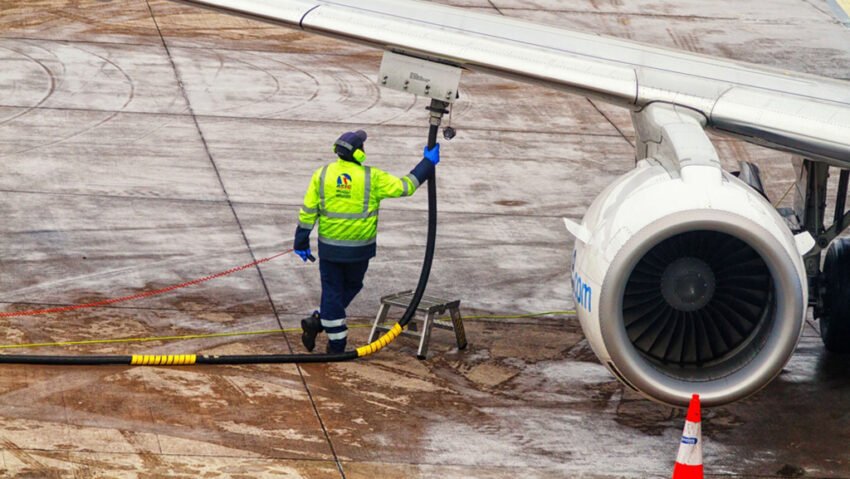
This article provides context about the Strait of Hormuz's importance to global fuel supplies: https://www.eia.gov/todayinenergy/detail.php?id=48916
Information about the UK's energy infrastructure: https://www.gov.uk/government/statistics/uk-energy-statistics
This article from the Tony Blair Institute discusses Europe's energy policy: https://www.tonyblairinstitute.org/europe-is-paying-the-price-of-climate-motivated-energy-policy/
Comments
Please log in or register to join the discussion