The Ministry of Defence has allocated £10 million to Anduril UK, BAE Systems, Tekever and Thales to develop autonomous wing‑man drones for Apache helicopters. Four concept designs will be evaluated this fall, with the aim of fielding operational wing‑men by 2030.
Announcement
The British Ministry of Defence (MoD) has announced a £10 million (US$13.3 million) investment in the next development phase of Project NYX, the programme that will attach autonomous “loyal wing‑men” drones to Army Apache attack helicopters. Four UK‑based companies—Anduril Industries (UK) Ltd, BAE Systems Operations Ltd, Tekever Ltd and Thales UK Ltd—have been shortlisted from an original pool of seven. The MoD will assess all four concepts before selecting one or possibly two partners for the final prototype stage, with a decision expected in the fall of 2026 and operational deployment targeted for 2030.
Technical specs and architecture
| Parameter | Expected value / range | Comments |
|---|---|---|
| Airframe size | 1.2–1.8 m wingspan | Small enough to be carried internally on an Apache’s external stores pylon. |
| Maximum take‑off weight | 45–70 kg | Allows payloads up to 15 kg while staying within the helicopter’s lift envelope. |
| End‑to‑end latency (command → actuation) | ≤ 30 ms | Critical for close‑in target acquisition and coordinated strike runs. |
| On‑board processing | Dual‑core ARM Cortex‑A78 + 2 TOPS AI accelerator (10 nm FinFET) | Provides real‑time image classification, obstacle avoidance and swarm‑level decision making without relying on external links. |
| Communications | Secure L‑band datalink + mesh‑network 5 GHz link (AES‑256) | Enables peer‑to‑peer coordination among multiple wing‑men and fallback to the Apache crew. |
| Range / endurance | 120 km radius, 2 h loiter time (fuel‑cell or high‑energy density Li‑S battery) | Sufficient for deep‑strike reconnaissance beyond the Apache’s line‑of‑sight. |
| Payload options | EO/IR camera, SAR radar, laser designator, electronic‑warfare (EW) suite, low‑signature munition dispenser (non‑lethal) | Modular bays let the same airframe serve recon, target acquisition or EW roles. |
| Autonomy level | Human‑in‑the‑loop (HITL) for weapon release; fully autonomous for navigation and sensor management | The MoD explicitly states that final weapon release decisions remain with the crew, satisfying current rules of engagement. |
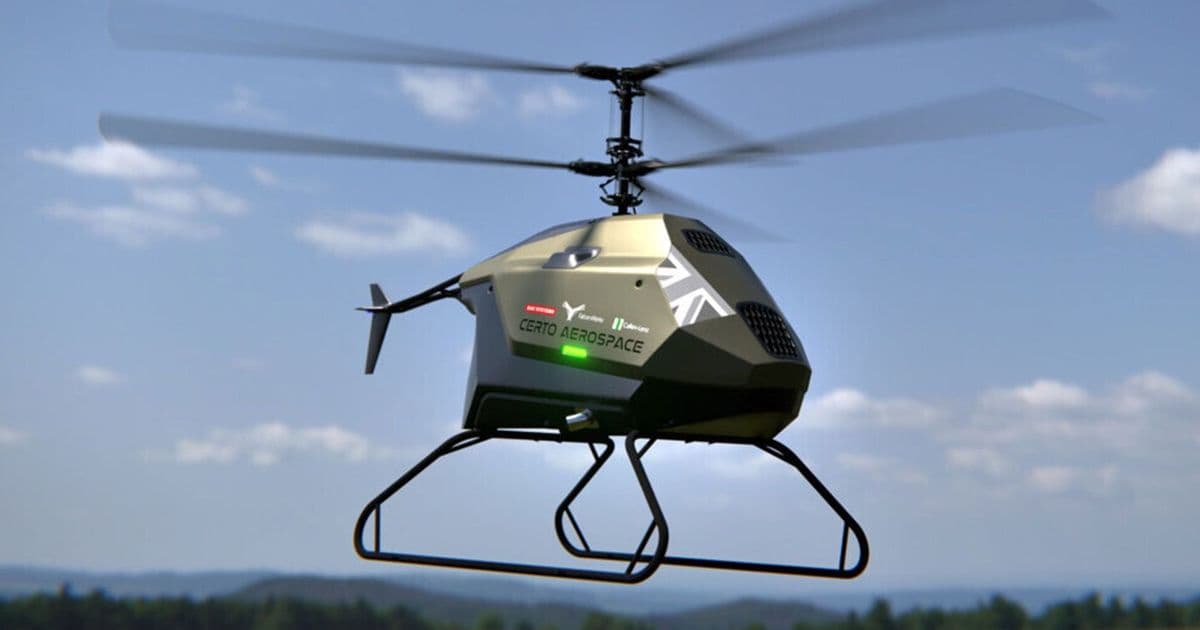
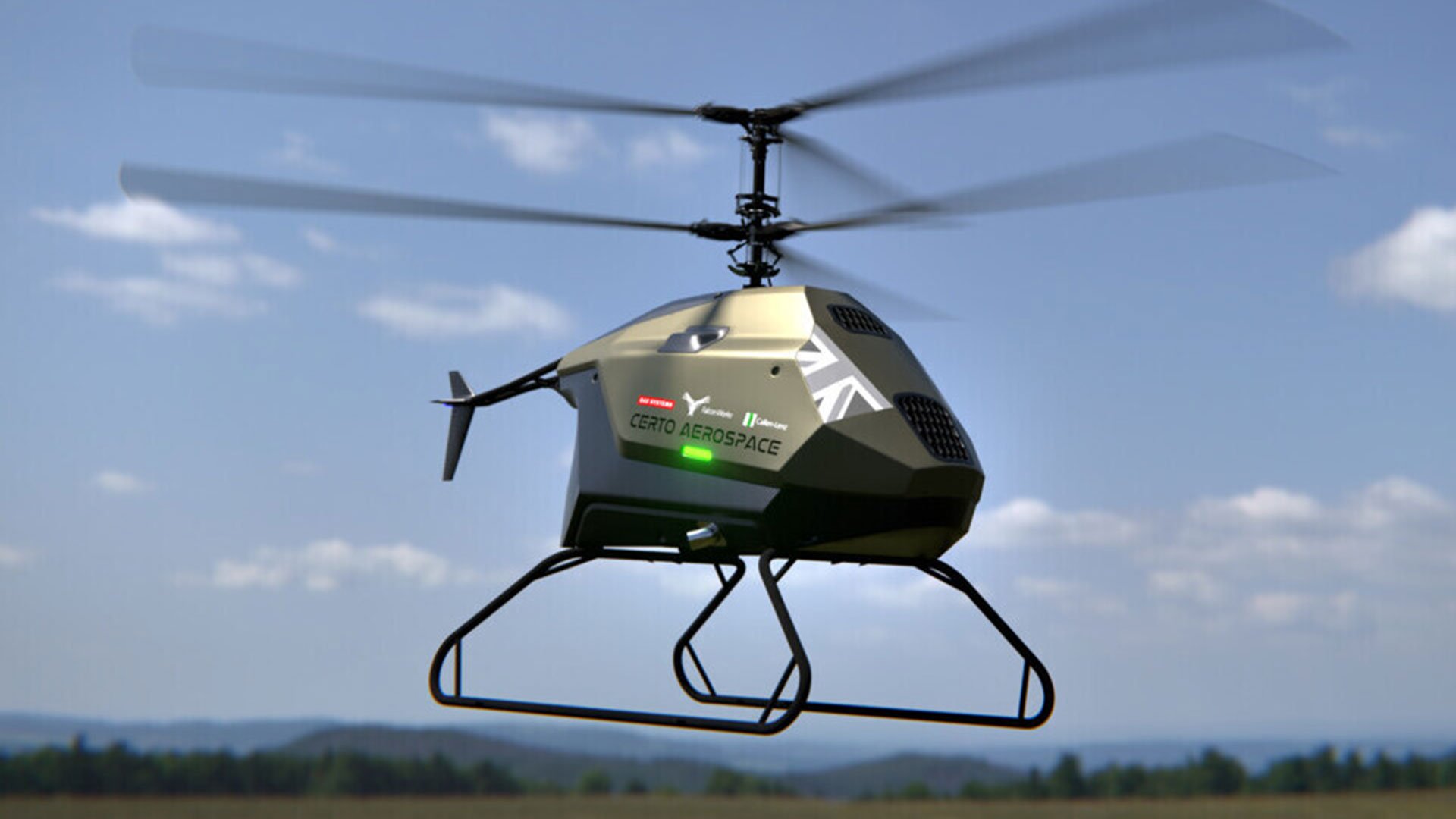
The designs shown in the MoD press release illustrate a range of approaches: a fixed‑wing loitering platform from Tekever, a rotary‑wing micro‑UAV from Anduril, a hybrid‑propulsion concept from Thales, and a stealth‑shaped airframe from BAE. All four incorporate on‑board AI inference engines built on sub‑10 nm process nodes, mirroring the semiconductor trends seen in autonomous vehicle and edge‑AI markets. The use of 10 nm FinFET silicon delivers the required compute density (≈ 2 TOPS per watt) while keeping power draw under 30 W, a figure compatible with the limited energy budget of a small UAV.
Market and supply‑chain implications
- Domestic supply chain reinforcement – By awarding the contract to four home‑grown firms, the MoD is keeping critical component sourcing within the UK. The AI chips, RF transceivers and battery chemistries will likely be sourced from UK‑based fabs or from European partners such as STMicroelectronics and AMS, reducing exposure to US export controls that have complicated other defence programmes.
- Cross‑industry technology transfer – The AI accelerator architecture selected for the wing‑men is similar to that used in autonomous drones for oil‑&‑gas inspection and agricultural monitoring. Successful volume production could open a secondary market for civilian customers seeking high‑performance edge AI at low power.
- Impact on semiconductor demand – Assuming a modest production run of 150 units per year per design, each UAV will require roughly 0.8 W of silicon per kilogram of payload. Scaling to a fleet of 200 Apaches each equipped with two wing‑men translates to an annual demand of ~ 300 kW of AI compute, equivalent to the output of a mid‑size fab line. This adds a measurable, albeit niche, demand signal for advanced nodes in the defence sector.
- Timeline pressure on component suppliers – The 2030 operational target leaves a ten‑year window for component qualification, especially for radiation‑hardening and high‑temperature operation of the AI chips. Suppliers that can certify 10 nm and 7 nm processes for defence use will gain a competitive edge.
- Potential for export – Once the UK demonstrates a mature wing‑man system, allied nations operating Apache or similar attack helicopters (e.g., the US, Australia, Saudi Arabia) may seek licensed versions. That could generate a modest export stream for the participating firms and for the underlying semiconductor suppliers.
Outlook
Project NYX is moving from concept to hardware validation at a pace that mirrors other autonomous‑weapon programmes worldwide. The decision to keep weapon release under human control addresses ethical concerns while still delivering the performance boost of autonomous target tracking and strike coordination. If the selected design can achieve the projected 30 ms command latency and 2‑hour endurance, the Apache’s effective combat radius could increase by 40 % without adding crew workload.
The next milestone—presentation of the four design prototypes in autumn 2026—will be a key indicator of whether the UK’s domestic supply chain can meet the stringent power‑, weight‑ and security‑requirements of next‑generation autonomous wing‑men. Success would not only enhance the Army’s strike capability but also create a new niche for UK semiconductor manufacturers specializing in low‑power AI accelerators.
Comments
Please log in or register to join the discussion