The UK's media regulator Ofcom has escalated its investigation into 4chan, a US-based online platform, raising critical questions about extraterritorial enforcement of censorship laws and the future of internet governance.
The digital world is witnessing a significant transatlantic conflict as the United Kingdom's media regulator, Ofcom, expands its investigation into 4chan, a US-based online platform. This escalating dispute highlights the growing tensions between national regulatory frameworks and the inherently borderless nature of the internet, with profound implications for global digital governance.
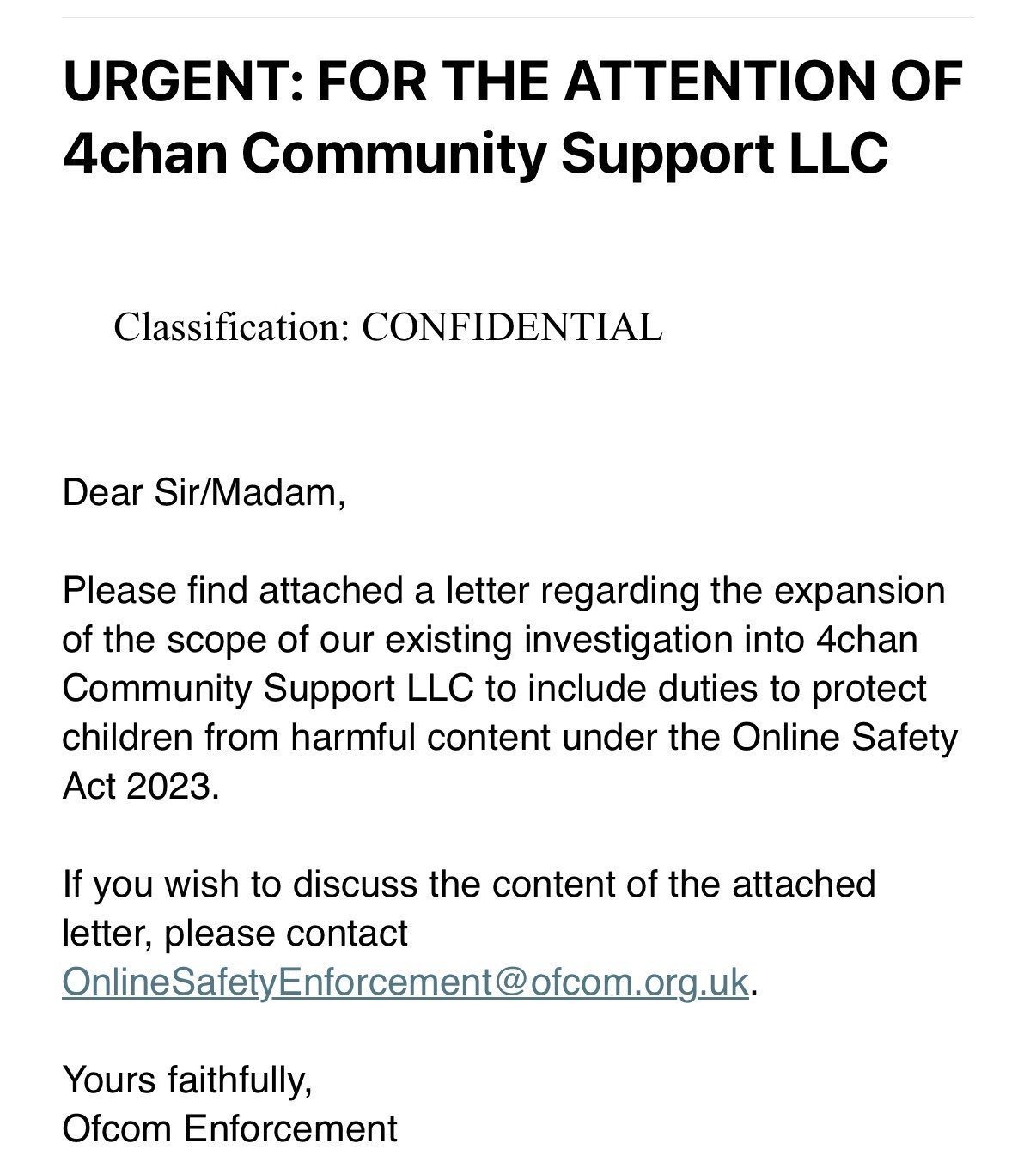
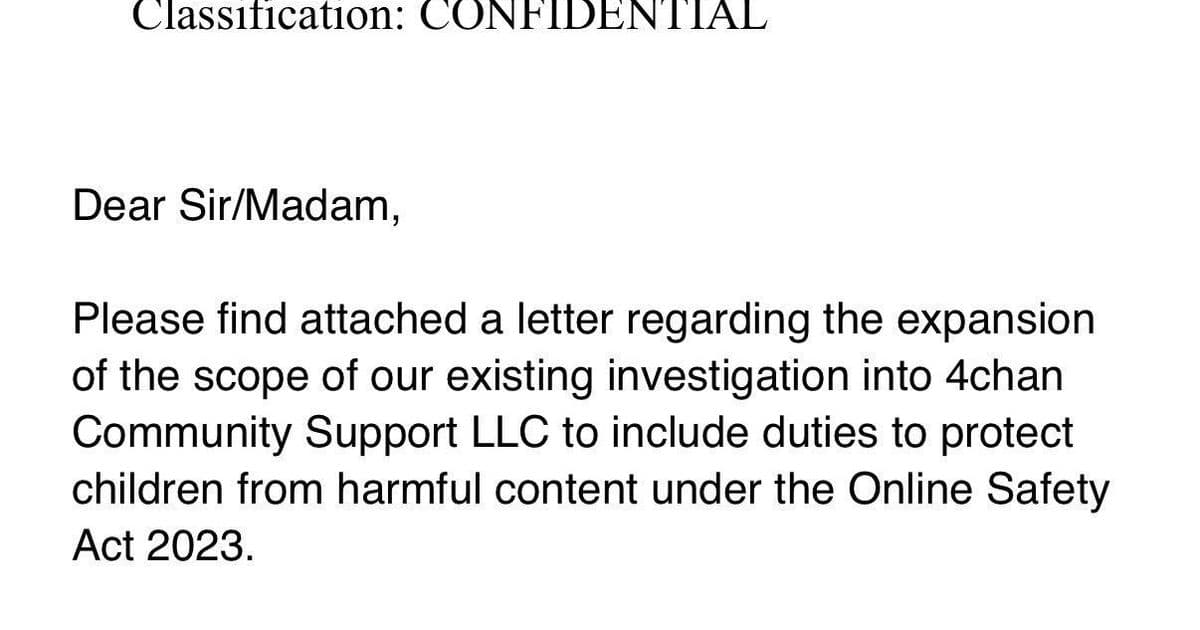
The conflict centers around Ofcom's attempts to enforce UK regulations on platforms operating outside its jurisdiction. According to correspondence obtained by The Lunduke Journal, Ofcom has sent threatening letters to 4chan, a company incorporated in the United States, demanding compliance with UK content moderation standards, including controversial "age assurance" requirements.
"The full letter Ofcom attached to their e-mail was full of legally illiterate nonsense claiming extraterritorial power to enforce their censorship laws against Americans in the United States," wrote Bryan Lunduke in detailing the correspondence.
This isn't an isolated incident but part of a broader pattern of regulatory overreach that has prompted a significant response from the US tech sector and legal community. Preston Byrne, the attorney representing 4chan in this dispute, has responded with a forceful rejection of Ofcom's authority, citing the First Amendment protections that govern American internet companies.
"4chan will not be implementing your 'age assurance' rules," Byrne stated in his formal response to Ofcom. "Your 'age assurance' rules would destroy anonymity online, which is protected by the First Amendment."
The response also references a significant development in US legislative efforts to counter such extraterritorial enforcement. Byrne revealed that the US Congress is considering a federal version of the GRANITE Act, a proposal initially developed by Byrne himself and now being adapted at the federal level.
The GRANITE Act represents a legislative shield designed to protect American internet companies from foreign censorship demands that violate US constitutional rights. Its emergence directly responds to the aggressive tactics employed by regulators like Ofcom, which have increasingly attempted to extend their jurisdiction beyond national borders.
"The proposal was inspired by your agency's censorship letters, letters targeting Americans in America for conduct occurring wholly and exclusively in America," Byrne wrote in his correspondence to Ofcom officials.
This conflict underscores a fundamental challenge in internet governance: how to reconcile national regulatory priorities with the global, decentralized nature of online platforms. As digital services transcend geographical boundaries, regulators worldwide are grappling with questions of jurisdiction and enforcement.
For the technology industry, this dispute has significant implications. US-based platforms face the prospect of navigating conflicting regulatory requirements from multiple jurisdictions, potentially creating compliance nightmares and operational barriers. The situation threatens to fragment the global internet, creating a patchwork of incompatible regional standards.
The 4chan case specifically highlights tensions around content moderation, anonymity, and age verification—issues that have become increasingly contentious as governments worldwide seek to regulate online spaces. Ofcom's push for "age assurance" measures represents a particular point of conflict, as such requirements often necessitate collecting extensive personal data that privacy advocates and technologists argue undermines fundamental rights.
The broader implications extend beyond this single case. If successful, Ofcom's approach could establish a precedent for other regulators to assert jurisdiction over foreign platforms, potentially leading to a cascade of conflicting demands that could paralyze global internet operations.
Conversely, the development of the GRANITE Act suggests a growing recognition in the US of the need to protect American internet companies from such extraterritorial overreach. The proposed legislation could create a robust legal framework shielding US-based platforms from foreign censorship demands that violate constitutional rights.
As this conflict unfolds, it serves as a critical test case for the future of internet governance. Will national regulators succeed in extending their authority across borders, or will the internet maintain its character as a largely ungoverned global commons? The outcome of this dispute between Ofcom and 4chan may provide early answers to these pressing questions.
In the meantime, the technology industry watches closely, recognizing that the principles established in this conflict will shape the digital landscape for years to come. The balance between national sovereignty and global digital freedom hangs in the balance.
Comments
Please log in or register to join the discussion