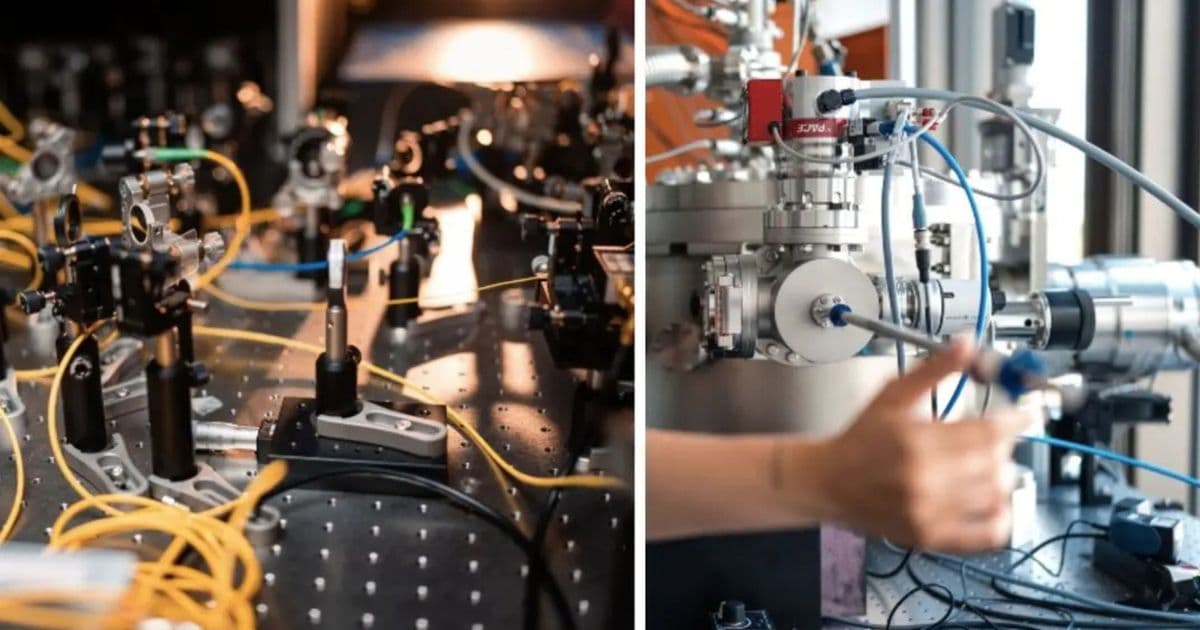
Researchers at the University of Stuttgart have identified a novel magnetic state in twisted chromium triiodide that extends beyond conventional moiré patterns, potentially enabling ultra-dense data storage technologies.
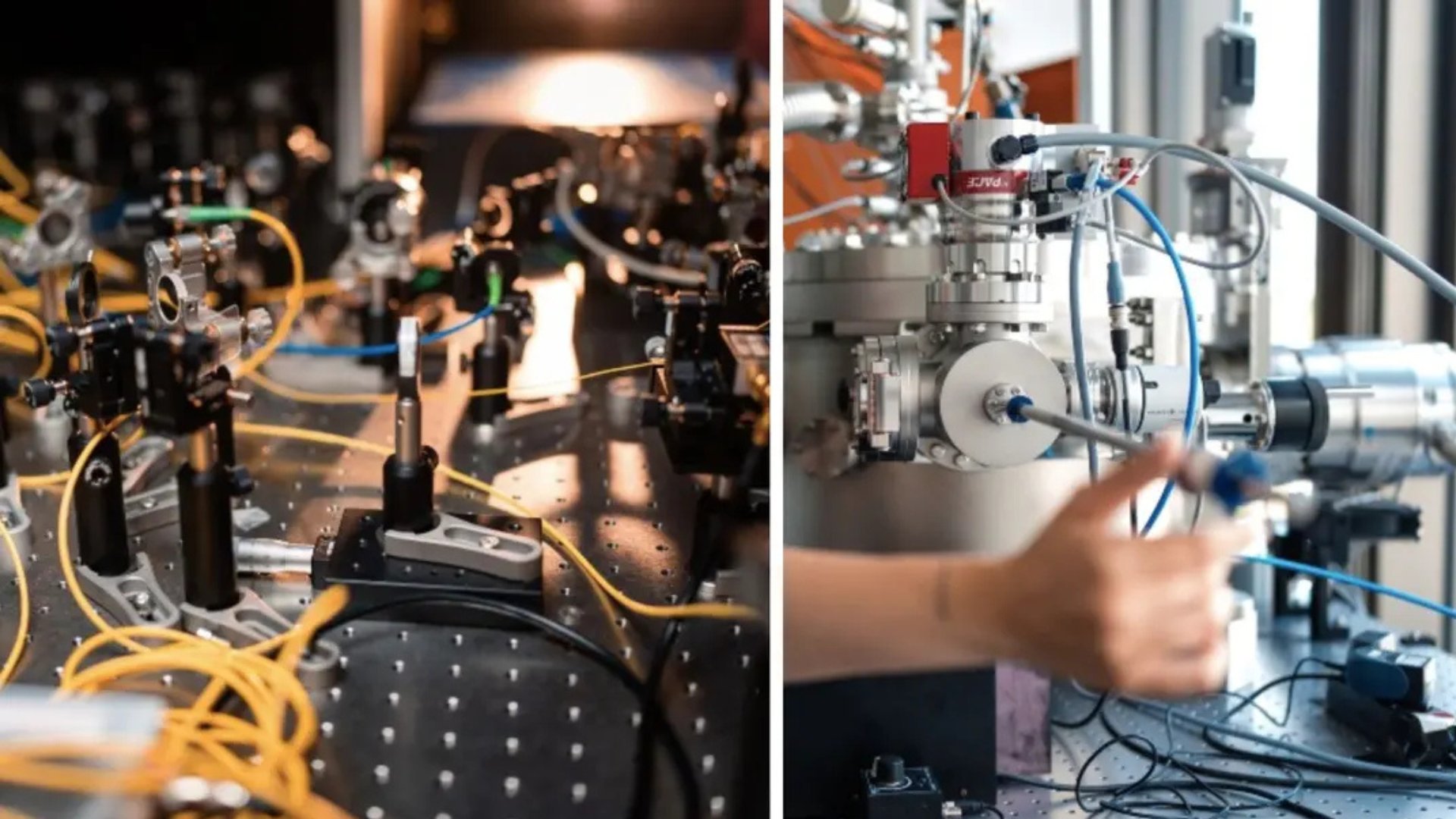
Researchers at the University of Stuttgart have uncovered a previously unknown magnetic phenomenon in atomically thin materials that could redefine future data storage architectures. Published in Nature Nanotechnology, their work reveals how twisted double-bilayer chromium triiodide (CrI₃) generates magnetic textures spanning hundreds of nanometers – far exceeding the boundaries of the material's intrinsic moiré pattern.
Experimental Breakthrough
Using scanning nitrogen-vacancy magnetometry at cryogenic temperatures (~4K), the team mapped magnetic domains in CrI₃ bilayers with twist angles between 1.1° and 2°. At precisely 1.1° misalignment, they observed:
- 300nm magnetic textures – 5× larger than the underlying 60nm moiré unit cells
- Dot-like spin structures organized across multiple lattice periods
- Complete disappearance of ordered states beyond 2° twist angles
This emergent behavior contradicts prior moiré-confined magnetism models. Instead, researchers identified a "super-moiré" state where magnetic ordering decouples from atomic geometry due to competing quantum interactions.
Physics of the Super-Moiré State
Three key forces drive this phenomenon:
- Exchange interactions: Govern spin alignment between neighboring atoms
- Magnetic anisotropy: Fixes spin orientation along crystal axes
- Dzyaloshinskii-Moriya interaction (DMI): Spin-orbit coupling effect inducing chiral spin textures
As twist angles decrease below 2°, DMI strength increases dramatically. When the moiré period shrinks sufficiently, DMI overpowers local exchange energies, forcing spins to reorganize across 4-5 moiré cells. This creates antiferromagnetic skyrmion-like structures – topological spin configurations prized for motion control in spintronics.
Storage Density Implications
The observed textures could enable data bits at ∼60nm pitch. Current HDD technologies max out around 100Gb/in², while this approach theoretically supports >1Tb/in² densities. Professor Jörg Wrachtrup notes: "As data volumes grow, future magnetic storage must achieve higher densities without reliability loss. These results directly address that challenge."
Manufacturing Considerations
While promising, hurdles remain:
- Operation currently requires cryogenic temperatures
- CrI₃ degrades in ambient air
- Precision twist control below 1° presents fabrication challenges
The team confirms the mechanism should apply to other van der Waals magnets like Cr₂Ge₂Te₆ or Fe₃GeTe₂, which offer higher Curie temperatures (-30°C to 60°C). Material substitutions could yield room-temperature operation – essential for commercial viability.
This breakthrough demonstrates twist angle as a tunable parameter for engineering magnetic states, potentially enabling next-generation storage devices that leverage quantum phenomena for unprecedented data density.
Comments
Please log in or register to join the discussion