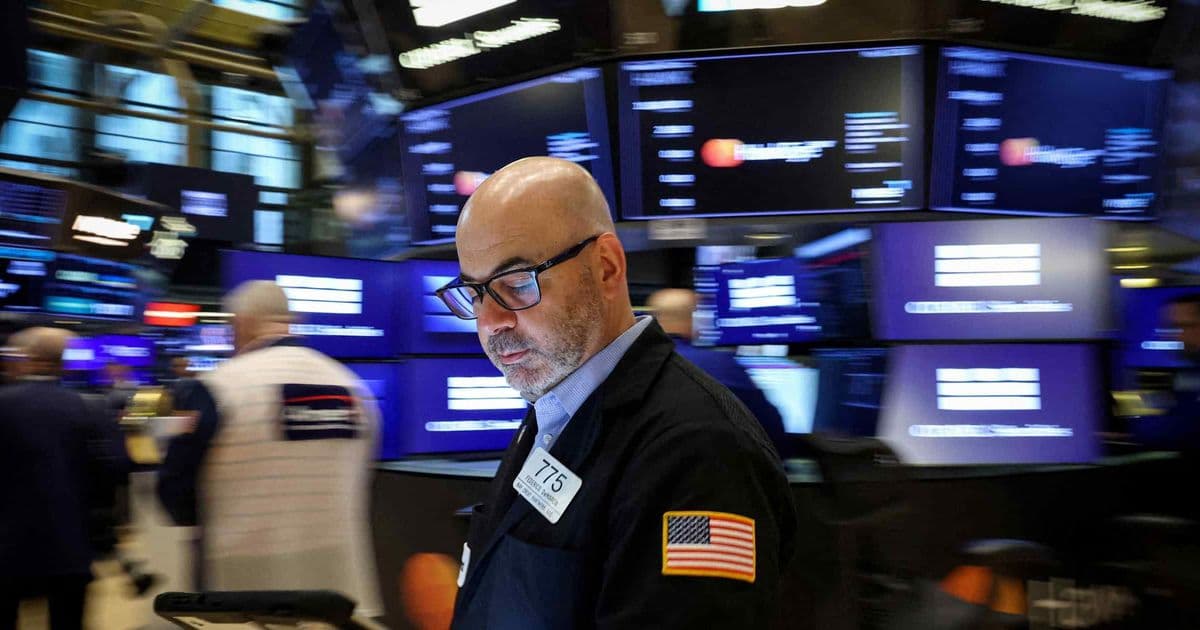
Wall Street opened lower on May 15, with the S&P 500 down 1.2% and the Nasdaq off 1.5%, after President Donald Trump’s meeting with Xi Jinping produced no concrete agreements on tariffs or Iran. Higher oil prices and a stickier core CPI reading lifted Treasury yields, adding pressure to technology and growth stocks.
US equities slide as Trump‑Xi summit fails to spark trade optimism

Market reaction
- S&P 500: –1.2% (down $58.3 bn in market cap)
- Nasdaq Composite: –1.5% (technology sector lost $42.7 bn)
- Dow Jones Industrial Average: –0.9%
- 10‑year Treasury yield: rose to 4.62%, its highest level since March 2024
- Crude oil (WTI): +2.3% to $84.10 per barrel after the summit, reflecting concerns about supply disruptions in the Middle East.
The sell‑off was led by semiconductor makers (Intel, AMD, Nvidia) and cloud‑infrastructure firms (Microsoft, Alphabet). The Energy Select Sector SPDR (XLE) was the only major index to post a modest gain, buoyed by the oil rally.
Why the summit mattered to investors
The Trump‑Xi meeting was billed as a chance to reset a relationship that has been dominated by a 30% tariff regime on $370 bn of goods and a series of export controls on advanced chips and rare‑earth minerals. Analysts expected at least a verbal commitment to a “phase‑down” of tariffs or a joint statement on Iran‑related sanctions. Instead, the joint press conference was dominated by diplomatic platitudes and a warning from Xi that mishandling Taiwan could lead to a "clash."
Without a clear roadmap, market participants interpreted the summit as a continuation of policy uncertainty:
- Trade tariffs remain unchanged. The U.S. still enforces 25% duties on $120 bn of Chinese electronics, while China keeps 15% tariffs on $110 bn of U.S. agricultural products.
- Iran sanctions stay in place. Both sides reaffirmed support for existing sanctions, keeping oil markets volatile.
- No progress on semiconductor supply‑chain talks. The U.S. had hoped to secure Chinese concessions on export controls for advanced lithography equipment, a key bottleneck for domestic chip fabs.
Inflation and yields adding pressure
Even before the summit, the U.S. Consumer Price Index (CPI) for April showed a core increase of 0.5% month‑over‑month, nudging the annual core rate to 4.2%—well above the Federal Reserve’s 2% target. Higher inflation expectations forced investors to demand higher yields, pushing the 10‑year Treasury above 4.6% and making growth‑oriented tech stocks less attractive relative to value stocks.
Strategic implications for tech firms
- Chip manufacturers: Nvidia’s shares fell 3.8% after the market digested the news that no new export‑control relief was forthcoming. The company’s guidance for FY 2027, which assumes a 12% YoY increase in AI‑related GPU sales, now faces a head‑wind from potential supply constraints.
- Cloud providers: Microsoft and Alphabet each announced modest quarterly earnings revisions, citing higher capital‑expenditure plans for data‑center expansion in regions outside China. Their earnings calls highlighted a shift toward “geographically diversified” infrastructure to mitigate geopolitical risk.
- Consumer electronics: Apple’s supply chain, heavily reliant on Chinese assembly, saw its stock dip 2.1% as investors weighed the possibility of renewed tariff escalations.
What it means for investors
- Short‑term volatility likely to persist. With Treasury yields climbing and oil prices reacting to Middle‑East tensions, risk‑off sentiment will keep pressure on high‑valuation tech names.
- Diversification across regions becomes more valuable. Companies with production footprints in Southeast Asia (Vietnam, Malaysia) or on‑shore U.S. fabs may outperform peers still tied to mainland China.
- Watch for policy signals. The next Federal Reserve meeting (June 12) will be a key barometer; a dovish stance could partially offset the geopolitical risk premium.
Bottom line
The Trump‑Xi summit delivered no substantive policy shift, leaving the existing tariff regime and Iran sanctions intact. Combined with stubborn inflation and rising yields, the lack of clarity prompted a broad sell‑off in U.S. equities, especially in the technology sector. Investors should monitor upcoming Fed guidance and any follow‑up diplomatic overtures for clues on whether the market’s risk appetite will recover before the end of the quarter.
Sources: Reuters, Bloomberg, U.S. Bureau of Labor Statistics, Federal Reserve Economic Data (FRED).
Comments
Please log in or register to join the discussion