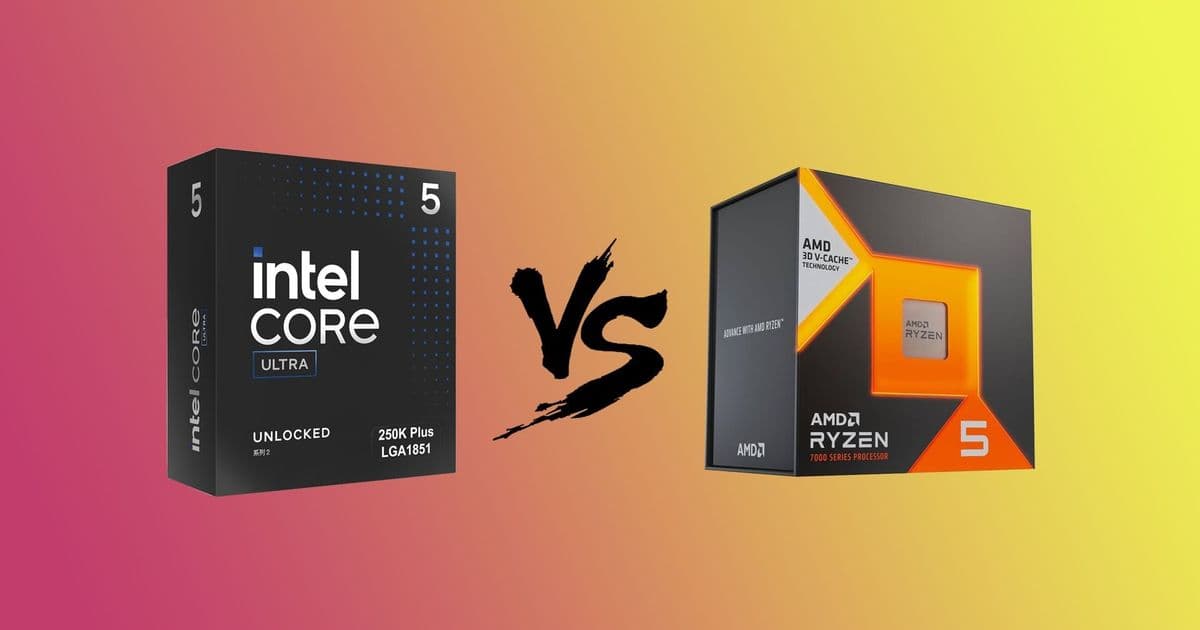
A data‑driven comparison of Intel’s Arrow Lake Refresh Core Ultra 5 250K Plus and AMD’s Zen 4‑based Ryzen 5 7600X3D shows Intel leading in multi‑threaded productivity and overclocking flexibility, while AMD retains a modest edge in pure gaming performance, power efficiency and platform longevity.
Intel Core Ultra 5 250K Plus vs AMD Ryzen 5 7600X3D – Mid‑Range Gaming CPU Face‑off
Announcement
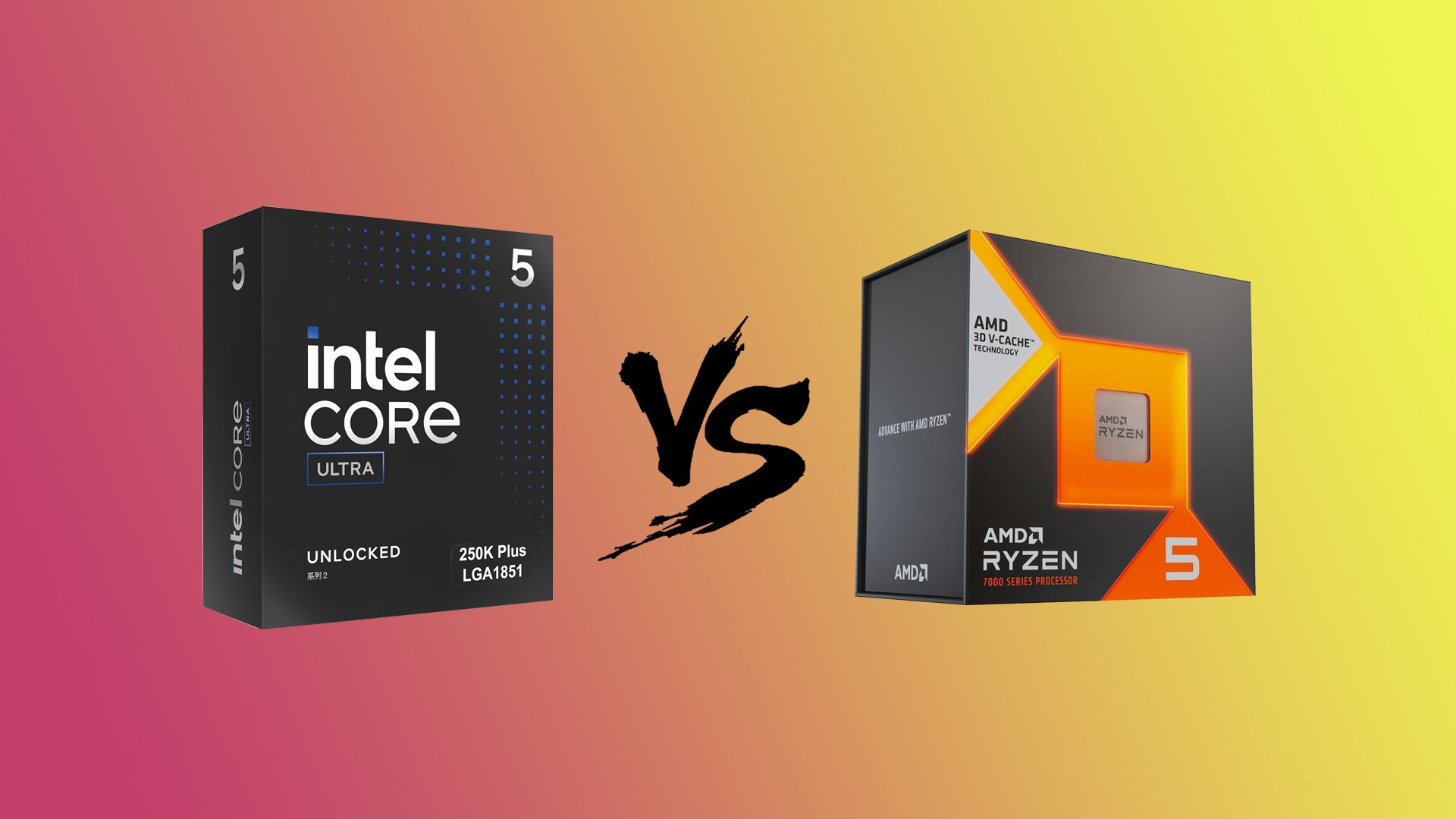
Intel’s Arrow Lake Refresh line finally arrives with the Core Ultra 5 250K Plus, a 3 nm, 18‑core hybrid chip priced around $199. AMD’s competing offering, the Ryzen 5 7600X3D, remains a 6‑core Zen 4 part with stacked 3D V‑Cache and a current street price near $230. Both CPUs target the $200‑$250 segment, but they take very different architectural routes. This article breaks down the specifications, benchmark results, and market implications to help builders decide which processor aligns with their priorities.
Technical specifications
| Feature | Intel Core Ultra 5 250K Plus | AMD Ryzen 5 7600X3D |
|---|---|---|
| Process node | TSMC N3B (3 nm) | TSMC N5 (5 nm) |
| Core layout | 6 Performance + 12 Efficiency (18 threads) | 6 homogeneous cores (12 threads) |
| Base / Boost clocks | 4.2 GHz / 5.3 GHz (P‑cores) – 4.6 GHz (E‑cores) | 4.1 GHz / 4.7 GHz |
| Cache | 30 MB L2 + 30 MB L3 (60 MB total) | 6 MB L2 + 96 MB L3 (102 MB total) |
| TDP / PPT | 125 W base / 159 W turbo | 65 W TDP / 88 W PPT |
| Memory support | DDR5‑7200 (official) | DDR5‑5200 (official) |
| PCIe | Gen 5 x16, Gen 4 x4 | Gen 5 x16, Gen 4 x4 |
| Launch price | $199 (MSRP) | $299.99 (MSRP) – now ~$230 |
What the numbers mean
- Process advantage – Intel’s 3 nm node gives it higher transistor density, enabling the hybrid 6+12 core layout and higher boost frequencies. AMD’s 5 nm design is older but benefits from a mature Zen 4 micro‑architecture and the 3D V‑Cache stack.
- Cache vs cores – AMD’s 96 MB of stacked L3 cache lowers memory latency for cache‑heavy games, while Intel’s larger core count improves parallel workloads such as rendering or video encoding.
- Memory bandwidth – DDR5‑7200 support can theoretically deliver up to 57.6 GB/s per channel, a 38 % increase over the 52 GB/s ceiling of DDR5‑5200. Real‑world gains depend on motherboard BIOS and memory quality.
Market implications
Gaming performance
In a 17‑title 1080p suite run on an RTX 5090, the 7600X3D posted a geometric‑mean of 168.8 FPS, about 10 % faster than the 250K Plus (153.5 FPS). The advantage is most pronounced in cache‑sensitive titles such as Minecraft RTX (+75 % FPS) and Final Fantasy XIV (+43 %). Intel closed the gap in newer AAA games that benefit from higher clock speeds and Intel‑specific optimizations (e.g., Doom: The Dark Ages +5 %).
Efficiency – AMD consumed 65.3 W on average during gaming, versus 82.3 W for Intel, translating to 2.58 FPS/W vs 1.87 FPS/W. For builders focused on power‑constrained builds or low‑noise rigs, the Ryzen chip offers a clear advantage.
Productivity workloads
Intel’s 18‑core hybrid design dominates multi‑threaded benchmarks. In Cinebench R23 multi‑core, the 250K Plus scored 7,523 pts versus 3,340 pts for the Ryzen, a 126 % lead. Rendering (POV‑Ray, Blender) and video encoding (HandBrake x265) showed similar gaps, often exceeding 150 % faster on Intel.
Single‑core scores were tighter: Intel posted 261 pts against AMD’s 204 pts, roughly 28 % higher. The modest single‑core edge, combined with the massive multi‑core lead, makes the Core Ultra 5 a compelling choice for content creators, engineers, and anyone running mixed workloads.
Overclocking flexibility
AMD’s 3D V‑Cache design locks the multiplier, limiting traditional frequency overclocking. Users can only tweak boost behavior via Precision Boost Overdrive 2 and Curve Optimizer. Intel’s unlocked multiplier, per‑core voltage control, and uncore (NGU/D2D) tuning via the BIOS or Intel Extreme Tuning Utility (XTU) give enthusiasts a far broader performance envelope. In practice, modest manual overclocks (+200 MHz on P‑cores) can push the 250K Plus past 5.5 GHz while staying under 90 °C on a high‑end air cooler.
Power and thermals
Despite a higher TDP, the 250K Plus ran 48 °C on average in gaming, thanks to Intel’s efficient power‑gate design and the workload’s reliance on efficiency cores. The Ryzen 5 7600X3D ran hotter (64 °C) under the same load, reflecting its higher per‑core voltage to sustain the stacked cache.
In heavy AVX workloads (y‑cruncher, Linpack), Intel drew 179 W versus 73 W for AMD, a 145 % increase. For data‑center‑style compute, AMD’s lower power envelope could translate into significant operational cost savings.
Platform cost and longevity
- Motherboard – Intel requires an LGA 1851 800‑series board (Z890 for overclocking, B860 for a budget route). Prices range $130‑$250. AMD’s AM5 platform is already in its second generation; B650/B850 boards start around $150, while X670/X870 premium boards exceed $200.
- Memory – DDR5 pricing remains elevated (32 GB kit $300‑$400). Intel’s higher‑speed support may encourage early adoption of DDR5‑7200 kits, but the price premium is modest compared to the baseline cost.
- Future upgrades – AMD has pledged AM5 support through 2027, giving Ryzen owners at least two more CPU generations. Intel has not announced a roadmap beyond Arrow Lake Refresh for LGA 1851, suggesting the platform may be a one‑generation stop.
Bottom line
| Category | Winner |
|---|---|
| Gaming FPS | AMD Ryzen 5 7600X3D (10 % higher average FPS) |
| Gaming efficiency | AMD (2.58 FPS/W vs 1.87 FPS/W) |
| Productivity multi‑core | Intel Core Ultra 5 250K Plus (≈ 120 % lead) |
| Single‑core | Intel (≈ 28 % lead) |
| Overclocking flexibility | Intel (unlocked multiplier, extensive BIOS controls) |
| Power consumption | AMD (≈ 40 % lower draw across workloads) |
| Platform value | AMD (longer socket lifespan, comparable motherboard cost) |
Overall recommendation – If your primary workload is gaming and you value lower power draw and a platform that will last several years, the Ryzen 5 7600X3D remains the stronger choice. For mixed‑use or productivity‑heavy builds, the Core Ultra 5 250K Plus delivers dramatically higher multi‑threaded performance and overclocking headroom, making it the better all‑round CPU despite higher power consumption.
Sources: Intel Arrow Lake Refresh datasheet, AMD Ryzen 5 7600X3D product brief, benchmark suite run on RTX 5090, Linpack and y‑cruncher power logs, motherboard pricing from major retailers.
Comments
Please log in or register to join the discussion