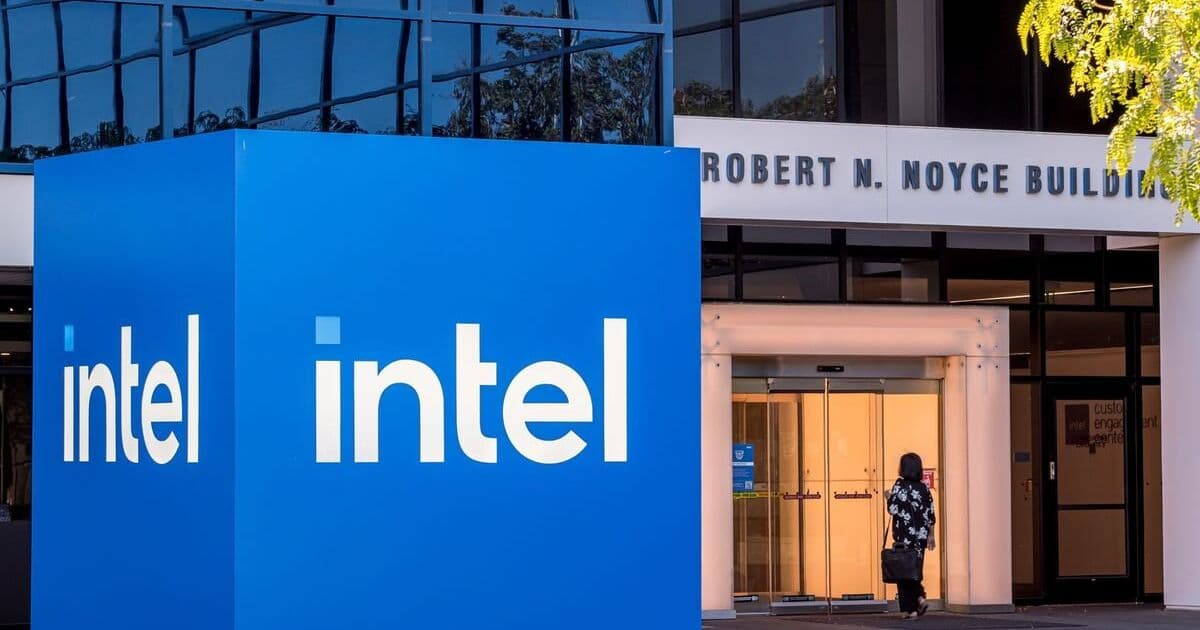
The US government's investment in Intel has quadrupled in value since August 2025, reaching approximately $36 billion as the chipmaker experiences a resurgence amid the AI boom.
The US government's strategic investment in Intel Corp. has delivered substantial returns, with the value of its stake increasing fourfold to approximately $36 billion since an August 2025 announcement that the US would purchase an $8.9 billion stake in the semiconductor giant. This remarkable appreciation reflects both Intel's operational turnaround and the broader surge in semiconductor demand driven by artificial intelligence expansion.
The investment, part of the US government's efforts to strengthen domestic semiconductor manufacturing capabilities, has yielded significant returns in just eight months. Intel's stock performance has been particularly noteworthy, with shares closing up 23.6% on recent reports—the company's best single-day performance since October 1987. Year-to-date, Intel's stock has climbed 124%, outpacing many peers in the semiconductor sector.
Intel's resurgence appears directly tied to its strengthening position in the AI chip market. The company's improved financial outlook, which exceeded analyst expectations, suggests CEO Pat Gelsinger's turnaround strategy is gaining traction. Under Gelsinger's leadership, Intel has been working to restore its technological competitiveness while expanding manufacturing capacity in the United States.
The timing of this investment appreciation coincides with unprecedented demand for semiconductors powering AI applications. Companies like OpenAI, Google, and Microsoft have been rapidly expanding their AI infrastructure, creating substantial demand for high-performance chips. Intel's ability to capture a portion of this growing market has contributed significantly to its stock appreciation.
From a strategic perspective, the government's investment serves multiple purposes. Financially, it represents a successful public-private partnership that has generated substantial returns for taxpayers. Politically, it demonstrates the effectiveness of the CHIPS and Science Act in revitalizing American semiconductor manufacturing. Technologically, it positions Intel as a stronger competitor to industry leaders like Nvidia and AMD in the critical AI chip space.
The increased valuation also reflects market confidence in Intel's IDM 2.0 strategy, which aims to restore the company's manufacturing leadership while becoming a foundry service provider for other chip designers. This dual approach could position Intel to benefit from both the AI chip market and the broader trend of chip design outsourcing.
Looking ahead, the government's stake in Intel may continue to appreciate if the company maintains its current trajectory. However, the semiconductor industry remains cyclical, and Intel will need to navigate potential challenges including increasing competition, technological shifts, and global supply chain complexities.
The success of this investment may encourage similar public-private partnerships in other strategic technology sectors, potentially setting a precedent for how governments can support domestic industries while generating financial returns.
Intel's improved financial performance has also had positive ripple effects across the semiconductor ecosystem. The company's stock surge has lifted other chip manufacturers, with Nvidia's market capitalization recently surpassing $5 trillion as the entire sector benefits from AI-driven demand.
This government investment in Intel represents a significant data point in the ongoing effort to rebuild American semiconductor leadership. The substantial returns generated thus far suggest that strategic government intervention in critical technology sectors can yield both financial and strategic benefits.
Comments
Please log in or register to join the discussion