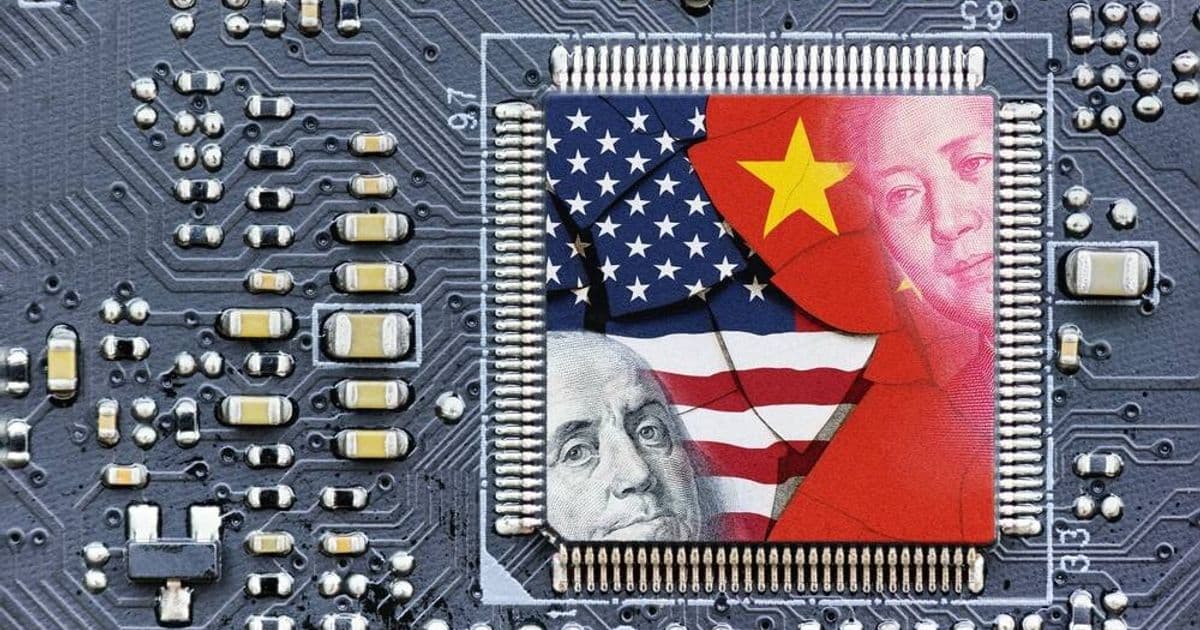
A bipartisan group of US lawmakers is calling for comprehensive export controls on semiconductor manufacturing equipment to China, citing national security concerns and the need to prevent China from developing advanced chipmaking capabilities.
A bipartisan group of US lawmakers is urging the Trump administration to implement a sweeping ban on the export of advanced semiconductor manufacturing equipment to China, arguing that current entity-specific restrictions are insufficient to protect US national security interests.
In a letter to Commerce Secretary Howard Lutnick and Secretary of State Marco Rubio, eight members of Congress called for the implementation of countrywide trade restrictions on chipmaking equipment, rather than the current approach of targeting specific Chinese companies.
Current Export Control Limitations
The lawmakers argue that the existing export control regime has critical gaps that allow Chinese companies to acquire advanced chipmaking technology despite US sanctions. They point out that certain foreign-produced "chokepoint" semiconductor manufacturing equipment is controlled only for specific entities in China, rather than being subject to countrywide restrictions.
"Once equipment crosses the border into China, the US government has extremely limited ability to enforce end-use and end-user restrictions," the letter states. This enforcement challenge has allowed Chinese companies to continue accessing advanced chipmaking tools despite existing sanctions.
Focus on Critical Equipment
The letter specifically highlights the importance of controlling "chokepoint" equipment and subcomponents - those for which China lacks domestic alternatives. The lawmakers note that the semiconductor supply chain's complexity means many critical components are manufactured outside the US, limiting Washington's ability to police trade effectively.
Dutch company ASML's advanced lithography equipment appears to be of particular concern. The lawmakers report that Dutch sales of advanced lithography equipment to China doubled from 2022 to 2023 and again from 2023 to 2024. "Each chokepoint tool that enters China represents a permanent loss of American leverage," they warn.
Proposed Enforcement Measures
The lawmakers are calling for several specific actions:
- Implementation of countrywide controls on key chokepoint semiconductor manufacturing equipment and subcomponents
- Pressure on US allies to align with these restrictions
- Preparation to use US-origin component restrictions to close gaps if allies don't comply
- Crackdown on companies that continue servicing existing equipment now subject to trade restrictions
"The United States should be prepared to act to close remaining gaps itself if necessary, including by prohibiting the use of US-origin components in the production of chokepoint tools destined to China," the letter reads.
Strategic Timing Concerns
The lawmakers emphasize that time is of the essence, as China is actively working to develop its own chipmaking technology. They warn that if left unchecked, China could render US and allied export controls irrelevant by replacing foreign chipmaking tools entirely.
This push for stricter controls comes amid ongoing tensions between the US and China over technology transfer and national security. The semiconductor industry has become a key battleground in this broader conflict, with both nations seeking to maintain or gain technological advantages.
Industry Context
The semiconductor manufacturing equipment industry is dominated by a handful of companies, with ASML holding a near-monopoly on extreme ultraviolet (EUV) lithography machines - the most advanced tools needed for cutting-edge chip production. This concentration of critical technology in a few companies makes export controls particularly effective but also creates challenges when allied nations have different economic interests.
The lawmakers' proposal represents a significant escalation in US efforts to restrict China's access to advanced semiconductor technology. While previous administrations have focused on entity-specific controls, this new approach would effectively create a "great wall" of export restrictions, potentially reshaping the global semiconductor supply chain and forcing allied nations to choose between economic ties with China and security cooperation with the United States.
As the Trump administration considers these recommendations, the semiconductor industry and its global supply chain face potential disruption, while the strategic competition between the US and China in advanced technology continues to intensify.
Comments
Please log in or register to join the discussion