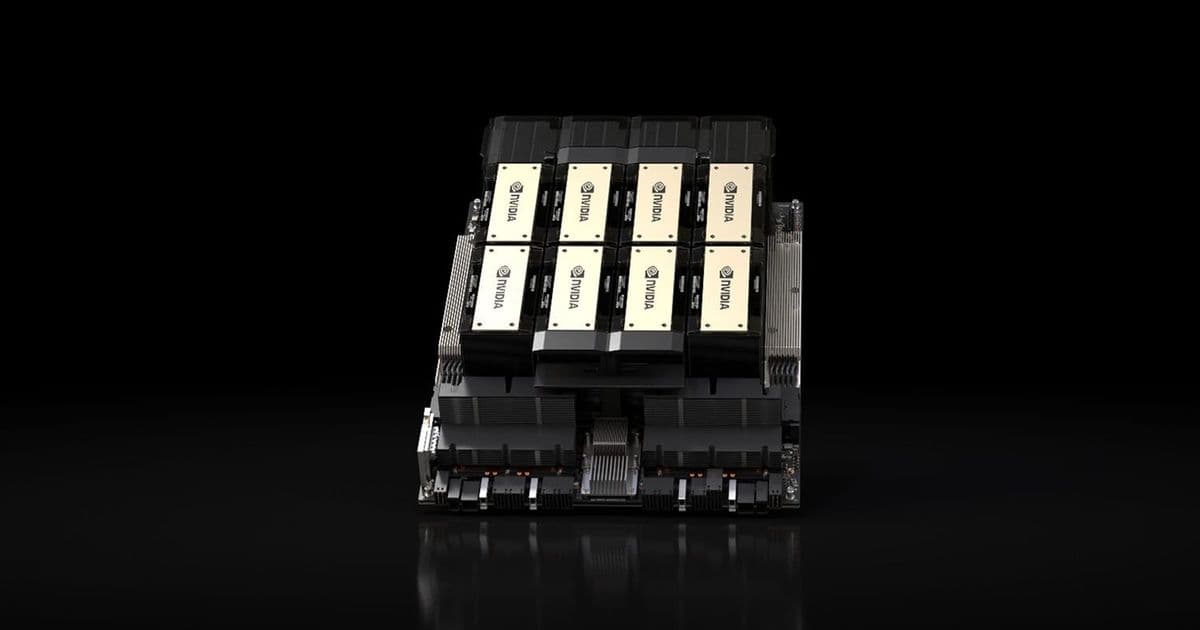
The Commerce Department has pulled a draft proposal that would have forced foreign AI data center operators to invest in U.S. infrastructure to obtain American AI accelerators, effectively doubling costs for international customers.
The U.S. Commerce Department has withdrawn a controversial draft export rule that would have required foreign operators of large AI clusters to invest in American AI infrastructure to obtain U.S.-made hardware, effectively doubling the cost for international customers, according to Reuters.
Draft Rule Disappears Without Explanation The proposed regulation, submitted to the Office of Information and Regulatory Affairs (OIRA) in late February as part of the 'AI Action Plan Implementation' initiative, vanished from the regulatory tracking system last Friday without official explanation.
A U.S. official told Reuters the proposal had never progressed beyond early draft stage and did not represent finalized policy direction. The withdrawal comes after the Commerce Department abandoned its previous U.S. Diffusion Rule last spring, signaling ongoing uncertainty about America's approach to AI hardware exports.
Proposed Tiered Licensing System The draft framework outlined a complex three-tier system for AI accelerator exports:
- Tier 1: Shipments up to 1,000 Nvidia GB300 GPUs would qualify for accelerated approval with minimal regulatory resistance
- Tier 2: Medium-scale installations would require pre-authorization and detailed operational transparency, including business activity disclosure and infrastructure usage reporting
- Tier 3: Very large clusters of 200,000 Nvidia GB300 GPUs or more would need direct government negotiations and intergovernmental national security assurances
Controversial Investment Requirement Most contentious was the proposed requirement for operators of large AI clusters to invest in U.S. AI infrastructure as part of the export arrangement. The Commerce Department was specifically considering formalizing the approach already used with Cerebras and Nvidia for Middle East sales.
Under existing arrangements with Saudi Arabia and the United Arab Emirates, these countries must match every dollar spent on domestic AI infrastructure with a dollar invested in U.S. AI infrastructure. If applied broadly, this would have effectively doubled costs for international customers deploying AMD, Cerebras, Nvidia, and other U.S. AI hardware.
Balancing National Security and Market Access The withdrawal likely reflects internal disagreements about balancing national security concerns with maintaining U.S. influence in the global AI market. The Commerce Department continues working on new export rules, but the direction remains unclear.
Industry observers note that overly restrictive policies could accelerate development of alternative AI hardware ecosystems outside U.S. control, while too-liberal approaches might compromise American technological advantages.
The next draft of export rules could take either a stricter or more liberal approach toward exporters and their international customers, with significant implications for global AI infrastructure development and U.S. semiconductor industry competitiveness.
The evolving regulatory landscape comes amid growing concerns about AI data centers consuming unprecedented amounts of memory and storage supply, with memory makers projected to earn $551 billion from the AI boom according to recent industry analysis.
Comments
Please log in or register to join the discussion