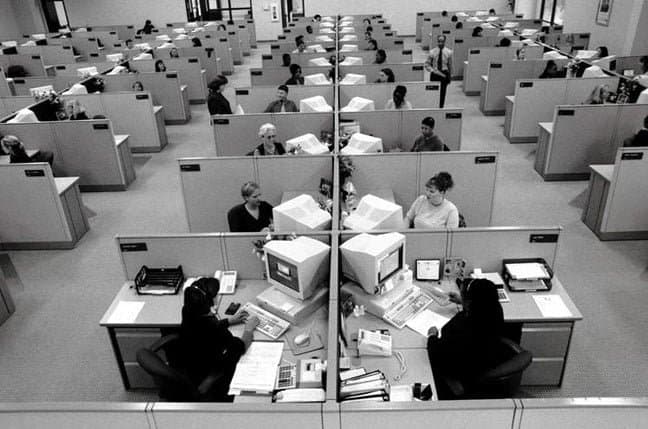
The U.S. Department of Agriculture has contracted Palantir to manage employee seating assignments as workers return to offices, a move critics say could introduce invasive workplace surveillance technologies.
The U.S. Department of Agriculture is turning to Palantir, the controversial data analytics company known for its work with defense and intelligence agencies, to solve what might seem like a mundane problem: where to seat employees as they return to the office.
According to a contract notice, the USDA needs "advanced data integration capabilities to consolidate information from multiple sources, real-time analytics to optimize space utilization and employee seat assignments, and robust security compliance to protect sensitive organizational data." The agency's chief data and artificial intelligence officer, Christopher Alvares, explicitly stated that while competitors like Databricks, Snowflake, IBM, SAS, Salesforce, and Alteryx offer data analytics platforms, "none offer the combination of capabilities, enterprise scale data fusion, real-time analytics, compliance monitoring and integration with existing USDA systems that Palantir provides."
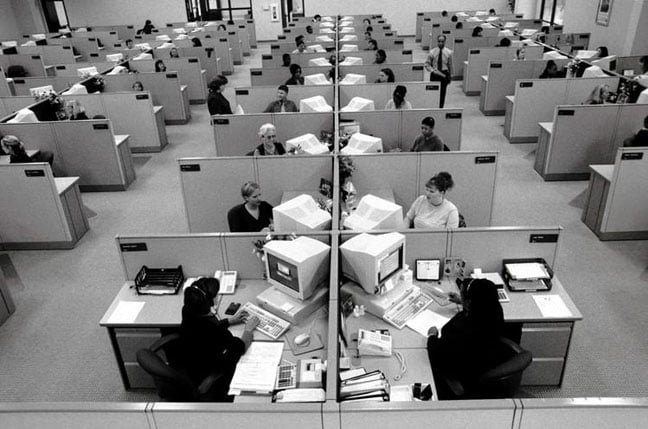
The contract request goes beyond simple seating charts, calling for "real time and continuous compliance monitoring with automated risk or alert generation of regulatory compliance officers and other personnel upon detection of threats or anomalies." This language has raised eyebrows among privacy advocates who see it as potentially introducing "bossware" - workplace surveillance technology that tracks employee behavior and productivity.
Paul Sonn, state policy program director at the National Employment Law Project, expressed concern on LinkedIn that this contract "could potentially bring a workforce surveillance technology known as bossware to the federal workforce, despite concerns about its mental and physical toll on workers and its potential for errors and discrimination."
The timing is notable given Palantir's recent public statements about its technology's "lethality." During the company's February 2 earnings call, CEO Alex Karp and CTO Shyam Sankar boasted about the platform's capabilities on "quasi-legal battlefields," with Karp stating, "But from the beginning, we have stuck to our very strong values of expanding what we believe is the noble side of the West, which means being lethal on the front end, meaning outside against adversaries if necessary."
This isn't Palantir's first controversial government contract. The company has faced criticism for its work with Immigration and Customs Enforcement (ICE), its role in military operations, and its data platform's deployment in the UK's National Health Service, where doctors were advised to avoid using it. The company has also been scrutinized for CEO Alex Karp's expensive private flights and its sale to Accenture by a British rival whose founder had previously touted UK tech sovereignty.
For the USDA, the return-to-work mandate has created operational challenges that the agency believes require Palantir's sophisticated data integration and analytics capabilities. The contract notice emphasizes the need for real-time analytics to optimize space utilization and employee seat assignments, suggesting the agency wants to maximize office efficiency as it brings workers back to physical locations.
The USDA has stated that this is "not a new tool" and was "deployed last year to support USE IT (building utilization and reporting) and workspace allocation and management." However, the agency did not respond to questions about the contract's cost or the specific rationale for choosing Palantir over other providers.
This contract represents another example of Palantir expanding its presence in federal government operations, moving from its traditional focus on defense and intelligence into more routine administrative functions. The juxtaposition of Palantir's battlefield rhetoric with its new role in office seating plans highlights the company's broad ambitions and the government's willingness to employ advanced surveillance and analytics tools for everyday bureaucratic challenges.
The use of such sophisticated technology for workplace management raises important questions about the balance between operational efficiency and employee privacy, particularly in the federal workforce where civil service protections and privacy expectations may differ from the private sector. As more agencies consider similar approaches to managing their return-to-office strategies, the implications for workplace surveillance and data collection will likely become an increasingly important policy issue.
Comments
Please log in or register to join the discussion