
Autumn Ashton of Valve has successfully demonstrated NVIDIA's DLSS upscaling technology running atop the open-source NVK Vulkan driver for NVIDIA GPUs. This experimental milestone, achieved through custom Vulkan extension support, signals a potential leap for Linux gaming performance and open-source graphics development.
In a significant stride for open-source graphics, Valve developer Autumn Ashton has achieved initial success in enabling NVIDIA's Deep Learning Super Sampling (DLSS) technology on Mesa's NVK driver—an open-source Vulkan implementation for NVIDIA GPUs. This breakthrough, shared via Bluesky, demonstrates DLSS functioning in the game Control through the experimental driver stack, marking a critical step toward high-performance upscaling for Linux gaming.
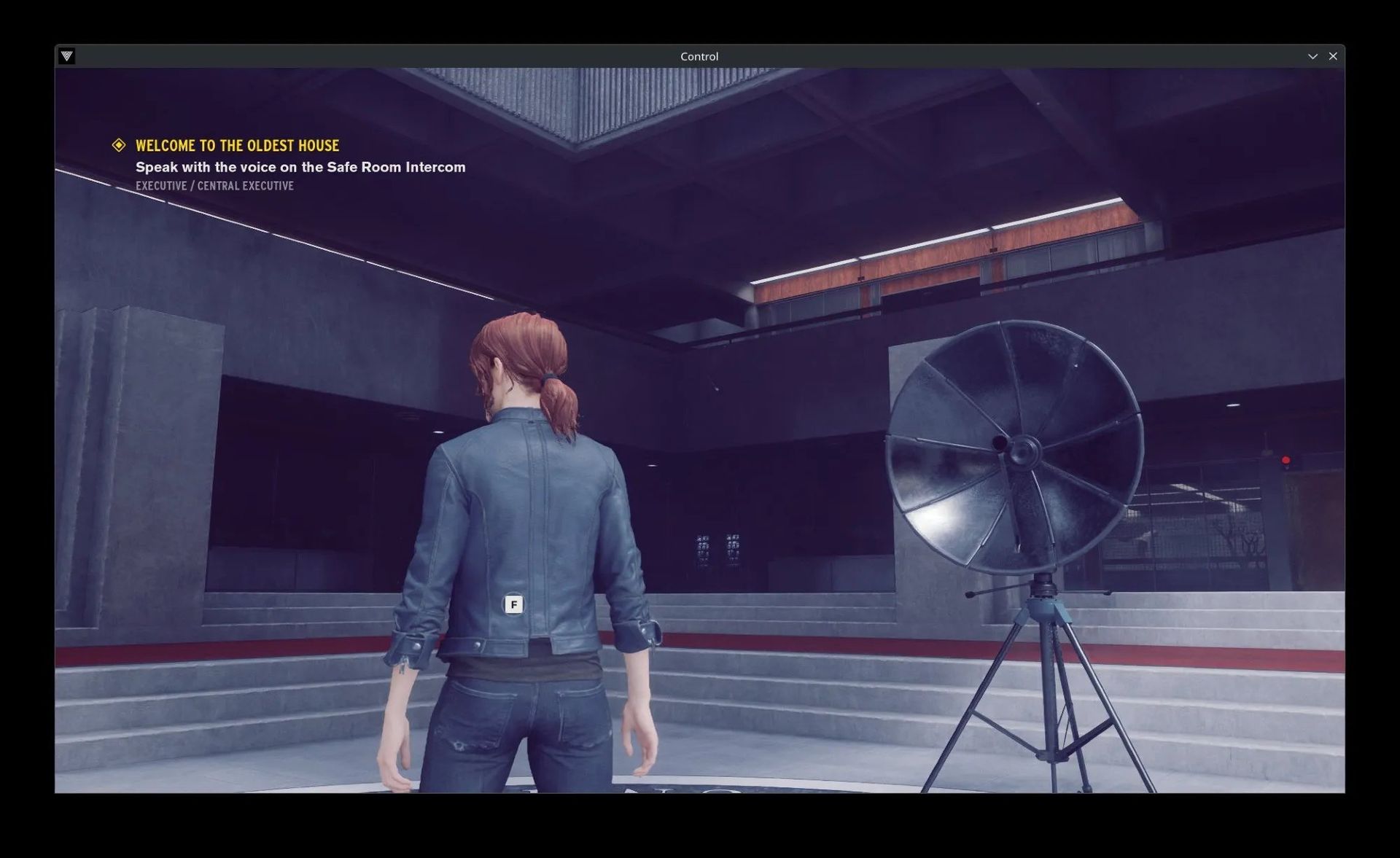
Image: DLSS in action on NVK via Ashton's experimental branch (Credit: Phoronix)
The Technical Bridge
Ashton enabled DLSS by implementing support for two proprietary NVIDIA Vulkan extensions—VK_NVX_binary_import and VK_NVX_image_view_handle—which act as conduits for NVIDIA's AI upscaling algorithms. DLSS relies on precompiled CUDA kernels, which NVK now interfaces with by translating Vulkan API calls to NVIDIA's native binary formats. This allows compatibility layers like DXVK and VKD3D-Proton (via DXVK-NVAPI) to leverage DLSS in Windows games running on Linux.
The work underscores a pragmatic approach: Instead of reverse-engineering DLSS, Ashton focused on integrating NVIDIA's existing proprietary components within Mesa's open framework. This hybrid model acknowledges the reality of vendor-specific technologies while advancing open driver capabilities.
Why It Matters
DLSS is a cornerstone of modern gaming performance, using AI to upscale lower-resolution frames with minimal quality loss. Its absence in open-source NVIDIA drivers has been a notable gap, especially as AMD's FidelityFX Super Resolution (FSR) works cross-platform. NVK's experimental DLSS support could eventually:
- Boost Linux gaming performance for NVIDIA GPU users
- Reduce reliance on proprietary drivers without sacrificing advanced features
- Accelerate Vulkan ecosystem maturity for hybrid open/closed workflows
The Road Ahead
Ashton clarified the code isn't merge-ready, requiring further refinement for stability and compatibility. Challenges include optimizing shader handling and ensuring seamless integration with Proton. However, this proof-of-concept validates that NVIDIA's AI-driven upscaling can coexist with open-source stacks—a win for Linux gaming advocates and a nod to Valve's ongoing investment in open graphics infrastructure.
Source: Phoronix (Michael Larabel)
Comments
Please log in or register to join the discussion