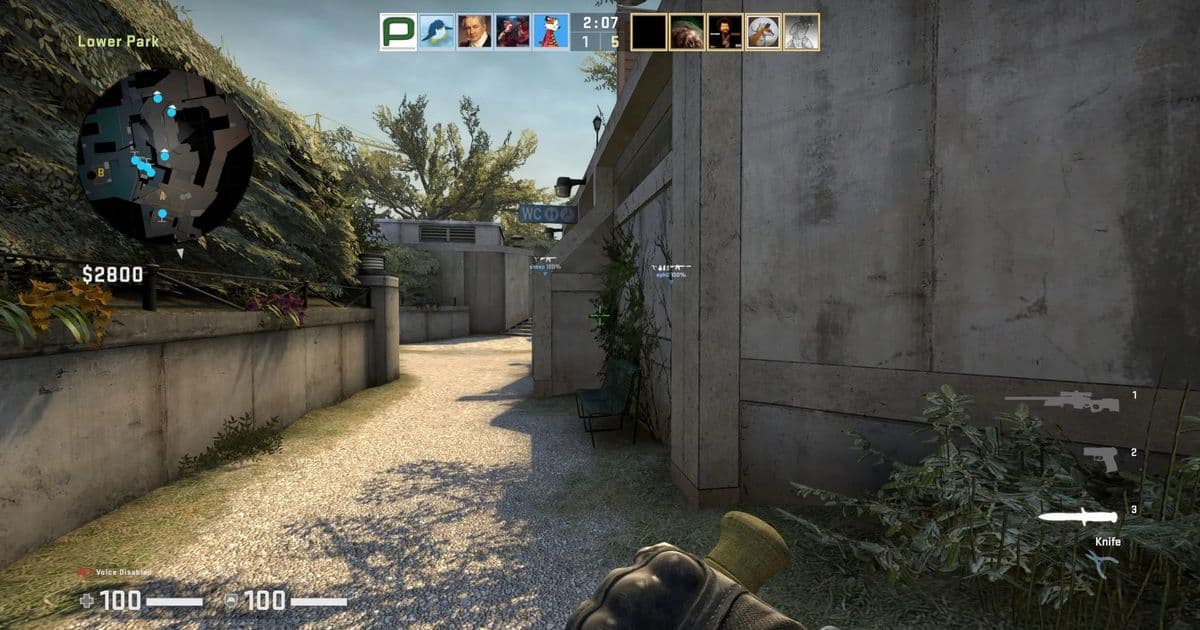
After a nearly four-year dormancy, Valve has released GameNetworkingSockets v1.5 with Rust bindings, P2P improvements, and enhanced compatibility for game developers and server administrators.
GameNetworkingSockets, Valve's open-source networking library that powers titles from Counter-Strike to Dota 2, has received its first major update in nearly four years. The new v1.5 release brings significant improvements including initial Rust bindings, enhanced peer-to-peer capabilities, and better platform compatibility, marking a welcome return to active development for this critical gaming infrastructure component.
What is GameNetworkingSockets?
GameNetworkingSockets serves as a fundamental network transport layer for games, providing both reliable and unreliable message types through a connection-oriented API that maintains the simplicity of UDP while offering additional features. The library supports IPv6, peer-to-peer networking, encryption, and other networking essentials that have made it suitable for Valve's flagship titles. Since its open-source debut in 2018, it has been adopted by various game developers beyond Valve's ecosystem.
The Long Hiatus
The previous version, v1.4.1, was released back in June 2022, making today's v1.5 release the first significant update in nearly four years. This extended period without updates raised questions about the library's active maintenance status, especially as networking technologies continued to evolve. The return of regular development is significant news for game developers who rely on this library for their networking needs.
Key Improvements in v1.5
The most notable addition in GameNetworkingSockets v1.5 is the inclusion of initial Rust bindings. While developed by the open-source community rather than Valve directly, this expansion to Rust support opens the library to a growing segment of game developers who prefer Rust's memory safety guarantees for performance-critical networking code. The Rust bindings maintain the same API structure as the C++ version, allowing for seamless integration into existing Rust game engines and networking stacks.
Peer-to-peer networking has received significant improvements in this release. For games that rely on direct connections between players rather than dedicated servers, these enhancements could translate to more stable connections and reduced latency in P2P scenarios. The improvements likely include better NAT traversal techniques and more robust connection establishment protocols.
Developers will also appreciate the enhanced CMake integration, which simplifies the process of incorporating GameNetworkingSockets into various build systems. This is particularly valuable for indie developers and smaller studios that may not have dedicated build engineering teams.
The update addresses numerous compiler and platform compatibility issues, ensuring that the library works reliably across different development environments and target platforms. This broad compatibility is crucial for a networking library that needs to function across Windows, Linux, macOS, and various game consoles.
Security has always been a priority for networking libraries, and GameNetworkingSockets v1.5 includes several security fixes. While specific vulnerabilities weren't detailed in the announcement, regular security updates are essential for protecting against potential exploits that could compromise game servers or player connections.
Perhaps most importantly for long-term maintenance, Valve has implemented better continuous integration (CI) testing for the library. This automated testing infrastructure helps catch regressions early and ensures that new changes don't introduce unexpected bugs, which is particularly valuable for a library that needs to maintain high reliability in production environments.
Performance Implications
While the announcement doesn't provide specific benchmark data, networking libraries like GameNetworkingSockets can have significant impacts on game performance. The reliability of network connections affects everything from player movement synchronization to hit registration in competitive games. The P2P improvements could reduce latency in peer-hosted matches, while the security fixes help prevent denial-of-service attacks that could degrade server performance.
For server administrators, the compatibility improvements mean easier deployment across different Linux distributions and configurations. The enhanced CI testing should result in a more stable library that requires fewer emergency patches in production environments.
Build Recommendations
For game developers currently using GameNetworkingSockets:
- Consider upgrading to v1.5 to benefit from the Rust bindings if you're working in a Rust-based environment
- Test the P2P improvements if your game uses peer-to-peer connections
- Review the security patches and apply them to your game servers
- Take advantage of the improved CMake integration to simplify your build process
For server administrators:
- Update your game servers to v1.5 to benefit from security fixes
- Test the new version in a staging environment before deploying to production
- Monitor performance metrics after the update to ensure no regressions
Future Outlook
The return of active development to GameNetworkingSockets is promising for the game development community. With the addition of Rust support and improved CI practices, the library appears positioned to remain relevant in an evolving gaming landscape. The continued maintenance and improvement of this foundational networking component will benefit both large studios and indie developers who rely on it for their online multiplayer games.
The code for GameNetworkingSockets v1.5 is available on GitHub under a BSD 3-clause license, making it accessible for both commercial and non-commercial use. Developers can explore the source code, contribute improvements, and integrate the library into their own projects with minimal licensing restrictions.
For more information about GameNetworkingSockets and to access the source code, visit the official GitHub repository. The library's documentation provides detailed information on implementation and best practices for game networking.
This update from Valve demonstrates their continued commitment to supporting the broader game development ecosystem through open-source contributions, even as they focus on their own platform and content development. The resurrection of GameNetworkingSockets development is good news for anyone building multiplayer games or managing game servers that rely on robust networking infrastructure.
Comments
Please log in or register to join the discussion