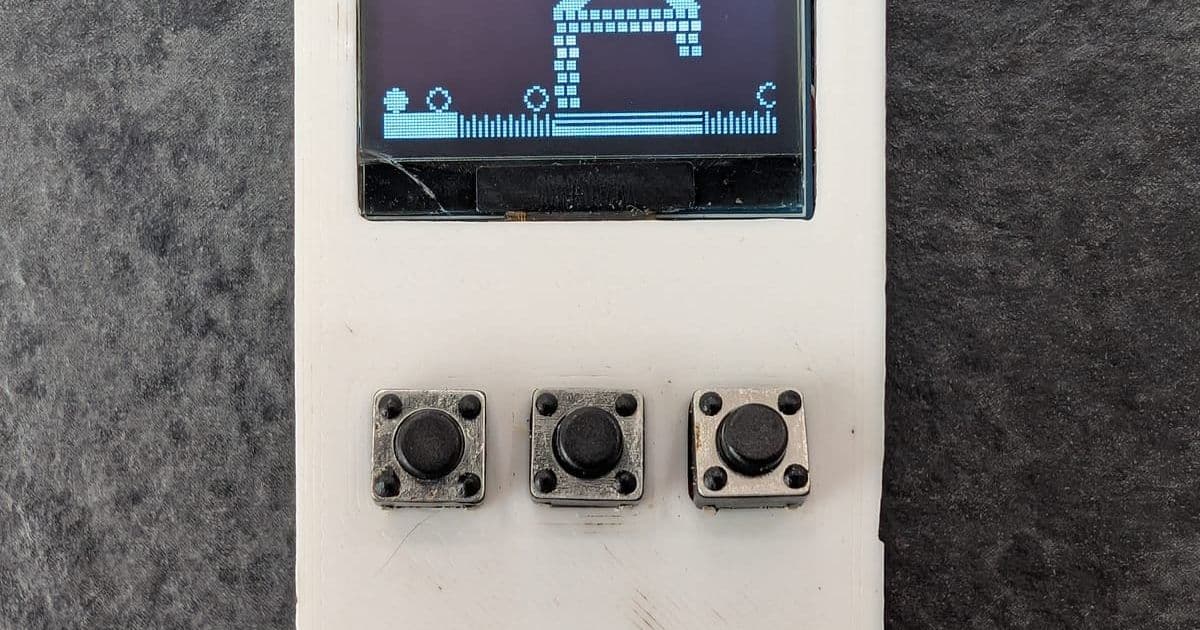
A developer demonstrates the remarkable potential of modern programming languages by creating a playable handheld gaming console on a microcontroller costing just $0.09, showcasing how Rust's safety and performance can thrive even on severely constrained hardware.
In an era where technological advancement often seems synonymous with increasing complexity and cost, a recent project offers a refreshing perspective on what's possible when we combine clever engineering with accessible tools. By leveraging the Rust programming language on one of the world's cheapest microcontrollers, a developer has created a functional handheld gaming console that challenges our assumptions about performance, resource constraints, and the practical applications of modern programming paradigms.
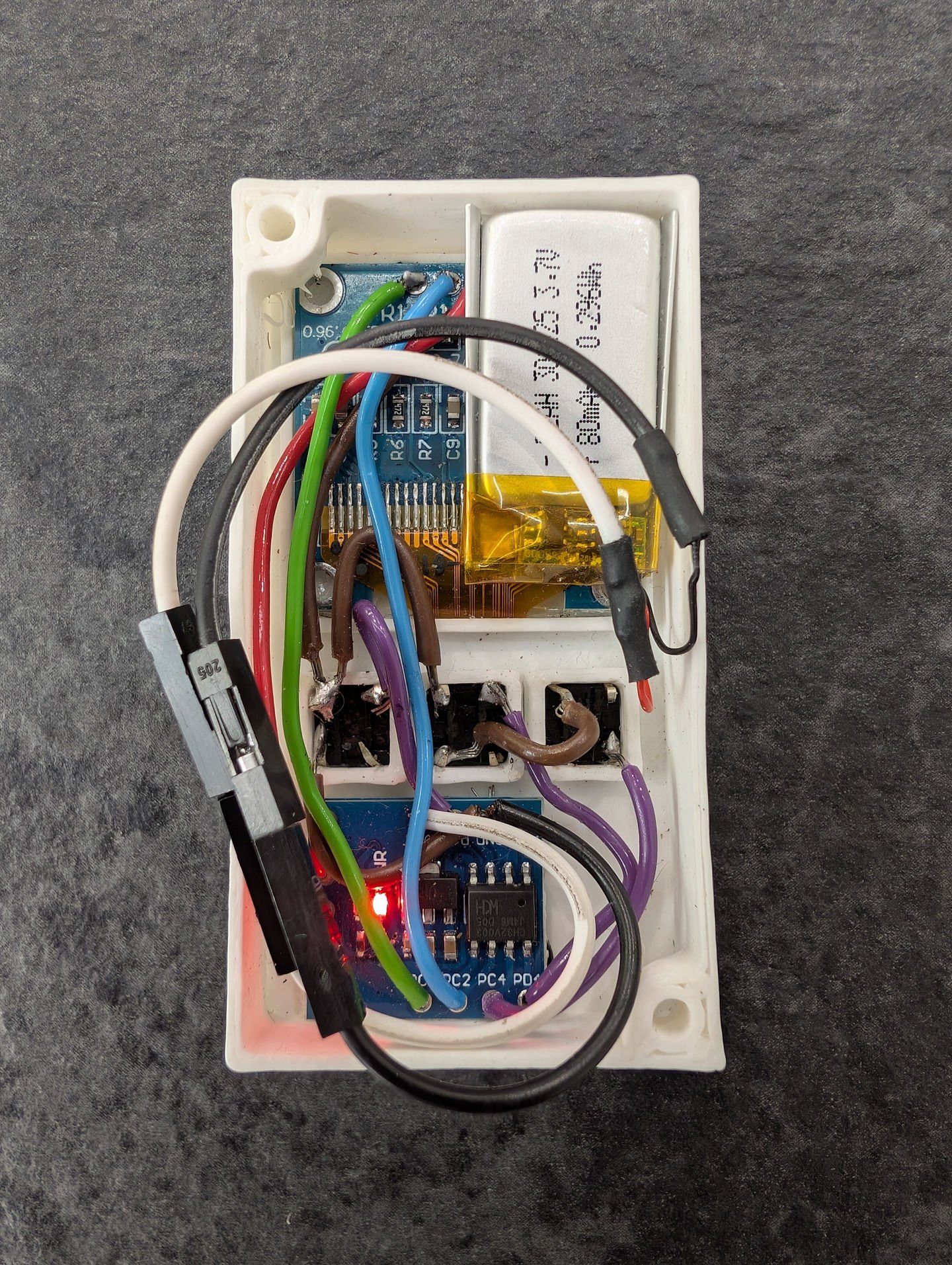
The CH32V003 microcontroller at the heart of this project represents a fascinating intersection of affordability and capability. Priced at an astonishing $0.09 in bulk quantities, this RISC-V-based chip offers 32-bit processing power at 48MHz with only 2KiB of RAM and 16KiB of flash memory. These specifications place it in the same category as the venerable Atmel ATmega328P found in early Arduino boards, yet with significantly improved performance characteristics. What makes this project particularly compelling is not just the hardware selection, but the software ecosystem that enables such ambitious applications on such constrained devices.
The developer's choice of Rust for this endeavor reflects a growing trend in embedded systems development toward languages that offer both safety and performance. Having recently worked with Rust on the more capable ESP32 using libraries like Embassy and esp-hal, the author recognized an opportunity to apply these same principles to an even more challenging platform. The existence of the ch32-hal project provided the necessary framework to bring Rust to the CH32V003, creating an environment where a modern, memory-safe language could be tested against the most extreme constraints of embedded development.
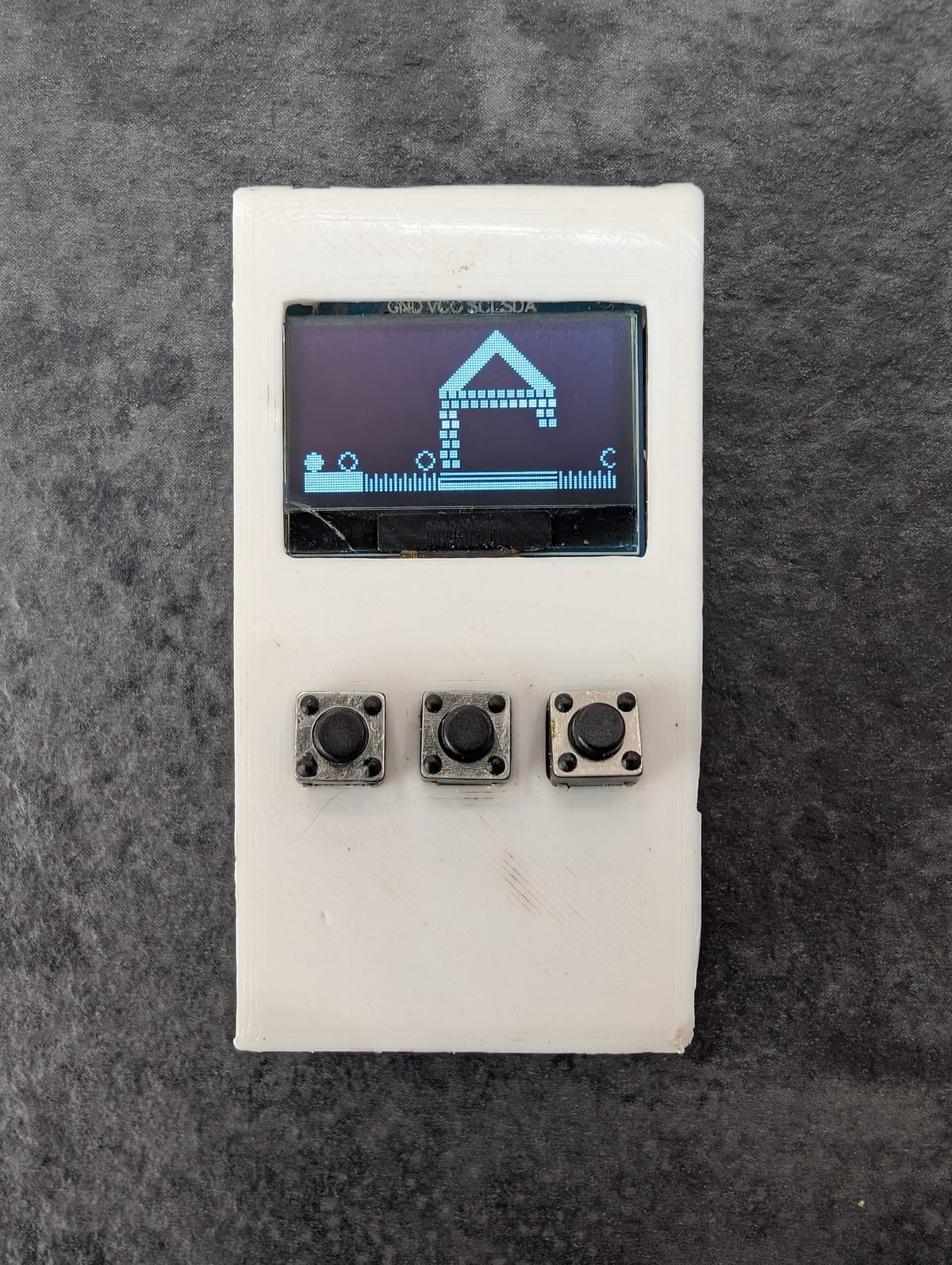
The technical challenges presented by this project are substantial, particularly when considering the target display: a 128x64 pixel SSD1306 OLED. With each pixel represented by a single bit, the display requires 1024 bytes just to maintain its framebuffer—nearly half of the available RAM. The solution demonstrates elegant engineering: rather than attempting to maintain a complete framebuffer in RAM, the developer exploited the display's persistent nature, sending only the current row of rendering data while the display itself maintained the complete image. This approach reduced the RAM requirement to just 128 bytes for the display buffer, leaving precious memory for game logic and state management.
Rendering efficiency became a critical concern given the limited processing power. The implementation featured a sophisticated culling system that only rendered objects visible in each 128x8 pixel strip being processed. By maintaining bounding box information for each game object and checking visibility before rendering, the system minimized unnecessary calculations. Each object referenced 8x8 tile textures stored in ROM, which were blitted directly to the display buffer at the appropriate positions. This approach balanced visual quality with computational feasibility, creating a game environment that felt complete despite the severe resource limitations.
Perhaps the most significant technical challenge—and the most revealing insight into embedded systems development—was the discovery that floating-point mathematics was crippling performance. The CH32V003 implements the RV32EC instruction set, which lacks hardware floating-point support, resulting in software emulation that can introduce up to a 100x performance penalty for floating-point operations. This bottleneck was overcome through the adoption of fixed-point mathematics, where 32-bit integers were partitioned to represent both integer and fractional components (22 bits for integer, 10 bits for fractional values). The fixed crate provided operator overloading that made these fixed-point numbers behave like regular numerical types, eliminating the need for specialized syntax while dramatically improving performance. This optimization alone transformed the game from an unplayable 1 FPS experience to a responsive 30+ FPS demonstration of what's possible on ultra-constrained hardware.
The game's map design further exemplifies the ingenuity required for such projects. Rather than storing map data as a straightforward array, the developer encoded the level as an array of u64 values, with each 4-bit nibble representing a tile index. This sideways storage allowed the entire map to be represented compactly while enabling lightning-fast access through simple bit shifts and masks. The display functioned as a sliding window over this map, calculating visible tiles based on the player's position and rendering only what was necessary. This approach demonstrated how careful data structure design can overcome seemingly insurmountable memory limitations.
The implications of this project extend far beyond the creation of an interesting gadget. It represents a significant data point in the ongoing discussion about programming languages for embedded systems. Rust's ability to provide memory safety without sacrificing performance has been well-documented in more capable environments, but this project demonstrates that these benefits remain valuable even when every byte and clock cycle counts. The success of this implementation challenges the notion that resource-constrained devices must rely on C or assembly code for optimal performance, showing that modern language features can coexist with the most extreme hardware limitations.
Moreover, the project highlights the democratization of technology through affordable components. A microcontroller costing less than a penny in bulk quantities—when combined with an appropriate display and minimal additional components—creates a platform accessible to hobbyists, students, and developers worldwide. This accessibility fosters innovation at the edges of computing, where constraints breed creativity and limitations drive elegant solutions.
The project is not without its limitations, of course. The 128x64 display resolution imposes inherent visual constraints, and the 2KiB RAM limit prevents the implementation of more complex game mechanics or richer visual elements. Additionally, while the fixed-point mathematics solved the floating-point performance issue, it introduced its own complexities in terms of precision management and debugging. These limitations, however, are not flaws but rather the defining characteristics of the platform that make the achievement noteworthy.
For developers interested in exploring similar projects, the source code provides an excellent starting point. The implementation demonstrates practical techniques for memory management, efficient rendering, and performance optimization that can be applied to other embedded projects. The GitHub repository includes code for both the actual device and a simulator, allowing developers to experiment without immediately requiring physical hardware.
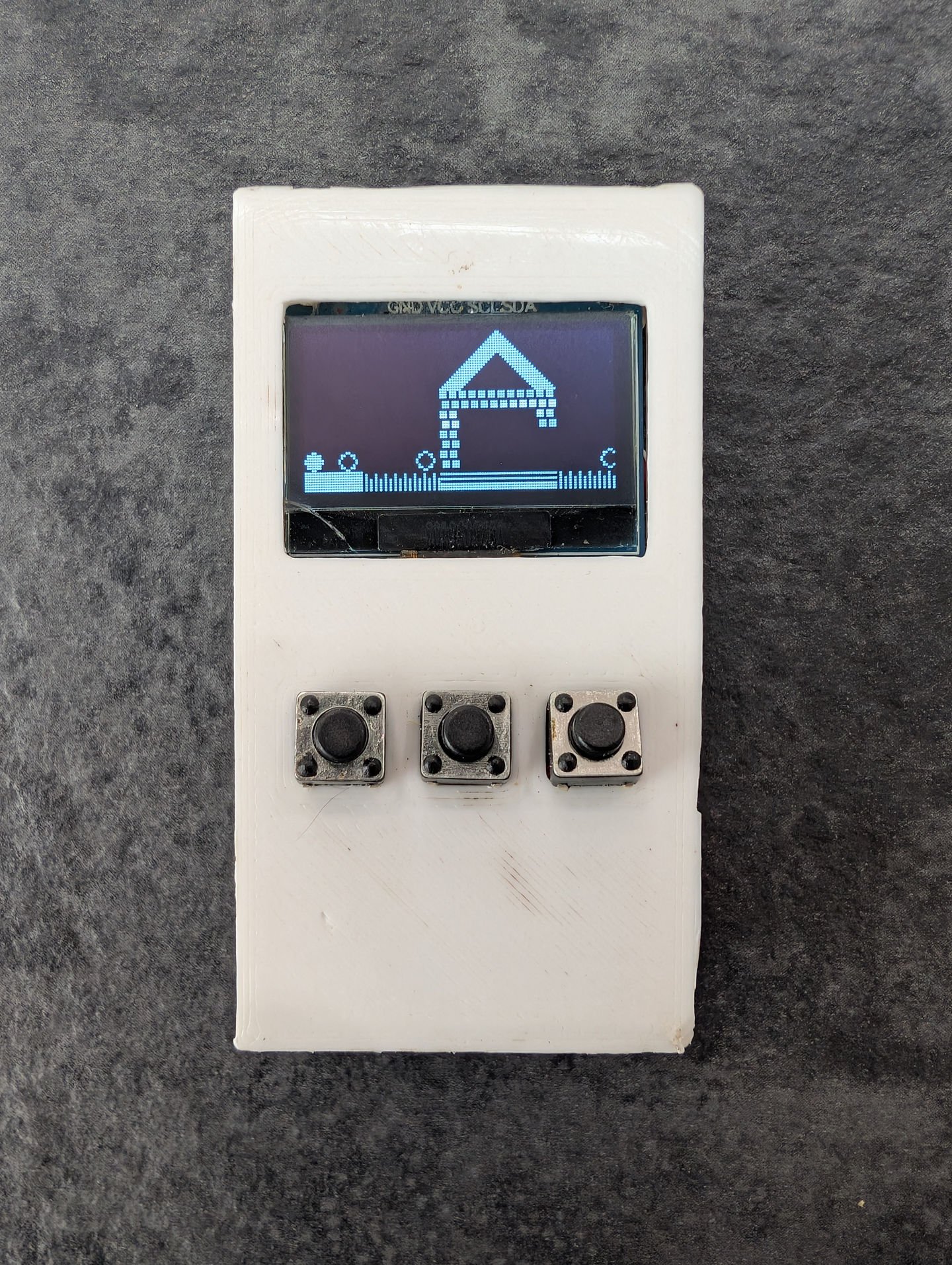
This project serves as a reminder that the most interesting technological innovations often emerge not from the most powerful platforms, but from the most constrained ones. By pushing Rust to its absolute limits on one of the cheapest microcontrollers available, the developer has created not just a functional game console, but a demonstration of how thoughtful engineering and appropriate tool selection can overcome seemingly insurmountable limitations. In a world where computing power is often taken for granted, this $1 gaming console offers a humbling perspective on the relationship between hardware, software, and creativity.
The technical achievements documented in this project provide valuable insights for the embedded development community. The successful implementation of a responsive game on such severely constrained hardware validates several design principles that can inform future projects. The exploitation of display persistence as a pseudo-framebuffer, the implementation of sophisticated culling algorithms, and the strategic use of fixed-point mathematics all represent approaches that could be applied to other resource-constrained embedded systems.
Perhaps most significantly, this project demonstrates the viability of Rust as a language for extreme embedded development. While the language has gained significant traction in areas like operating systems, web services, and even robotics, its application to the most basic microcontrollers has been less explored. This implementation provides concrete evidence that Rust's benefits—memory safety, thread safety (where applicable), and high performance—are not just theoretical advantages but practical realities even in environments with kilobytes of memory and megahertz clock speeds.
The project also highlights an important aspect of modern embedded development: the growing ecosystem of support libraries. The ch32-hal project, the ssd1306 display driver, and the fixed crate all played crucial roles in making this project feasible. This ecosystem reduces the barrier to entry for ambitious embedded projects, allowing developers to focus on application logic rather than low-level implementation details. As these libraries continue to mature and expand, we can expect to see increasingly sophisticated applications running on increasingly affordable hardware.
From an educational perspective, this project offers an excellent case study for teaching embedded systems principles. The constraints of the CH32V003 force developers to confront fundamental trade-offs between memory usage, processing power, and feature implementation. These are the same trade-offs that have defined embedded development for decades, but presented through the lens of modern tools and methodologies. Students and hobbyists can gain valuable insights into computer architecture, memory management, and optimization techniques by studying how this project overcame its limitations.
The broader implications for the RISC-V architecture are also noteworthy. While the CH32V003 represents a very basic implementation of RISC-V, its affordability and the growing software ecosystem suggest a promising future for the architecture in low-cost embedded applications. As RISC-V continues to evolve and gain market share, projects like this demonstrate the practical viability of the architecture beyond academic or high-performance applications.
Looking forward, this project opens several interesting avenues for exploration. The techniques developed for this implementation could be applied to other ultra-low-cost microcontrollers, potentially creating a new class of accessible development platforms. The fixed-point mathematics approach, in particular, could be standardized and incorporated into more embedded development frameworks, reducing the need for developers to rediscover these solutions independently.
Additionally, the success of this project suggests opportunities for educational initiatives targeting younger audiences. A $1 gaming console could serve as an excellent platform for introducing computer science and engineering concepts to students who might not have access to more expensive development kits. The combination of affordability, visual feedback, and immediate playability creates an engaging learning environment.
The project also invites consideration of the environmental implications of ultra-low-cost computing. By maximizing the utility of minimal hardware resources, this approach represents a more sustainable model of computing—one that minimizes material usage while maximizing functionality. In an era growing increasingly concerned with the environmental impact of technology, such approaches may become more important.
For the developer community, this project serves as both inspiration and challenge. It demonstrates what's possible when we combine modern tools with clever engineering, while simultaneously raising the bar for what we consider achievable on minimal hardware. The source code availability ensures that others can build upon this foundation, potentially creating an ecosystem of ultra-low-cost gaming and interactive devices.
In conclusion, this $1 gaming console built with Rust on the CH32V003 microcontroller represents more than just an interesting technical achievement. It embodies a philosophy of computing that values resourcefulness, accessibility, and elegant problem-solving. By pushing modern programming languages to their absolute limits on some of the cheapest hardware available, the project challenges our assumptions about what's possible and invites us to reconsider the relationship between hardware, software, and creativity. In a world where computing power is often taken for granted, this humble console offers a powerful reminder that innovation thrives not in abundance, but in constraint.
Comments
Please log in or register to join the discussion