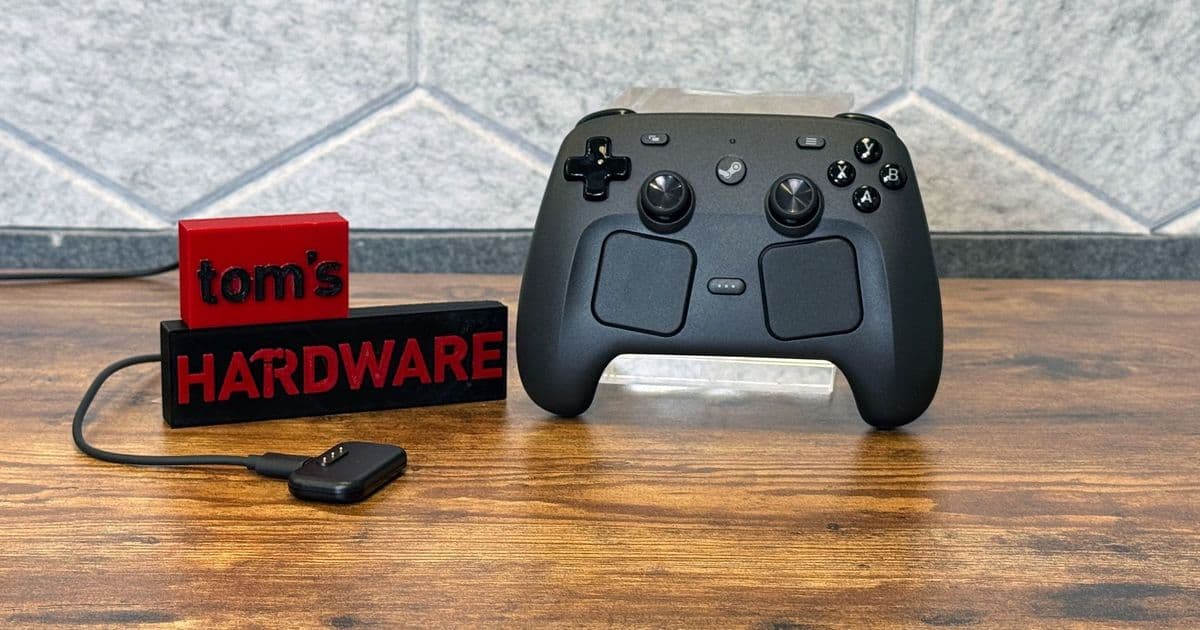
Valve's $99 Steam Controller delivers deck-like inputs for couch gaming through advanced TMR joysticks and extensive Steam Input customization, but its functionality remains tightly coupled to the Steam platform, creating a nuanced value proposition for invested users while highlighting trade-offs in cross-platform compatibility.
Valve's Steam Controller arrives as a deliberate extension of the Steam Deck's input philosophy to traditional PC gaming setups, priced at $99 to sit between standard first-party controllers and premium customizable options. At its core, the device leverages Tunnel Magnetoresistance (TMR) technology in its joysticks—a sensor approach that measures magnetic field changes via electron tunneling through thin films—to eliminate the potentiometer-based drift plaguing conventional analog sticks. This represents a meaningful step beyond the Hall-effect sensors now common in premium controllers, as TMR offers superior thermal stability and lower power consumption, critical for the claimed 35+ hour battery life from its 8.39 WHr cell.
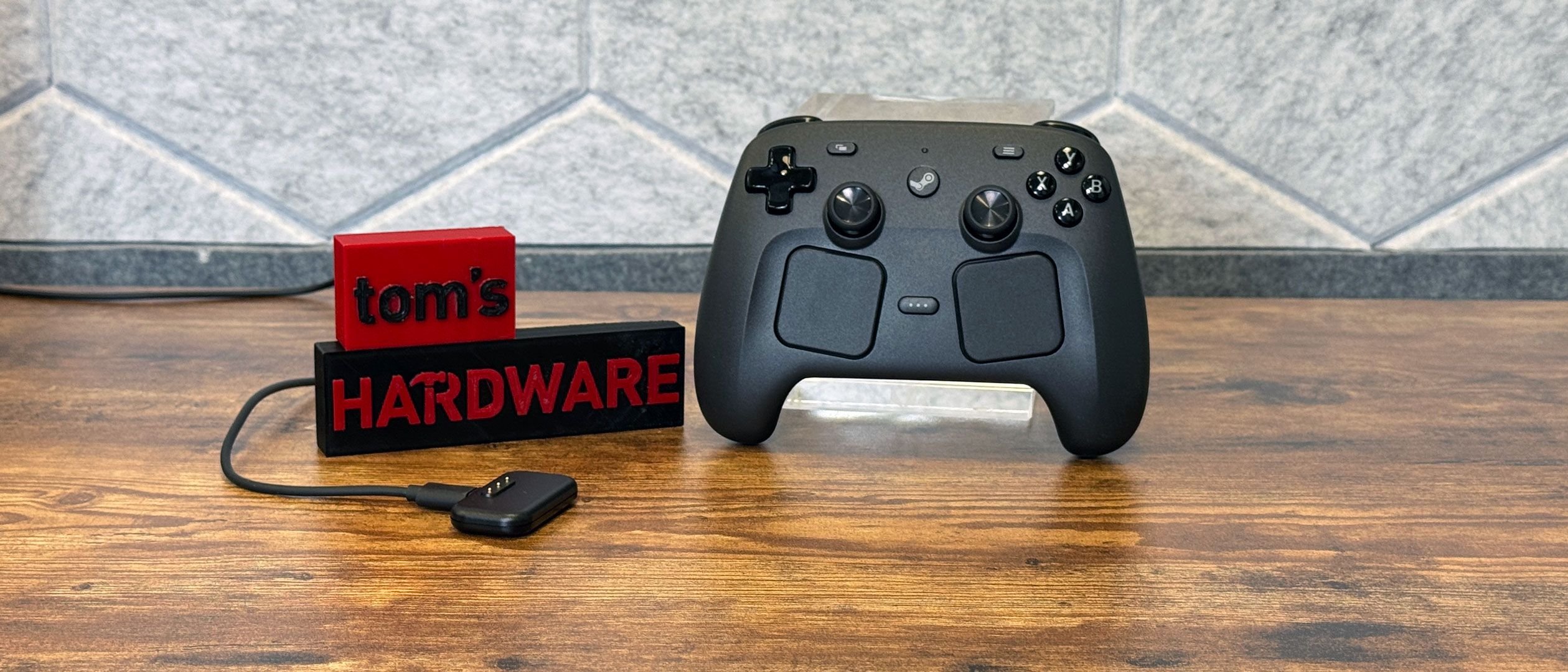
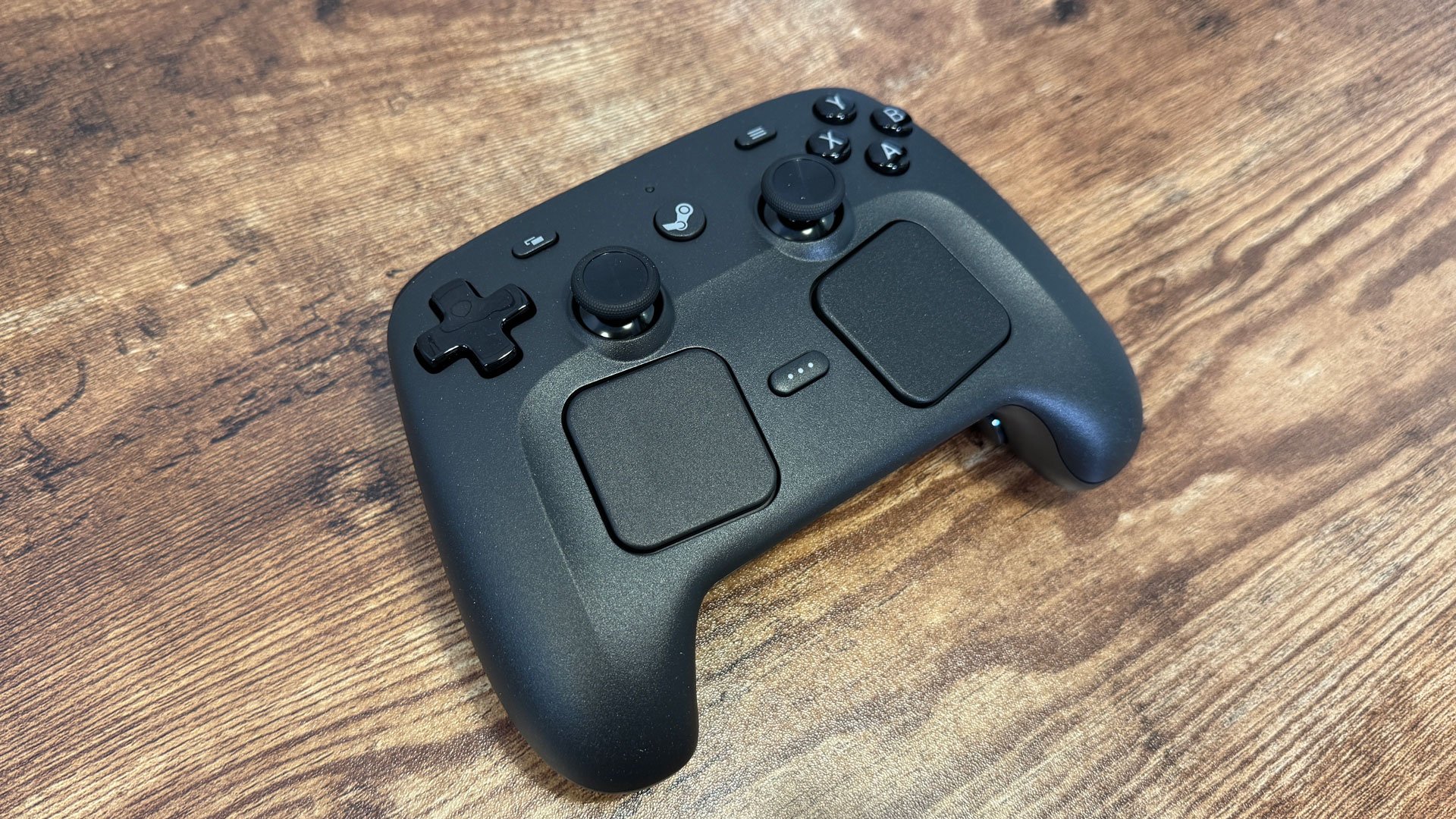
The controller's physical design reflects deliberate ergonomic trade-offs. Weighing 292 grams (0.64 lbs with AA-equivalent density), it matches the Xbox Series X/S controller's mass when accounting for battery requirements, though its front-heavy distribution—achieved by placing most weight anterior to the grip zone—creates a distinct feel that avoids rear-hand contact during use. This contrasts with the DualSense's more balanced 280g profile but aligns with Valve's goal of replicating the Steam Deck's heft. Notably, the four rear buttons—positioned on the grips rather than the Deck's flat rear surface—leverage natural hand anatomy for improved accessibility, addressing a key pain point in Valve's handheld design.
Connectivity centers on the Steam Controller Puck, a dual-function accessory serving as both a 2.4 GHz wireless dongle (via USB-C connection) and a magnetic charging dock. This avoids the latency inconsistencies sometimes seen in Bluetooth implementations while maintaining the option for standard Bluetooth pairing through a specific button combination (B + right bumper). The USB-C port enables direct wired use or firmware updates—a necessity Valve emphasizes during initial setup, reflecting the controller's reliance on ongoing Steam Input refinement.
The true differentiator remains Steam Input's per-game configurability, which transforms the controller from a generic gamepad into a context-sensitive input device. Every element—including the dual touchpads (angled to match grip orientation), TMR joysticks with capacitive touch, gyroscope, and rear buttons—can be remapped independently per title through Steam's interface. This depth exceeds what's available on stock DualSense or Xbox controllers without purchasing premium variants like the Edge or Elite Series 2, though it requires users to engage with Steam's settings menu—a hurdle Valve acknowledges by developing upcoming tutorial resources.
Market positioning reveals a calculated ecosystem play. Priced below the $149.99 Xbox Elite Series 2 and $199.99 DualSense Edge but above standard $49-$64 Xbox Wireless and $74-$85 DualSense controllers, the Steam Controller targets users already invested in Steam's software layer. Its inability to function as a standard HID device outside Steam—appearing merely as a mouse on non-Steam platforms—underscores Valve's strategic choice to avoid kernel-level drivers that could introduce system instability, as explained by programmer Pierre-Loup Griffais. This creates a clear value dichotomy: for Steam-exclusive players, the controller offers Deck-like versatility at a mid-tier price; for multi-platform gamers, alternatives like the Xbox controller provide broader compatibility at lower cost.
Battery validation shows the 8.39 WHr cell delivering real-world endurance consistent with Valve's claims when power-intensive features like haptics and gyro remain disabled per game—a configurable trade-off that contrasts with the fixed 5-hour runtime of the DualSense Edge under similar conditions. The magnetic Puck charging system further reduces friction, eliminating the need for disposable AA batteries while enabling effortless top-offs between sessions.
Ultimately, the Steam Controller succeeds as a specialized tool for the Steam-native audience, translating the Deck's input innovation to the living room without requiring a handheld purchase. Its TMR joysticks and rear-button refinement address tangible pain points, while Steam Input's depth provides genuine customization value. However, the platform restriction remains a significant limitation that confines its appeal to users whose gaming lives already orbit Steam—a constraint that may ease only if Valve expands the controller's HID compliance beyond its launcher ecosystem, a shift the company has thus far deemed too risky for system stability.
Comments
Please log in or register to join the discussion