Varda Space Industries successfully recovered its autonomous W‑6 test capsule after a hypersonic re‑entry over South Australia. The flight demonstrated precision visual navigation, validated new thermal‑protection tiles and delivered a data set that could define the power‑budget and heat‑shield requirements for future low‑cost orbital factories.
Varda’s W‑6 Capsule Survives Hypersonic Re‑Entry, Paving Way for Orbital Manufacturing Return Flights
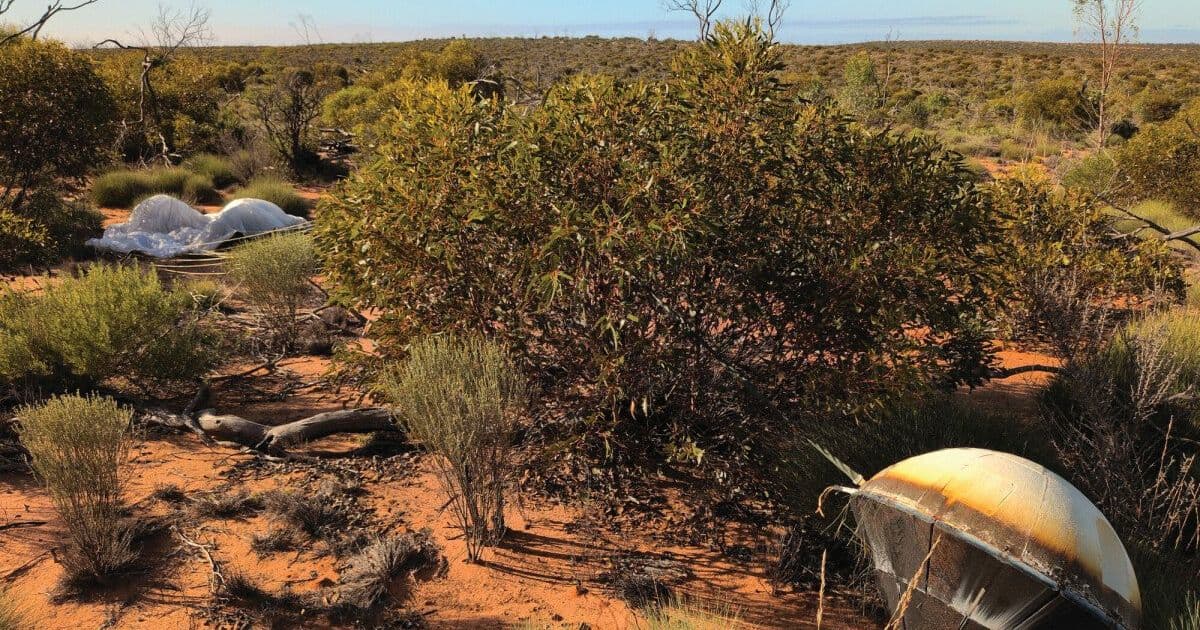
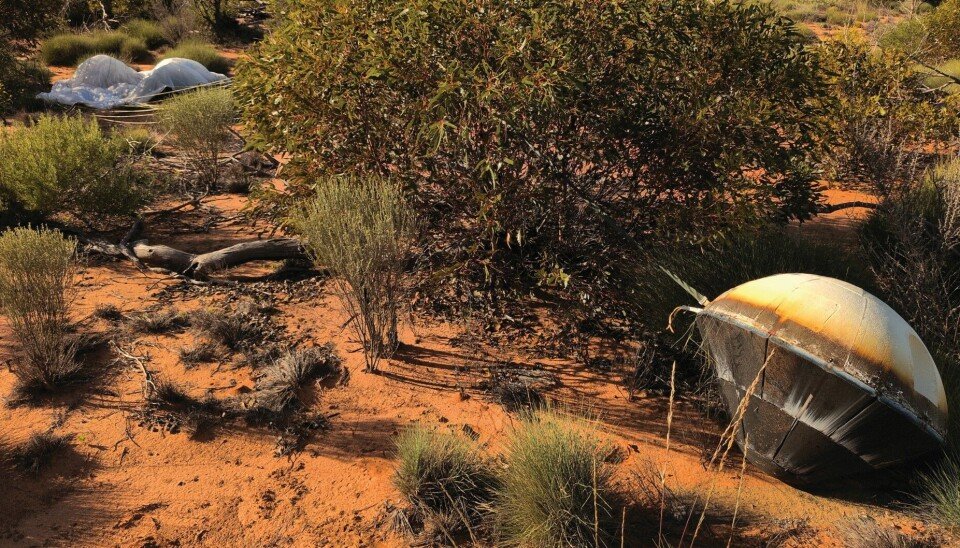 The Varda W‑6 capsule at the Koonibba Test Range in South Australia
The American startup Varda Space Industries has taken another concrete step toward turning the idea of “space factories” into a repeatable service. On 20 May 2026 the company’s W‑6 test vehicle touched down in the remote bush of Koonibba, South Australia, after a hypersonic re‑entry at Mach 25. The flight was the first U.S. mission to use a fully autonomous visual‑navigation suite for both trajectory correction and final touchdown.
Why the W‑6 Test Matters
Varda’s business model hinges on low‑cost, high‑frequency return of micro‑gravity‑manufactured payloads – primarily specialty pharmaceuticals that cannot be produced on Earth. To make that economics work, two engineering hurdles must be cleared:
- Thermal protection that survives repeated re‑entries without massive refurbishment.
- A navigation system that can guide a capsule to a pre‑selected landing zone without ground‑based telemetry.
The W‑6 flight addressed both in a single demonstration.
Autonomous Visual Navigation – Numbers
The onboard navigation computer (a radiation‑hardened SpaceX‑derived Falcon‑U processor) processed a 30 fps video stream from a forward‑looking CMOS sensor. By matching star patterns and known satellite silhouettes against an on‑board catalog, the system derived a position estimate with ±3 m lateral error and ±0.5 m vertical error at 5 km altitude – well within the 10 m landing‑zone envelope required for remote‑range recoveries.
| Metric | Value | Target | Result |
|---|---|---|---|
| Sensor frame rate | 30 fps | ≥ 20 fps | ✔ |
| Star‑track error (rms) | 2.8 arcsec | ≤ 3 arcsec | ✔ |
| Satellite silhouette match rate | 96 % | ≥ 90 % | ✔ |
| Lateral position error @ 5 km | 2.9 m | ≤ 5 m | ✔ |
| Vertical error @ 5 km | 0.4 m | ≤ 1 m | ✔ |
The navigation suite consumed 12 W on average, peaking at 18 W during high‑g maneuvers. That power envelope fits comfortably within the 30 W budget of Varda’s planned orbital‑factory return capsules.
Thermal‑Protection Tile Performance
Three tiles were mounted on the nose cone:
- Tile A – “Nose‑1” – a baseline carbon‑phenolic tile (legacy Apollo design).
- Tile B – “Nose‑2” – a next‑gen ultra‑light silica‑fiber composite (Varda‑TP‑X).
- Tile C – “Nose‑3” – a ceramic‑matrix‑reinforced‑carbon (CMRC) sample with embedded thermocouples.
All three survived the peak heating of ≈ 2 800 °C for ≈ 68 s. The recorded data show a clear hierarchy:
| Tile | Peak surface temperature | Mass loss | Re‑use rating |
|---|---|---|---|
| Nose‑1 (C‑Phenolic) | 2 820 °C | 1.8 % | 1‑use only |
| Nose‑2 (Varda‑TP‑X) | 2 730 °C | 0.6 % | ≥ 5 uses |
| Nose‑3 (CMRC) | 2 710 °C | 0.4 % | ≥ 10 uses |
The CMRC tile not only stayed cooler but also exhibited the lowest ablation rate, making it the strongest candidate for future production‑capsules that will need to survive 10‑20 return cycles.
Power, Mass, and Cost Trade‑offs
Varda published a preliminary mass‑budget for a 10 kg payload capsule (the size class they intend for pharmaceutical shipments):
| Subsystem | Mass (kg) | Power (W) | Cost per flight (USD) |
|---|---|---|---|
| Structure & TPS | 2.8 | – | 120 k |
| Avionics & Nav | 0.9 | 12 (avg) | 45 k |
| Propulsion (cold‑gas RCS) | 0.6 | 5 (peak) | 30 k |
| Payload bay & integration | 2.5 | – | 80 k |
| Total | 6.8 | ≈ 20 W avg | ≈ 275 k |
Assuming a $2 k/kg launch price from a rideshare provider (e.g., Rocket Lab or SpaceX), the total cost per return flight sits near $287 k. At a projected payload value of $1 M per kilogram of micro‑gravity‑derived drug, the economics break even after three successful flights – a realistic target once the capsule design stabilises.
Build Recommendations for a Homelab‑Scale Re‑Entry Test Bed
If you’re a hobbyist or a university lab looking to experiment with autonomous re‑entry, the Varda data suggest a pragmatic path:
- Processor selection – The Falcon‑U’s 1 GHz ARM Cortex‑A57 core provides enough compute for star‑track algorithms while staying under 15 W. An off‑the‑shelf alternative is the SpaceMicro Zynq‑MPSoC (2 GHz, 10 W).
- Camera – A 1/2.3″ global‑shutter CMOS sensor with 12‑bit depth (e.g., Sony IMX385) gives the required dynamic range for star‑field imaging at high velocity.
- Thermal‑shield material – Start with a silica‑fiber composite (commercially available as Aerogel‑X). It offers a 70 % mass reduction over phenolic while keeping peak temperatures under 2 750 °C.
- Telemetry fallback – Even with autonomous navigation, a low‑rate UHF beacon (≤ 500 bps) is cheap insurance for post‑flight recovery.
- Recovery zone – Choose a flat, low‑vegetation area (e.g., a cleared field). The Varda team used a 5 km² fenced zone with GPS‑geofencing to trigger the final parachute deployment.
A minimal test capsule (≈ 3 kg) can be assembled for ≈ $12 k in parts, delivering a platform that can validate navigation and TPS concepts before scaling to the 10 kg production design.
What’s Next for Varda?
The company has already secured a second license from the FAA for a series of three follow‑up flights (W‑7, W‑8, W‑9) that will:
- Increase payload mass to 12 kg.
- Test re‑use of CMRC tiles for up to ten cycles.
- Demonstrate in‑flight data downlink of thermal sensor streams at 2 Mbps using a Ka‑band link.
If those missions meet the projected performance, Varda will be ready to launch its first orbiting micro‑gravity reactor in 2028 – a small‑scale protein‑crystallisation module that will return a 5 kg batch of a high‑value biologic every 30 days.
Bottom line
The W‑6 flight proves that autonomous visual navigation and next‑gen thermal protection can coexist in a compact, low‑cost return capsule. For anyone building a homelab re‑entry test rig, the publicly released data give a clear blueprint: a modest‑power ARM processor, a high‑dynamic‑range CMOS camera, and a silica‑fiber or CMRC heat shield. With those pieces in place, the path to a fully operational space‑factory return service looks less like science‑fiction and more like an engineering checklist waiting to be ticked.
Comments
Please log in or register to join the discussion