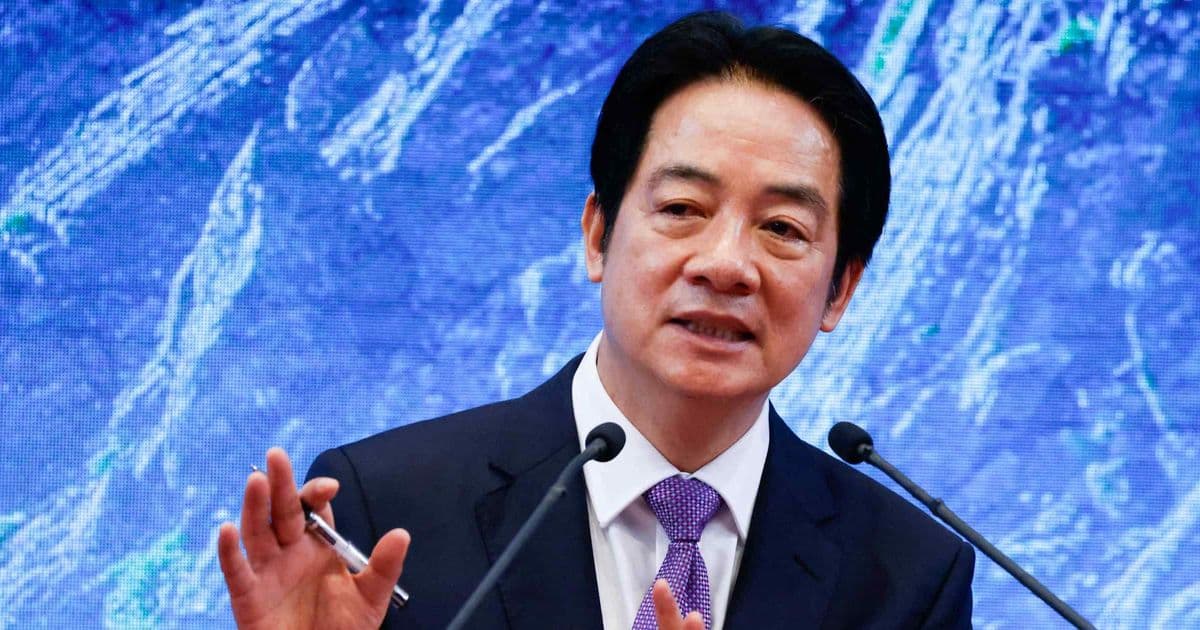
On the midpoint of his term, President Lai Ching‑te pledged that Taiwan will not cede its freedoms and unveiled a new budget line for indigenous unmanned aerial systems, signaling a shift in the island’s defense spending amid rising cross‑strait tensions.
Lai Reaffirms Taiwan’s Defense Autonomy, Announces Expanded Drone Funding
Business news
Taiwan’s president, Lai Ching‑te, used his two‑year anniversary in office to stress that the island’s future will be decided by its own people, not external powers. In the same speech he unveiled a new NT$12 billion (US$380 million) allocation for domestically produced combat drones and related research. The funding will be drawn from the 2027 defence budget and is earmarked for the Indigenous Unmanned Aerial Vehicle (I‑UAV) program that began in 2023.
Market context
The move arrives as Taiwan’s overall defence budget for 2027 is projected at NT$560 billion (US$17.6 billion), a 6 % increase from the 2025 figure. Historically, Taiwan has spent roughly 2 % of its GDP on defence; the latest plan nudges that share to about 2.2 %. The United States has been the island’s largest arms supplier, delivering over US$6 billion in weapons since 2020, including F‑16 upgrades and missile systems.
China’s People’s Liberation Army has expanded its coastal missile inventory by an estimated 15 % this year, according to the International Institute for Strategic Studies. The heightened missile threat has prompted analysts to argue that indigenous drone capability offers a cost‑effective counter‑measure, allowing Taiwan to conduct persistent surveillance and rapid strike missions without relying solely on foreign platforms.
What it means
- Supply‑chain diversification – By investing in home‑grown UAVs, Taiwan reduces its exposure to potential export controls or delays from foreign vendors. The I‑UAV program is partnered with local firms such as Aerospace Industrial Development Corporation (AIDC) and Giant Manufacturing, which stand to see revenue growth of 15‑20 % over the next three years.
- Export potential – If the drones meet performance benchmarks, Taiwan could market them to other democracies facing similar asymmetric threats. Early estimates suggest a US$200 million export market in Southeast Asia by 2030.
- Strategic signaling – The budget announcement reinforces Lai’s diplomatic stance: Taiwan will not “provoke” Beijing, but it will “prevent war” through credible self‑defence. This calibrated message aims to reassure U.S. allies while deterring Chinese escalation.
- Fiscal impact – The NT$12 billion line represents roughly 2 % of the total defence budget. While modest in absolute terms, it signals a shift toward high‑tech procurement, a trend echoed in other Asian defence ministries that are reallocating funds from legacy platforms to autonomous systems.
Overall, Lai’s drone funding underscores a broader pivot in Taiwan’s security architecture: leveraging indigenous technology to maintain a credible deterrent, sustain economic benefits for the domestic aerospace sector, and keep strategic options open amid an uncertain cross‑strait environment.
Comments
Please log in or register to join the discussion