
ZTE’s 2025 Sustainability Report details how the “All in AI, AI for All” vision helped the company exceed science‑based carbon targets, expand digital services to underserved regions, and secure multiple ISO and data‑privacy certifications. The report also outlines concrete compliance timelines for climate‑related disclosures, supply‑chain carbon accounting and cross‑border data governance.
ZTE Sustainability Report 2025 – AI‑Powered ESG Milestones
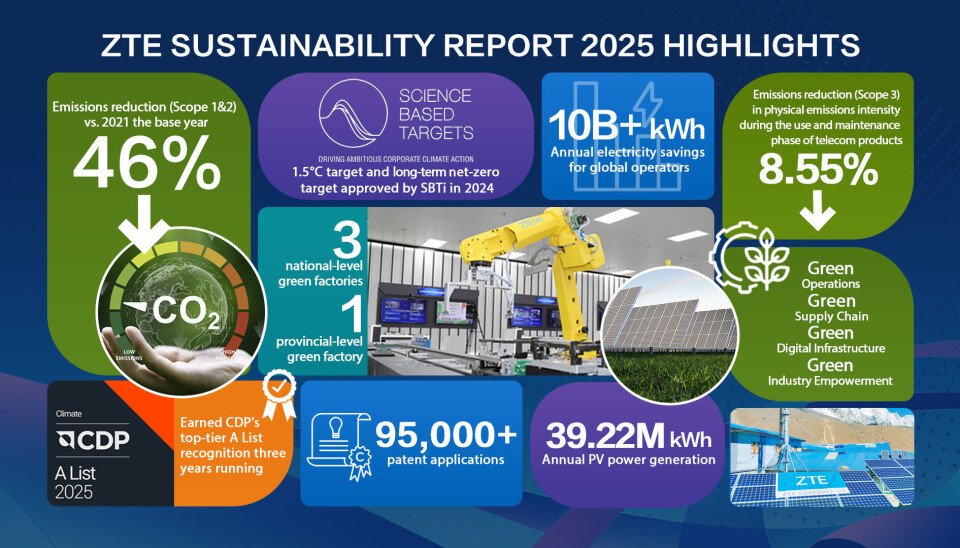 Caption: Highlights of ZTE Sustainability Report 2025
ZTE has published its eighteenth consecutive voluntary ESG disclosure, the Sustainability Report 2025. The document ties the company’s “All in AI, AI for All” vision to measurable outcomes across climate, digital inclusion and governance. Below is a compliance‑focused breakdown of the regulatory actions, required actions and implementation timelines that arise from the report.
1. Climate‑Related Disclosure Requirements
| Regulation / Standard | What ZTE Must Report | Compliance Timeline |
|---|---|---|
| EU Taxonomy Regulation (2023‑2025) | Alignment of 2025 capital expenditures with taxonomy‑eligible activities (6G, low‑power chips, renewable energy projects). | Annual reporting from FY 2025 onward; verification by 31 Dec 2026. |
| Science‑Based Targets initiative (SBTi) – Phase II | Demonstrate a 46 % reduction in Scope 1 & 2 emissions versus the 2021 baseline and an 8.55 % reduction in Scope 3 intensity. | Submit updated target validation by 30 June 2026; public disclosure in FY 2026 ESG report. |
| CDP Climate A List | Provide quantitative data on emissions, energy mix, and risk scenario analysis. | Annual questionnaire due 1 Oct each year; maintain A‑list status through 2027. |
| China’s Green Credit Guidelines | Evidence of green financing for photovoltaic projects (Xi’an, Changsha) and green factory certifications. | Quarterly reporting to the People’s Bank of China; next review Q2 2026. |
Key actions for internal teams
- Consolidate emissions data from the new AI‑based dynamic scaling system into the corporate GHG inventory by 31 Mar 2026.
- Update the external sustainability website with the 2025 carbon‑footprint assessments for all 240 product categories by 15 May 2026.
- Align procurement contracts with the SPIRE 2.0 low‑carbon clause; ensure 100 % of Tier‑1 suppliers have completed dual‑carbon training by 30 Sep 2026.
2. Supply‑Chain Carbon Accounting and Reporting
ZTE’s 2025 report shows that 97 suppliers received dual‑carbon training and 158 suppliers underwent audits. To meet emerging regulations such as the EU CSRD and China’s Green Supply‑Chain Management Measures, ZTE must:
- Complete carbon accounting for the remaining 53 % of spend (approximately RMB 12 bn) by 31 Dec 2026.
- Publish supplier‑level Scope 3 emissions in the next ESG report (due FY 2026).
- Integrate CDP supplier disclosure into the procurement ERP system – target rollout Q3 2026.
3. Data‑Privacy and Cross‑Border Data Compliance
The report highlights three certifications retained in 2025:
- ISO/IEC 27001 (Information Security Management)
- ISO/IEC 27701 (Privacy Information Management)
- EU ePrivacyseal for five fixed‑network products
Additionally, ZTE launched a Cross‑Border Data Compliance Service Platform to help multinational customers navigate GDPR, China’s Personal Information Protection Law (PIPL) and other regional regimes.
| Regulation | Required Controls | Deadline |
|---|---|---|
| GDPR (EU) | Data‑subject rights automation, DPIA for AI‑driven services, breach notification within 72 h. | Ongoing; platform certification by 31 Dec 2026. |
| PIPL (China) | Local storage of personal data, cross‑border transfer assessments, appointed Data Protection Officer. | Full compliance audit by 30 Jun 2026; annual review thereafter. |
| ISO/IEC 27701 | Privacy‑by‑design processes for AI code‑generation tools (31 % AI‑generated code). | Maintain certification; next surveillance audit Q1 2027. |
Implementation notes
- Map all AI‑generated code repositories to the privacy impact register by 15 May 2026.
- Extend the platform’s API to expose compliance status to enterprise customers by Q4 2026.
- Conduct joint audits with top‑tier suppliers to verify that their data‑processing practices meet both GDPR and PIPL standards.
4. Business Continuity and Anti‑Bribery Governance
ZTE kept ISO 22301 (Business Continuity) and ISO 37001 (Anti‑Bribery) certifications across 38 countries in 2025. New regulatory expectations include:
- EU Supply‑Chain Due Diligence Directive – require documented risk assessments for human‑rights and environmental impacts in the supply chain.
- China’s Anti‑Unfair Competition Law (2022 amendment) – stricter reporting on anti‑bribery controls for overseas subsidiaries.
Action plan
- Integrate a unified risk‑assessment module into the existing BCM system by 31 Oct 2026.
- Publish an annual anti‑bribery effectiveness report (target release 15 Feb 2027).
5. ESG Recognition and Ongoing Monitoring
ZTE’s external validation (Sustainalytics Low ESG Risk, Fortune China ESG Impact List, S&P Global Sustainability Yearbook) does not replace statutory reporting but reinforces the need for continuous monitoring:
- Set up a quarterly ESG KPI dashboard linked to the Digital Nebula analytics platform.
- Align KPI definitions with the TCFD recommendations for climate‑related financial disclosures; first TCFD‑aligned report due FY 2026.
6. Practical Steps for Compliance Teams
- Create a master compliance calendar that captures all the deadlines listed above, with owners from ESG, Legal, Procurement and IT.
- Deploy the AI‑based emissions‑tracking tool across all R&D sites to maintain the 79.78 % developer penetration rate and improve data accuracy for Scope 1‑3 reporting.
- Conduct a gap analysis between the current ePrivacyseal scope and the upcoming EU Digital Services Act obligations for network equipment.
- Train 100 % of global staff on the updated privacy‑by‑design guidelines by the end of Q2 2026 – leverage the existing employee‑training platform.
- Report progress to the Board through the quarterly “Strategy‑Decision‑Execution” governance meetings, ensuring that each regulatory requirement is tracked as a separate agenda item.
7. Where to Find the Full Report
- Download the ZTE Sustainability Report 2025: ZTE Sustainability 2025 PDF
- For ongoing updates, visit the ZTE Sustainability portal: ZTE ESG Hub
By mapping the ambitious AI‑driven ESG achievements to concrete regulatory obligations, ZTE can translate its sustainability narrative into a robust compliance framework that satisfies investors, regulators and the communities it serves.
Comments
Please log in or register to join the discussion