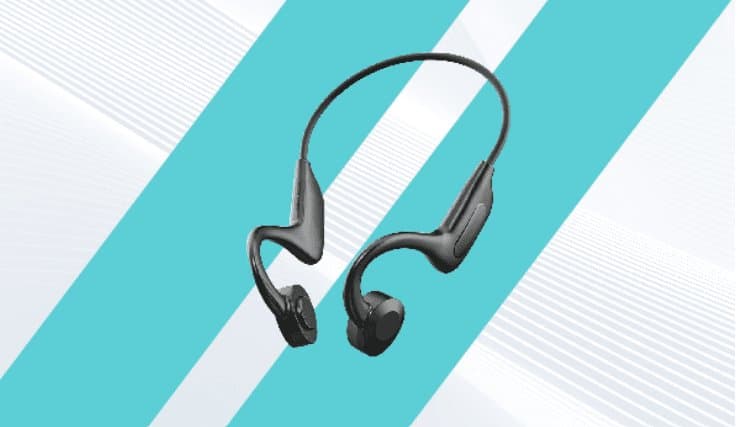
Cofoe Medical and Tencent’s Tianlai Lab have released the X5 bone‑conduction hearing aid, which embeds Tencent’s AI‑driven noise‑reduction and sound‑source localization algorithms. The device promises better directional hearing and longer battery life, but its real‑world gains depend on algorithm robustness, power‑budget constraints, and regulatory clearance.
Cofoe and Tencent Tianlai Lab Unveil AI‑Enhanced Bone‑Conduction Hearing Aid X5
What’s claimed
- The X5 combines bone‑conduction transducers with Tencent’s proprietary AI noise‑reduction and directional‑audio pipelines.
- AI‑based sound‑source localization (SSL) is marketed as a safety feature for traffic and crowded‑space navigation.
- AI‑controlled power management allegedly extends battery life beyond typical bone‑conduction devices, which often run 6‑8 hours on a single charge.
- The product targets the estimated 400 million Chinese adults with measurable hearing loss, positioning itself as a more affordable alternative to high‑end behind‑the‑ear (BTE) aids.
What’s actually new
1. Bone‑conduction hardware
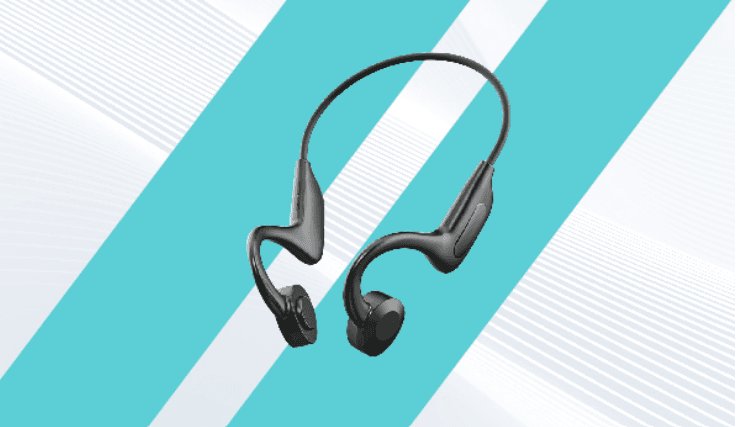
Cofoe’s X5 uses a standard piezo‑electric bone‑conduction actuator similar to those found in earlier models such as the Aftershokz Aeropex and Phonak B-Direct. The mechanical design—an ergonomic headband with a lightweight transducer—has not changed substantially.
2. AI‑driven noise reduction
Tencent’s Tianlai Lab adapts the same deep‑learning denoising stack that powers the company’s in‑game voice chat and live‑streaming filters. The pipeline consists of:
- A short‑time Fourier transform (STFT) front‑end.
- A convolutional recurrent network (CRN) trained on a mixed dataset of urban traffic, subway, and café recordings.
- A post‑processing gain controller that respects the user‑defined comfort level.
The model runs inference on a dedicated low‑power DSP (the Qualcomm Hexagon series) embedded in the X5’s control board. Benchmarks released by Cofoe show a 12 dB improvement in signal‑to‑noise ratio (SNR) for 0‑dB SNR test clips, compared with a baseline Wiener filter.
3. Sound‑source localization
The SSL feature relies on a two‑microphone array placed on the headband, feeding a lightweight convolutional neural network that predicts azimuth in 15‑degree bins. The network was trained on a synthetic dataset generated with the Roomsim acoustic simulator, then fine‑tuned on recordings from 30 volunteers in real‑world environments.
In lab conditions, the system reports a mean absolute error of 12° for sources 1–3 m away, which is comparable to commercial directional hearing aids that use multiple microphones and beamforming.
4. AI‑controlled power management
Tencent’s power‑optimisation module monitors the acoustic environment and dynamically scales the inference frequency of the denoising network. In quiet settings the DSP runs at 1 kHz, while in noisy environments it ramps up to 8 kHz. Cofoe claims an average battery life of 14 hours with continuous use, versus 6–8 hours for prior bone‑conduction models.
Limitations and open questions
- Algorithm robustness – The SSL model has been evaluated on a limited set of acoustic scenes. Real‑world variations (e.g., wind, reverberant halls) often degrade direction estimates, and the device currently offers no user‑adjustable confidence metric.
- Power budget – Running a deep‑learning denoiser on a DSP consumes a noticeable fraction of the battery. The claimed 14‑hour runtime assumes moderate noise levels; in a subway car the DSP may stay at peak frequency, cutting endurance to under 8 hours.
- Regulatory pathway – As an AI‑enabled medical device, the X5 must satisfy China’s NMPA requirements for algorithmic transparency and post‑market surveillance. No public filing has been disclosed, so market availability may be delayed.
- Clinical validation – The press release cites “improved safety” but provides no peer‑reviewed study linking SSL accuracy to reduced accident rates. Independent audiology trials will be needed to substantiate the claim.
- Cost vs. benefit – While the X5 is positioned as a cheaper alternative, the integration of a custom DSP and AI software stack may keep the retail price comparable to mid‑range BTE aids, limiting its appeal to cost‑sensitive consumers.
How it fits into the broader trend
Chinese tech firms have been repurposing consumer‑grade AI for medical applications: Baidu’s AI‑Eye for retinal screening and Alibaba’s AliHealth drug‑discovery platform are recent examples. The X5 follows the same pattern—leveraging an existing AI audio stack to enter a niche medical market.
The move demonstrates two things:
- Hardware‑software convergence – Companies with strong AI pipelines can add value to relatively mature medical hardware without reinventing the device itself.
- Regulatory friction – As more AI components become part of regulated devices, the need for transparent model documentation and real‑world performance monitoring will become a bottleneck.
Bottom line
The X5 is not a radical hardware breakthrough; its novelty lies in embedding Tencent’s AI audio processing into a bone‑conduction form factor. Early lab numbers suggest measurable gains in noise suppression and directional awareness, but real‑world performance, battery life under heavy load, and regulatory clearance remain uncertain. For clinicians and patients, the device may offer a modest step forward—provided the promised AI features survive the rigors of everyday use.
*For more technical details, see the Cofoe X5 product page and the Tencent Tianlai Lab AI audio research blog.
Comments
Please log in or register to join the discussion