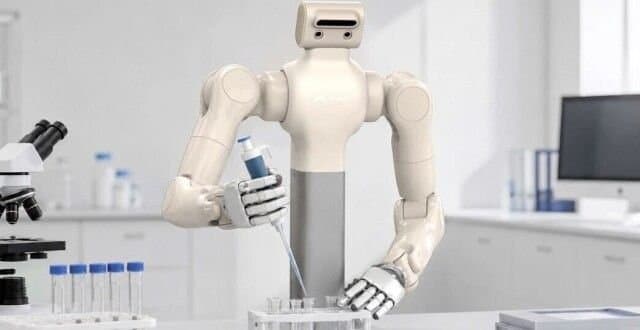
Guangdong Tianji Intelligence System has shipped over 10,000 force-controlled humanoid robot arms in Q1 2026 with a production success rate exceeding 99.5%, while launching four new products that set industry records in load-to-self-weight ratio and arm span.
Tianji Intelligence Ships 10,000+ Force-Controlled Humanoid Arms in Q1, Unveils Four New Products
The humanoid robotics sector continues its rapid acceleration in 2026, with Guangdong Tianji Intelligence System Co., Ltd. (Tianji Intelligence) reporting significant milestones in force-controlled humanoid arm technology. The company has shipped over 10,000 units of its force-controlled humanoid arms in the first quarter of 2026, achieving a production line success rate exceeding 99.5%. Alongside these impressive production numbers, Tianji has introduced four new force-controlled humanoid arm products targeting diverse industrial applications.
Industry Context: Diverging Commercialization Paths
Since early 2026, the humanoid robotics industry has experienced substantial growth driven by increased capital investment and technological advancement. This acceleration has led to distinct commercialization strategies emerging among key players:
High-Dynamic Motion Control: Companies focusing on pushing the physical limits of robot hardware and algorithms through advanced motion control systems.
Brain Evolution through Large Models: Significant investment in developing large-scale models and datasets to enhance robot intelligence and learning capabilities.
Application-Specific Deployment: Concentration on practical implementation in specific scenarios, with Tianji exemplifying this approach through their 99.5% production line success rate.
The industry's progression toward what some term the "technology singularity" reflects a maturing field where theoretical advances are increasingly translated into practical, commercially viable solutions.
Tianji's Technological Advancements
Tianji Intelligence has established itself as a significant player in the force-controlled humanoid arm market, having already delivered over 2,000 units prior to this quarter's surge. Their new product matrix addresses the diverse requirements across scientific research, education, commercial services, and precision industries.
The company's latest products feature two notable technological achievements:
- Load-to-Self-Weight Ratio: Setting new industry standards in payload capacity relative to the arm's own weight
- Large Arm Span: Extending operational reach beyond previous industry benchmarks
These specifications suggest Tianji has made meaningful progress in the mechanical design and force control systems that are critical for humanoid robot functionality.
Production Excellence and Market Implications
The 99.5% production line success rate reported by Tianji indicates a level of manufacturing maturity that has eluded many robotics companies. This high yield suggests several potential advantages:
- Reduced Costs: Higher production success rates typically translate to lower per-unit costs, making the technology more accessible
- Scalability: Reliable manufacturing processes enable faster scaling to meet growing demand
- Quality Consistency: Uniform product quality across large production runs enhances reliability for end users
The shipment of 10,000+ units in a single quarter represents a remarkable scaling achievement, indicating substantial market demand for Tianji's force-controlled arms. This volume suggests the technology is moving beyond niche applications toward broader industrial adoption.
Product Diversity and Application Focus
Tianji's introduction of four distinct force-controlled humanoid arm products demonstrates an understanding that different applications require specialized solutions. Rather than pursuing a one-size-fits-all approach, the company has developed a product matrix that addresses specific use cases:
- Scientific Research: Arms optimized for laboratory environments with precision requirements
- Education: Cost-effective models designed for teaching and training purposes
- Commercial Services: Robust arms suitable for retail, hospitality, and other service environments
- Precision Industry: High-accuracy arms manufactured for assembly, inspection, and manufacturing tasks
This diversified approach aligns with the growing recognition that a single humanoid robot form factor cannot adequately serve the wide spectrum of real-world demands across different sectors.
Technical Considerations and Limitations
While Tianji's achievements are impressive, several technical questions remain regarding their force-controlled arms:
- Force Control Precision: The actual precision and responsiveness of the force control system compared to competitors
- Durability: Long-term performance data under continuous operational conditions
- Energy Efficiency: Power consumption characteristics, which significantly impact practical deployment
- Integration Complexity: Compatibility with existing automation systems and software ecosystems
The company has not provided detailed technical specifications or independent validation of performance claims, which limits a comprehensive assessment of their technological advantages.
Market Position and Competitive Landscape
Tianji's entry into the "deep water zone" of force-controlled arm technology positions them within a competitive field that includes established robotics companies and emerging startups. Their focus on application-specific solutions rather than general-purpose humanoid robots may provide a strategic advantage in markets where specialized functionality is valued over versatility.
The shipment volume and production success rate suggest Tianji has achieved significant economies of scale, potentially enabling competitive pricing. However, the long-term sustainability of this manufacturing performance and the company's ability to maintain technological leadership remain open questions.
Future Outlook
The humanoid robotics sector continues to evolve rapidly, with force-controlled arms representing a critical component of broader embodied AI systems. Tianji Intelligence's Q1 performance demonstrates both the growing market demand and the improving manufacturing maturity necessary for widespread industrial adoption.
As the industry progresses, the convergence of advanced force control, machine learning, and application-specific design will likely determine which companies can successfully transition from promising technology to commercially sustainable products. Tianji's focus on practical deployment with high production yields positions them well for near-term market impact, though sustained innovation will be essential for long-term competitiveness.
The introduction of these four new products, combined with the significant shipment volume, suggests that force-controlled humanoid arms are moving from experimental phase to industrial reality in 2026. This transition marks an important milestone in the broader development of humanoid robotics and their integration into practical applications across multiple sectors.
Comments
Please log in or register to join the discussion