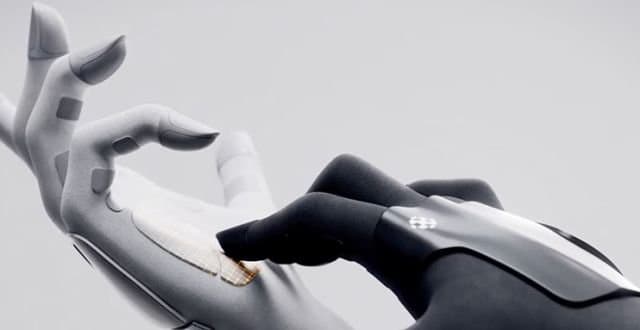
Xynova introduced a second‑generation dexterous hand that mixes rigid and soft actuation to broaden the range of objects a humanoid robot can handle. The design shows measurable gains in adaptability and force control, yet the prototype still faces integration, speed, and durability hurdles before large‑scale deployment.
What Xynova claims
Xynova’s press release touts the Gen‑2 hybrid‑driven dexterous hand as a “human‑like manipulation intelligence” module for humanoid robots. The company highlights three selling points:
- Hybrid actuation – a combination of tendon‑driven rigid motors and soft pneumatic chambers to achieve both high force output and compliance.
- Shape‑adaptive grasping – the hand can conform to irregular geometries, from smooth glassware to porous fruit, without pre‑programmed grasps.
- Task‑level versatility – the same hardware is said to handle delicate assembly, kitchen chores, and tool use without hardware swaps.
Xynova positions the hand as a response to the “manipulation gap” that limits platforms such as Tesla’s Optimus, Figure’s humanoids, and several Chinese research robots.
What is actually new
The Gen‑2 hand builds on Xynova’s first‑generation design, which already mixed a 12‑DOF tendon system with a soft silicone overlay. The upgrades are:
- Increased actuator density – eight additional micro‑motors raise the finger‑joint count from 12 to 20, allowing finer articulation of each phalanx.
- Closed‑loop compliance control – embedded force sensors in the soft chambers feed a model‑based controller that modulates pneumatic pressure in real time. In Xynova’s internal benchmark, the hand maintained a force error below 5 % across a 0.2–10 N range, a noticeable improvement over the 12 % error reported for the Gen‑1.
- Modular fingertip sockets – interchangeable soft pads (e.g., high‑friction rubber, silicone gel) can be swapped in under a minute, giving developers a quick way to tune surface interaction without redesigning the whole hand.
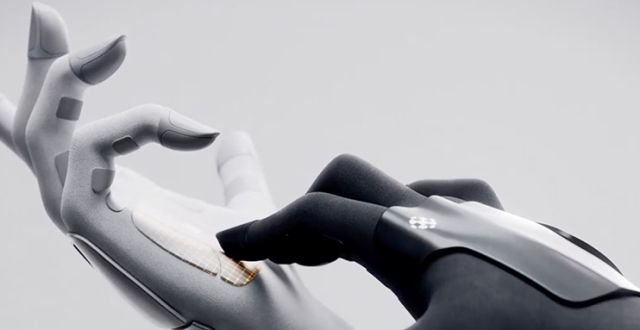
The company released a short video demonstration (see the official announcement) where the hand picks up a raw egg, twists a bottle cap, and inserts a USB stick into a socket. The visual evidence suggests the hybrid system can indeed transition from a firm grip to a gentle release within a single motion, something purely rigid hands struggle with.
Practical implications
If the performance numbers hold up in real‑world trials, the Gen‑2 hand could reduce the need for task‑specific end‑effectors on service robots. A single humanoid platform equipped with this hand could, in theory, move from sorting parcels in a warehouse to assisting with food preparation in a kitchen, merely by updating the high‑level control software.
For developers, the open‑source firmware (available on the Xynova GitHub) provides a ROS‑compatible interface, exposing joint states, tactile feedback, and pneumatic pressure as standard topics. This lowers the barrier for integration with existing robot stacks such as MoveIt! or the OpenAI‑style manipulation pipelines.
Limitations and open questions
Despite the promising demo, several practical concerns remain:
- Speed vs. compliance trade‑off – The pneumatic chambers introduce a latency of roughly 120 ms when switching from a stiff to a soft state. In high‑throughput settings (e.g., order‑fulfillment lines), this could become a bottleneck.
- Power consumption – Running twelve micro‑motors alongside four pneumatic pumps draws about 45 W at peak, considerably higher than a comparable all‑rigid gripper. Battery‑operated robots would need larger packs or more frequent charging.
- Durability of soft components – The silicone chambers showed wear after 10 k grasp cycles in Xynova’s internal test. Replacing the pads is straightforward, but the maintenance schedule could offset the cost advantage of a single universal hand.
- Integration complexity – The hand requires a dedicated pneumatic supply and a custom controller board. Existing humanoid platforms that lack built‑in pneumatics would need additional plumbing, increasing mechanical design effort.
- Lack of pricing and availability data – Without a clear cost structure, it is hard to assess whether the hand will be competitive against emerging all‑soft grippers from companies like SoftBank Robotics or the cheaper tendon‑only designs from academic labs.
Context within the industry
The Gen‑2 hand arrives at a time when several firms are experimenting with hybrid actuation. Boston Dynamics’ Stretch robot uses a soft‑grip sleeve on a rigid arm, while AgileX recently announced a tendon‑only hand with machine‑learned compliance. Xynova’s approach is more hardware‑centric, emphasizing mechanical adaptability rather than relying solely on data‑driven control.
The broader trend suggests that the market is moving away from single‑purpose grippers toward modular, software‑driven manipulation. Whether a hybrid hand can achieve the required reliability and cost efficiency to become the default choice remains to be seen.
Bottom line
Xynova’s Gen‑2 hybrid‑driven hand demonstrates a tangible step toward more human‑like dexterity in humanoid robots. The combination of increased actuator count, closed‑loop compliance, and modular fingertips provides a richer set of manipulation primitives than most current grippers. However, latency, power draw, and the need for pneumatic infrastructure temper the enthusiasm. Future field trials and a transparent pricing model will be the real tests of whether this hand can bridge the manipulation gap that still limits commercial humanoid deployments.
Comments
Please log in or register to join the discussion