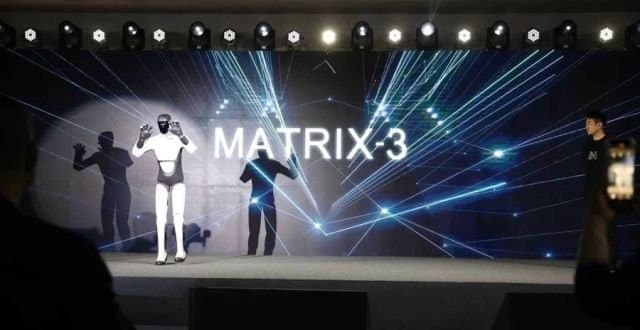
Shanghai‑based Matrix Super Intelligence unveiled the 170 cm, 65 kg MATRIX‑3, branding it as “China’s Optimus.” The firm promises to scale to 100 000 units within four years, but the announcement provides few performance numbers, safety data, or concrete application scenarios.
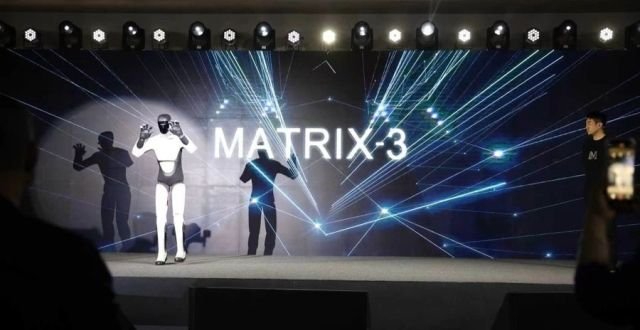
Matrix Super Intelligence, an embodied‑AI startup operating out of Shanghai’s Pudong Zhangjiang district, held a press event on May 19, 2026 to introduce its first full‑size humanoid, the MATRIX‑3. The robot stands 170 cm tall, weighs 65 kg, and features a “human‑like muscle body” built from flexible textile composites that the company says give it a bionic texture and protective coverage while it moves.
What the company claims
- Production ambition: 100 000 units by 2027, positioning the MATRIX‑3 as a mass‑market “China’s Optimus.”
- Design focus: Integrated textile‑based actuation layers meant to mimic muscle fibers, purportedly improving compliance and impact resistance.
- Versatility promise: The robot is described as a general‑purpose platform for “real‑world applications,” though no specific sectors (e.g., logistics, retail, healthcare) were named.
- Timeline: Pilot validation and safety certification are slated for 2026, with full‑scale manufacturing to start in 2027.
What is actually new?
- Textile‑based actuation – Most commercial humanoids (e.g., Boston Dynamics’ Atlas, Agility Robotics’ Digit) rely on metal‑frame actuators and hydraulic or electric motors. MATRIX‑3’s claim of a flexible textile skin that also serves as a structural element is unusual. However, the announcement provides no quantitative data on tensile strength, fatigue life, or how the textile integrates with the robot’s joint torque output.
- Scale of production – A target of 100 k units would dwarf current humanoid output, which is typically measured in low‑hundreds for pilot programs. Achieving that scale would require a supply chain for high‑precision actuators, sensors, and the novel textile that is not yet demonstrated.
- Embedded AI stack – The company positions itself as an embodied‑AI specialist, yet the press release does not disclose the on‑board compute hardware, sensor suite, or any benchmark results (e.g., perception latency, manipulation success rate).
Missing technical details
| Metric | Expected value for a commercial humanoid | Reported for MATRIX‑3 |
|---|---|---|
| Joint torque (Nm) | 30–50 (Atlas) | Not disclosed |
| Payload capacity (kg) | 5–10 (Digit) | Not disclosed |
| Perception latency (ms) | <50 ms (vision + lidar) | Not disclosed |
| Power consumption (kWh/hr) | 1–2 kWh (Atlas) | Not disclosed |
| Safety certification | ISO/TS 15066 compliance | Planned for 2026 |
The absence of these numbers makes it difficult to assess whether the robot can handle anything beyond low‑speed, low‑payload tasks.
Practical implications and limitations
- Safety certification is a bottleneck. Human‑robot interaction standards (ISO/TS 15066) require rigorous testing of impact forces, reaction times, and fail‑safe mechanisms. Until those results are published, any deployment in public spaces remains speculative.
- Supply‑chain risk. The textile‑muscle concept may require specialized manufacturing facilities. Scaling from prototype to 100 k units in under two years would likely encounter bottlenecks in actuator production, sensor sourcing, and quality control.
- Application clarity. Without defined use cases, potential customers cannot evaluate ROI. For example, a warehouse robot needs precise load handling and repeatable navigation; a service robot for hospitality must meet strict hygiene and interaction standards. The announcement does not map the MATRIX‑3’s capabilities to any of these domains.
- Benchmark comparison. Existing platforms such as Boston Dynamics’ Atlas (benchmark: 1.5 m/s sprint, 30 kg payload) and Agility Robotics’ Digit (benchmark: 0.5 m/s walking speed, 5 kg payload) have publicly available performance data. MATRIX‑3’s lack of comparable metrics hampers any head‑to‑head assessment.
Outlook
Matrix Super Intelligence’s ambition reflects China’s broader push to commercialize humanoid robotics, but the current disclosure is more marketing than engineering. The next meaningful milestones will be:
- Release of a detailed technical datasheet (actuator specs, sensor suite, compute platform).
- Independent safety test results that satisfy ISO/TS 15066.
- Pilot deployments with measurable task success rates (e.g., object manipulation, navigation in cluttered environments).
Only after these data points become public can the claim of 100 k units be evaluated beyond a headline figure.
Further reading
Comments
Please log in or register to join the discussion