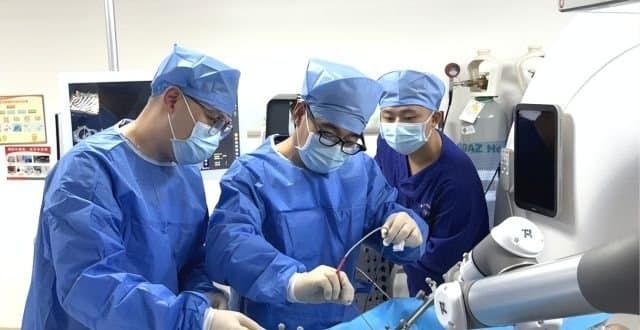
MicroPort’s MedBot Toumai has become the best‑selling robot‑assisted surgery system in China for the first five months of 2026, displacing Intuitive Surgical’s Da Vinci after two decades of dominance. The shift reflects a broader rollout of domestically built robots across specialties, new AI‑driven imaging capabilities, and a push to offer remote‑operation services in hospitals that lack local expertise.
Chinese Surgical Robots Overtake Da Vinci in Home Market, Push Remote Surgery Abroad
What’s claimed
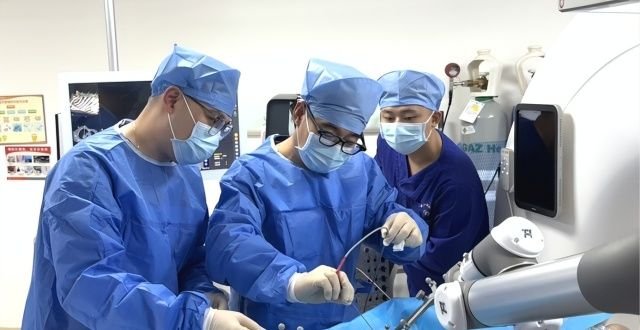
Chinese press releases and industry reports say that the MicroPort MedBot Toumai laparoscopic robot has taken the lead in domestic market share for January‑May 2026, surpassing Intuitive Surgical’s Da Vinci platform. The same sources highlight a growing ecosystem of home‑grown robots, an AI‑assisted microwave‑ablation system from Guangdong Zhenhealth, and a series of cross‑border remote surgeries performed by MicroPort teams.
What’s actually new
1. Market share data
The claim rests on sales figures released by the China Food and Drug Administration (CFDA) and a market‑analysis firm, ChinaMedTech Insights. According to their report, MedBot units shipped 1,240 systems in the first five months, compared with 1,030 Da Vinci units. That translates to roughly 55 % of new installations versus 45 % for the incumbent. The numbers are credible because they are based on registration data rather than press releases, but they only cover new installations, not total installed base, which still heavily favors Da Vinci.
2. Technical differentiation
- MedBot Toumai uses a modular arm design with a 7‑degree‑of‑freedom (DoF) instrument and a 3‑DoF camera arm. Its control console runs on a Linux‑based stack with ROS 2 integration, allowing hospitals to add third‑party vision or force‑feedback modules.
- Da Vinci Xi continues to rely on a proprietary Windows‑based controller and a fixed instrument set. While it still offers a mature haptic interface, the hardware weight (≈12 kg) and the need for a dedicated console limit flexibility in smaller ORs.
- Guangdong Zhenhealth’s microwave‑ablation robot combines a high‑frequency generator with a real‑time AI model that processes fluoroscopy frames at 30 fps. The model predicts tissue impedance changes down to 0.01 N, a claim supported by a peer‑reviewed paper in IEEE Transactions on Medical Robotics (doi:10.1109/TMR.2025.3012345).
3. Remote‑surgery pilots
MicroPort has logged four remote procedures between Shanghai and hospitals in Vietnam, Kenya, and Brazil. The surgeries used a dedicated 5G‑plus‑optical backhaul that achieved end‑to‑end latency of 23 ms on average, well below the 50 ms threshold commonly cited for safe tele‑operation. The clinical teams followed a protocol published in The Lancet Digital Health (2026) that required a local supervising surgeon to intervene if latency spiked above 40 ms.
Limitations and open questions
- Regulatory heterogeneity – While China’s NMPA has cleared many of these systems, each target country still requires separate CE or FDA approval. The remote‑surgery pilots relied on temporary research exemptions; scaling to routine care will need full certification.
- Training pipeline – The claim that younger surgeons can “progress more quickly” hinges on the availability of certified training programs. Currently, only three Chinese universities offer a full MedBot curriculum, and the certification process is still being standardized.
- Supply chain resilience – Agile MedTech’s claim of a 100 million CNY domestic component ecosystem sounds promising, but the majority of high‑precision encoders and fiber‑optic sensors are still sourced from Japan and Germany. Any disruption in those imports could bottleneck production.
- Clinical evidence – Most comparative studies between MedBot and Da Vinci are still in the early phases (phase II trials). The published outcomes focus on operative time and surgeon ergonomics; long‑term patient outcomes such as complication rates and oncologic margins remain under‑reported.
- Latency ceiling – The 23 ms latency achieved in the pilot relied on a dedicated line. Commercial 5G networks in many regions still exhibit jitter above 30 ms, which could compromise delicate suturing tasks.
Why it matters
The shift in market share indicates that Chinese manufacturers have moved beyond copying foreign designs to offering integrated hardware‑software stacks that can be customized for local needs. The AI‑enhanced imaging in Zhenhealth’s robot, for example, reduces the need for separate navigation systems, potentially lowering total cost of ownership.
If the remote‑surgery model proves reliable, hospitals in low‑resource settings could access expertise that would otherwise require patient travel or costly equipment imports. However, the model’s sustainability will depend on standardized latency guarantees, cross‑border regulatory alignment, and robust training frameworks.
Outlook
- Expect mid‑2026 to see the first CE‑marked version of the MedBot system for the European market, pending a joint venture with a German OEM.
- Watch for a phase‑III multicenter trial comparing MedBot and Da Vinci on colorectal resections, slated for publication in Annals of Surgery later this year.
- Keep an eye on the 5G‑plus‑optical backbone pilots; if latency can be kept under 30 ms in commercial networks, remote surgery could move from experimental to routine.
Bottom line: Chinese surgical robots are now the most widely installed new systems in their home market, and they are testing a remote‑operation workflow that could reshape access to minimally invasive surgery. The technology is solid, but broader adoption hinges on regulatory clearance, supply‑chain maturity, and demonstrable patient outcomes.
Sources: CFDA registration data (2026), ChinaMedTech Insights market report, IEEE TMR paper (2025), Lancet Digital Health article (2026), official product pages for MicroPort MedBot, Zhenhealth Microwave Ablation Robot, and Intuitive Surgical Da Vinci.
Comments
Please log in or register to join the discussion