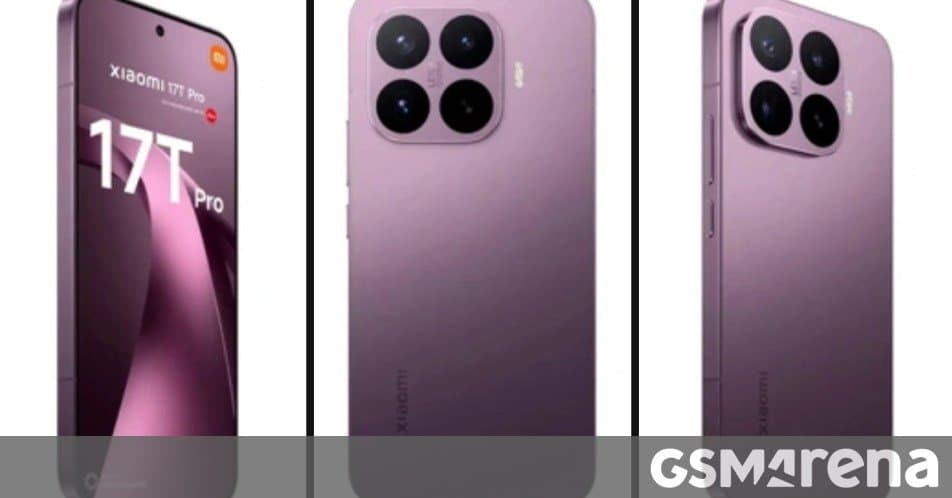
A Russian retailer’s early listing exposed the full specifications, official images and pricing for Xiaomi’s upcoming 17T and 17T Pro, confirming the devices will launch on May 28 with MediaTek Dimensity 8500 Ultra and 9500 chips, large AMOLED panels and sizable batteries.
Xiaomi 17T and 17T Pro specs leak from premature retailer listing
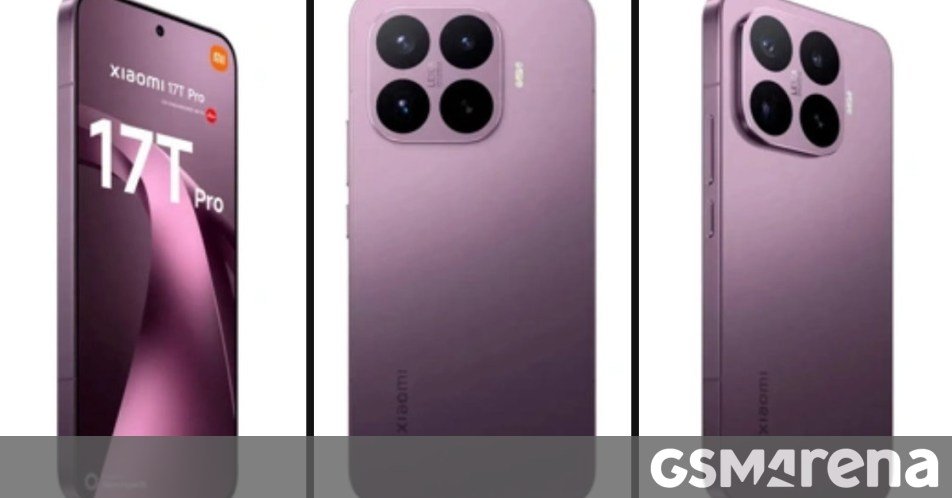
Xiaomi announced that its next‑generation 17T series will be unveiled at a live event on May 28, 2026. Hours before the official reveal, a Russian e‑commerce site posted a detailed product page for both models. The page was quickly removed, but the information – specifications, high‑resolution renders and Russian‑rubles pricing – has already been captured by the community.
What the leak tells us
| Feature | Xiaomi 17T | Xiaomi 17T Pro |
|---|---|---|
| Display | 6.59‑inch AMOLED, 1268×2756 px, 120 Hz | 6.83‑inch AMOLED, 1280×2772 px, 120 Hz |
| SoC | MediaTek Dimensity 8500 Ultra (5 nm) | MediaTek Dimensity 9500 (4 nm) |
| RAM | 12 GB LPDDR5 | 12 GB LPDDR5 |
| Storage options | 256 GB / 512 GB UFS 3.1 | 256 GB / 512 GB / 1 TB UFS 3.1 |
| Rear cameras | Triple: 50 MP (wide) + 50 MP (ultrawide) + 12 MP (macro) | Same triple layout |
| Front camera | 32 MP | |
| Battery | 6 500 mAh, 67 W fast charge | 7 000 mAh, 67 W fast charge |
| Dimensions | 162 × 75 × 8.2 mm | 162.2 × 77.5 × 8.3 mm |
| Weight | Not listed (expected ~210 g) | Not listed (expected ~225 g) |
| OS | Android 14 with MIUI 15 | Android 14 with MIUI 15 |
| Price (RUB) | 51 625 ($713) – 256 GB 54 537 ($753) – 512 GB |
68 535 ($946) – 256 GB 71 222 ($983) – 512 GB 81 861 (~$1 130) – 1 TB |
The leak confirms that Xiaomi is moving its flagship‑class lineup onto MediaTek’s high‑end Dimensity chips rather than the Snapdragon 8 Gen 5 series used in the previous flagship. The Dimensity 9500, built on a 4 nm process, offers comparable CPU performance and a more power‑efficient GPU, which should help the 17T Pro achieve the advertised 7 000 mAh endurance despite the larger screen.
Why the specifications matter
Display upgrades
Both phones keep the 120 Hz refresh rate that has become standard for premium Android devices, but the 17T Pro’s slightly larger panel pushes the resolution past the 2 K mark, giving a pixel density of roughly 460 ppi. This is a modest step up from the 17 series, which used 1080p panels, and will make the devices feel more at home when watching HDR video or playing high‑frame‑rate games.
Battery and charging
The 7 000 mAh cell in the Pro model is one of the largest seen in a flagship‑size phone. Coupled with 67 W wired charging, users can expect a full charge in around 45 minutes. The 17T’s 6 500 mAh battery should still comfortably last a day of mixed usage, especially with the Dimensity 8500 Ultra’s efficient cores.
Camera package
Xiaomi sticks with a dual‑50 MP primary/ultrawide setup, a formula introduced with the Mi 12 Pro. While the sensor sizes are not disclosed, the high‑resolution main lens should deliver detailed daylight shots, and the 12 MP macro remains a niche but useful addition. The 32 MP front sensor continues Xiaomi’s focus on selfie performance, supporting 4K video capture.
Ecosystem implications
Xiaomi’s decision to pair the 17T line with MediaTek chips signals a broader shift in the Android ecosystem. MediaTek has been closing the performance gap with Qualcomm, and its recent Dimensity 9500 offers integrated AI acceleration that MIUI can exploit for on‑device photo processing, real‑time translation and battery‑saving heuristics.
For users already invested in Xiaomi’s ecosystem – Mi Cloud, Mi Account sync, and the growing line of Mi Smart Home devices – the new phones will integrate seamlessly. The devices will support Mi Share (Xiaomi’s counterpart to Apple’s AirDrop) and Mi Play for casting content to Mi TVs and Mi AIoT speakers.
However, the reliance on MediaTek may affect custom ROM support in the medium term. Historically, Snapdragon‑based devices receive faster unofficial Android builds because the bootloader and drivers are more widely documented. Developers will need to reverse‑engineer the Dimensity drivers, which could delay custom ROM availability for the 17T series.
Pricing context
The Russian ruble listings translate to roughly $713–$1 130 in the United States. While exchange‑rate fluctuations make direct comparison tricky, the price points place the 17T in the same bracket as the Samsung Galaxy S24 FE and the OnePlus 12, while the 17T Pro competes with the Galaxy S24 Ultra and the Pixel 8 Pro.
If Xiaomi follows its usual pricing strategy, we can expect a modest premium in markets outside Russia – perhaps $50–$100 higher for the base 256 GB model and a similar bump for higher storage tiers.
What to expect at the launch event
The May 28 livestream will likely showcase software features that take advantage of the new SoCs, such as AI‑enhanced camera modes, adaptive battery management, and enhanced gaming performance through the upcoming Mi Game Turbo 2.0.
Xiaomi may also announce a global pre‑order window with incentives like bundled earbuds or extended Mi Cloud storage, a tactic it has used for previous launches.
Bottom line
The premature retailer listing has given us a clear picture of what Xiaomi plans to bring to market with the 17T and 17T Pro: larger, higher‑refresh‑rate AMOLED displays, powerful MediaTek processors, sizable batteries and a familiar triple‑camera layout. The pricing suggests a competitive stance against other 2026 flagships, and the integration with Xiaomi’s broader ecosystem should make the devices attractive to existing Mi users.
Fans should keep an eye on the official event for confirmation of software features, regional pricing and availability dates. Until then, the leaked specs provide a solid foundation for evaluating whether the 17T series will be the next go‑to flagship for Android enthusiasts.
Comments
Please log in or register to join the discussion