
vivo introduces the S50t with only one significant change from the S50 - downgraded UFS 3.1 storage instead of UFS 4.1, offering a subtle cost reduction for budget-conscious consumers.
vivo has quietly added another member to its S50 series with the announcement of the S50t. Following the December launch of the S50 and S50 Pro mini, this new model enters the market with an unusual approach to differentiation. Rather than offering a mix of upgraded and downgraded features, vivo has made just one significant change between the S50 and S50t, creating what might be one of the most minimal model differentiations in recent smartphone history.
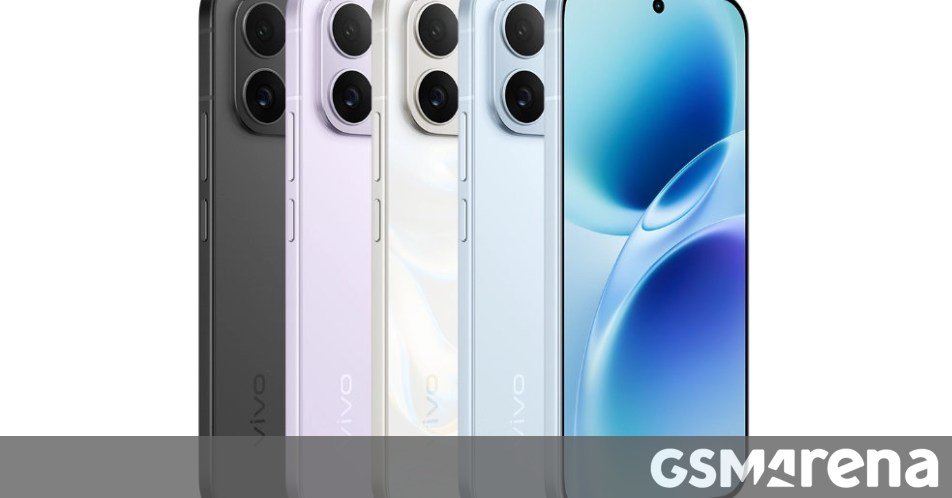
The sole difference between these two otherwise identical devices lies in their storage technology. The original vivo S50 features UFS 4.1 storage, the latest standard in flash memory technology, while the S50t utilizes the older UFS 3.1 specification. This seemingly minor change represents the only hardware distinction between the two models, with vivo maintaining complete feature parity across all other aspects.
Understanding the Storage Difference
UFS (Universal Flash Storage) technology is the backbone of modern smartphone storage, directly affecting app loading times, file transfers, and overall system responsiveness. The jump from UFS 3.1 to UFS 4.1 represents a significant technological advancement, with theoretical maximum sequential read speeds increasing from approximately 2,900MB/s to 4,200MB/s. Sequential write speeds also see substantial improvement, moving from about 1,700MB/s to 2,800MB/s.
Samsung's UFS 4.0 technology provides a good reference point for understanding these improvements, as UFS 4.1 builds upon this foundation. The newer standard also offers better power efficiency, which can contribute to slightly improved battery life during storage-intensive operations.
Performance Implications in Real-World Usage
While the theoretical benchmarks show a clear advantage for UFS 4.1, the real-world impact on everyday smartphone usage is more nuanced. Most users won't notice significant differences in day-to-day operations like app launches, photo saving, or general system navigation. The performance gap becomes more apparent in specific scenarios:
- Large file transfers: Moving large video files or game installations will be noticeably faster with UFS 4.1
- App loading: Particularly large applications and games may launch slightly quicker
- Multi-tasking: Switching between memory-intensive applications may feel more fluid
- Burst photography: Saving continuous bursts of high-resolution photos will be faster
For the average user, these differences might not justify the price premium for UFS 4.1. However, tech enthusiasts and power users who frequently work with large files or demand the absolute fastest performance may prefer the original S50 despite its higher cost.
vivo's Strategic Approach
The S50t represents an interesting strategy from vivo, creating a model differentiation based almost entirely on a component that most consumers rarely consider when purchasing a smartphone. This approach allows vivo to:
- Maintain a unified marketing message across the S50 series
- Target price-sensitive consumers who want the same experience with a minor cost saving
- Potentially improve profit margins by using older, less expensive storage components
- Avoid creating confusion with multiple feature variations
This strategy contrasts with typical smartphone model differentiation, where manufacturers often create multiple versions with varying camera systems, display sizes, or processor configurations. vivo's approach simplifies the product lineup while still offering a price option for more budget-conscious consumers.
Pricing and Value Proposition
The vivo S50t is priced at CNY 3,199 ($468) for the 12GB RAM + 512GB storage variant and CNY 3,499 ($512) for the 16GB RAM + 512GB model. Both versions are exactly CNY 100 ($14) less expensive than their S50 counterparts.
This minimal price reduction for what is essentially the same device raises questions about the value proposition. The $14 saving hardly seems significant when considering the technological sacrifice in storage performance. However, this pricing strategy may appeal to consumers who prioritize brand consistency and feature parity above all else, even if it means accepting a minor specification downgrade.
Who Should Choose the S50t?
The vivo S50t makes the most sense for:
- Budget-conscious consumers who want the vivo S50 experience at a slightly lower price point
- Users who don't frequently transfer large files or engage in activities that benefit from faster storage
- Brand loyalists who prefer vivo's ecosystem and design language
- First-time vivo buyers who want to enter the ecosystem without committing to the highest-priced model
Conversely, the original S50 remains the better choice for:
- Tech enthusiasts who appreciate having the latest storage technology
- Content creators who regularly transfer large media files
- Mobile gamers who benefit from faster game loading times
- Users who may keep their device for several years and want to ensure longevity
Conclusion
The vivo S50t represents an unusual approach to smartphone differentiation, focusing on a single component change while maintaining complete feature parity elsewhere. While this strategy simplifies the product lineup and offers a slight price reduction, it also highlights how manufacturers are finding new ways to segment their product categories.
For consumers, the choice between the S50 and S50t comes down to whether the UFS 4.1 storage performance is worth the additional $14. Given that most users won't notice significant differences in everyday usage, vivo may have successfully created a compelling option for budget-conscious shoppers who don't want to compromise on other features.
Comments
Please log in or register to join the discussion