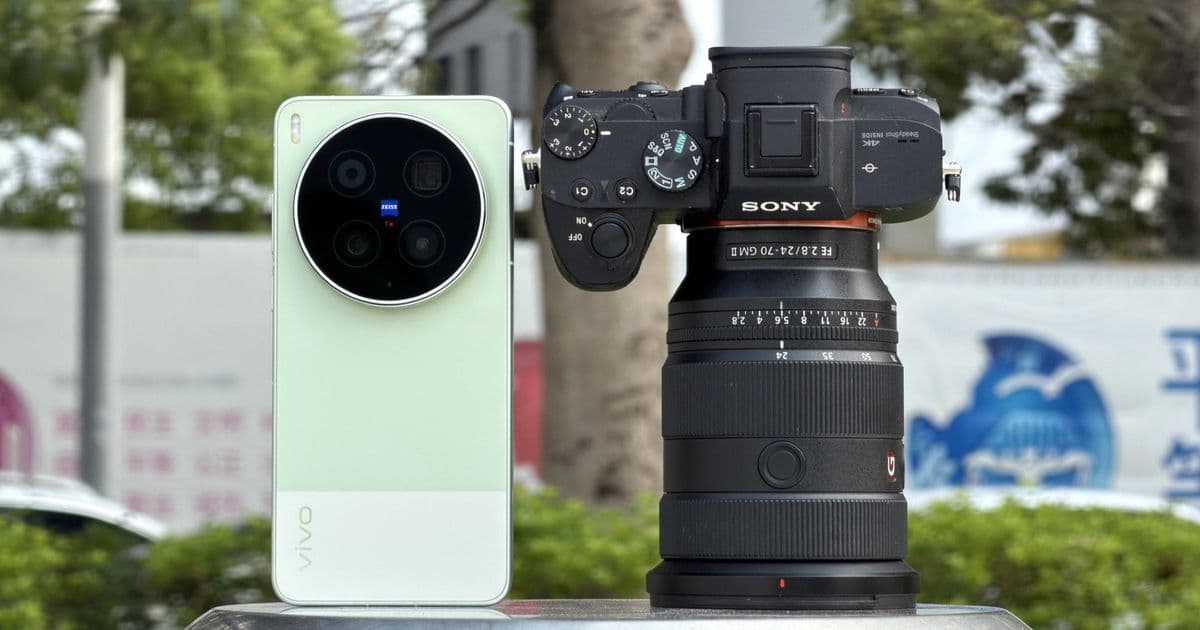
A surprising camera comparison reveals the Vivo X300 Ultra's 200MP sensor matching a $4,400 Sony Alpha A7 III setup in sharpness, though the full-frame system maintains advantages in versatility and professional features.
The smartphone camera wars have reached a new frontier, with the recently launched Vivo X300 Ultra taking on professional full-frame mirrorless cameras in a head-to-head comparison that's turning heads in the photography world.
The $4,400 Question: Can a Phone Compete?
When you consider that a Sony Alpha A7 III body costs $1,999 (currently discounted to $1,698 on Amazon) and the Sony 24-70mm GM2 zoom lens adds another $2,449 to the bill, you're looking at a $4,448 investment before you even think about accessories. That's roughly double the expected price of the Vivo X300 Ultra, which is rumored to retail around $2,000.
This price disparity makes the comparison all the more intriguing. While some might argue that the Vivo is overpriced for a smartphone, the comparison with professional camera gear puts things in perspective. There are certainly more expensive, heavier, and larger options in the camera segment, but there are also more compact and compellingly priced alternatives like the Panasonic Lumix S5D that some colleagues prefer.
The Technical Showdown
The comparison, conducted by Chinese creator fenibook and shared through a Google Drive archive, pits Vivo's new 35mm 1/1.12-inch 200MP sensor against Sony's full-frame setup. Despite the LYT-901 sensor in the Vivo being significantly smaller—Sony's full-frame sensor is about nine times larger—the results are surprisingly close.
In terms of sharpness, the 200MP images from the Vivo X300 Ultra actually beat the 24MP shots from the Sony setup in almost every case. This is particularly noteworthy given the massive difference in sensor size and the price gap between the two systems.
Vivo has also made significant strides in color reproduction. The company claims to have improved this area with a multispectral sensor and new algorithms, and the comparison suggests they've succeeded. In most cases, the color looks very similar to that of the professional Sony camera.
Limitations and Context
The comparison isn't without its limitations. The video is in Chinese, and the subtitles stop working after a short time, making it difficult for non-Chinese speakers to follow along. Additionally, the test doesn't include night scenes or moving subjects in low light, which are challenging scenarios for any camera system.
The comparison also lacks 14mm or 85mm focal length comparisons, though this can be explained by the zoom range of the Sony lens used in the test.
What This Means for Photography
Despite these limitations, the comparison shows that Vivo's latest Zeiss camera flagship can already come fairly close in some respects to the performance of a much more expensive full-frame camera. This doesn't mean that professional full-frame cameras are obsolete—they continue to have their place in professional use, offering advantages in versatility, low-light performance, and specialized features that smartphones can't match.
However, it does suggest that the gap between smartphone cameras and professional gear is narrowing faster than many expected. For many users, especially those who prioritize portability and convenience, a high-end smartphone like the Vivo X300 Ultra might be sufficient for their photography needs.
The comparison also highlights how companies like Vivo are pushing the boundaries of what's possible with smartphone photography. By combining high-resolution sensors, advanced algorithms, and partnerships with optics experts like Zeiss, they're creating devices that can compete with traditional cameras in ways that seemed impossible just a few years ago.
The full comparison files are available through the Google Drive archive shared by fenibook, allowing photography enthusiasts to examine the images themselves and draw their own conclusions about this fascinating technological face-off.
Comments
Please log in or register to join the discussion