
A sophisticated, modular malware framework written in Zig, Go, and C is targeting Linux cloud servers with advanced evasion techniques and cloud-native capabilities. Check Point researchers discovered VoidLink, which appears to be a commercial product designed for enterprise-scale attacks.
Security researchers at Check Point have uncovered a new advanced malware framework called VoidLink that represents a significant evolution in cloud-native threats. This isn't typical commodity malware—it's a professionally developed, modular post-exploitation platform designed specifically for modern Linux cloud environments.

What Makes VoidLink Different
VoidLink stands out for its commercial-grade development approach. Written in Zig, Go, and C, the framework shows signs of active development with extensive documentation, suggesting it's either a product offering or a custom framework developed for specific customers. The malware's interface and optimizations indicate Chinese-speaking developers, but more importantly, the technical sophistication points to a highly skilled team with deep expertise across multiple programming languages.
The framework's architecture reveals its cloud-native design philosophy. Upon activation, VoidLink immediately checks if it's running inside Docker containers or Kubernetes clusters, then queries cloud metadata services across major providers: AWS, GCP, Azure, Alibaba, and Tencent. The developers have already planned support for Huawei, DigitalOcean, and Vultr, demonstrating a comprehensive understanding of multi-cloud environments.
Modular Plugin System
VoidLink's power lies in its plugin architecture. The framework loads ELF object files directly into memory and uses syscalls to communicate with framework APIs. The default configuration includes 35 plugins covering the full attack lifecycle:
Reconnaissance and Enumeration:
- System profiling (kernel version, hypervisor, processes, network state)
- Cloud environment detection and container escape helpers
- EDR and security tool scanning
- Risk scoring based on installed defenses
Credential Harvesting:
- SSH keys and Git credentials
- Tokens, API keys, and browser data
- Cloud provider credentials
Lateral Movement:
- Shell access and port forwarding
- SSH-based propagation across networks
- Tunneling capabilities
Persistence:
- Dynamic linker abuse (LD_PRELOAD)
- Cron jobs and system services
- Rootkit installation
Anti-Forensics:
- Log wiping and history cleaning
- Timestomping
- Secure file overwriting
Advanced Evasion Techniques
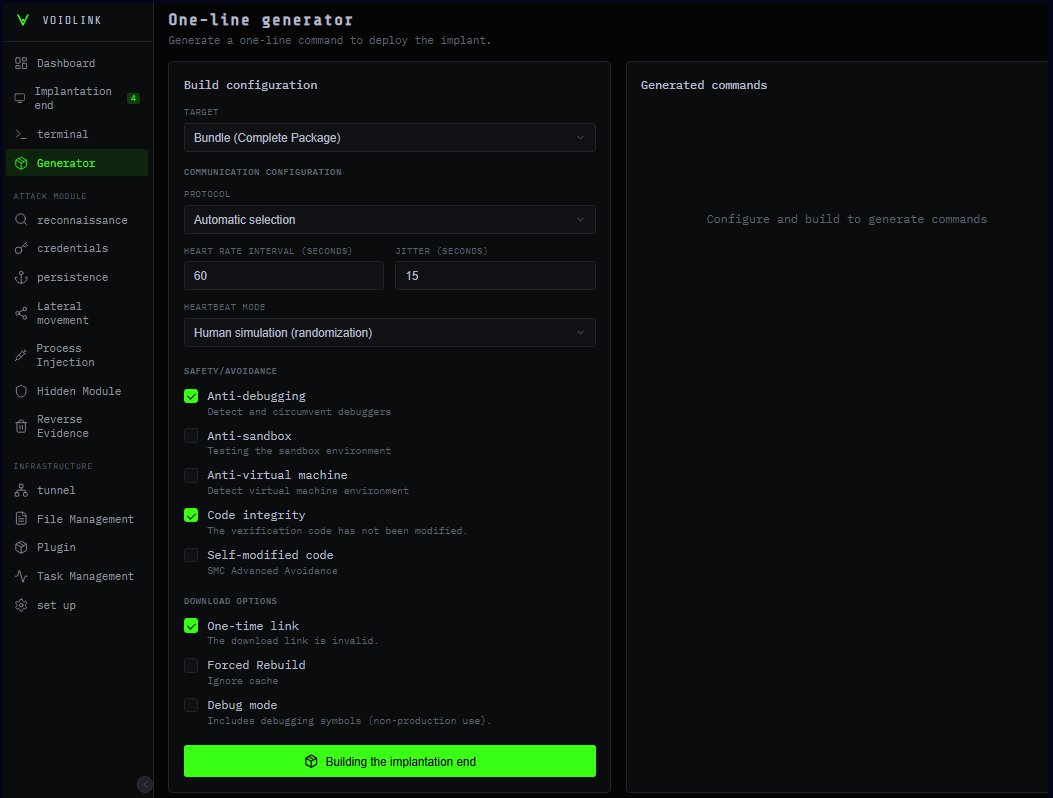
VoidLink's stealth capabilities are particularly concerning. The framework uses multiple communication protocols—HTTP, WebSocket, DNS tunneling, and ICMP—all wrapped in a custom encrypted messaging layer called 'VoidStream' that camouflages traffic to resemble normal web or API activity.
The malware employs three tiers of rootkit protection depending on the host environment:
- LD_PRELOAD for older kernel versions
- Loadable Kernel Modules (LKMs) for standard systems
- eBPF-based rootkits for modern kernels
These rootkits hide processes, files, network sockets, and the malware itself from system monitoring tools.
Anti-analysis features include:
- Debugger detection
- Runtime code encryption
- Integrity checks to detect hooks and tampering
- Automatic self-deletion if tampering is detected
- Complete forensic cleanup (logs, shell history, login records)
Operational Intelligence
What sets VoidLink apart from typical Linux malware is its adaptive behavior. The framework performs comprehensive environment profiling before choosing evasion strategies. It calculates a risk score based on installed security solutions and kernel hardening, then adjusts its tactics accordingly—slower port scanning, longer beaconing intervals, or alternative communication channels.
This intelligence-driven approach suggests the operators receive detailed reports about the target environment and can manually adjust module behavior through the builder panel, making each infection potentially unique.
Implications for Cloud Security
While Check Point hasn't confirmed active infections, the framework's existence signals a shift toward professional, productized malware targeting cloud infrastructure. This mirrors the legitimate software industry's move toward cloud-native tools, but with malicious intent.
The framework's modularity means it can evolve rapidly. New plugins could be added to exploit emerging vulnerabilities or target specific cloud services. The multi-protocol communication makes network detection challenging, while the rootkit components require kernel-level monitoring to uncover.
Recommendations for Defense
Organizations running Linux workloads in cloud environments should:
Enhance Monitoring:
- Deploy kernel-level monitoring tools that can detect eBPF-based rootkits
- Monitor for unusual LD_PRELOAD configurations
- Implement behavioral analysis for container escape attempts
Harden Environments:
- Restrict metadata service access from containers
- Implement strict network policies in Kubernetes
- Use runtime security tools that understand container orchestration
Credential Protection:
- Rotate SSH keys and API tokens regularly
- Use hardware security modules for sensitive credentials
- Implement short-lived tokens where possible
Incident Response:
- Develop forensics capabilities that account for anti-forensic techniques
- Monitor for log gaps or timestamp anomalies
- Establish baseline behavior for cloud workloads
VoidLink represents the professionalization of cloud malware. Its existence suggests that threat actors are investing significant resources to develop tools that match the complexity of modern infrastructure. Security teams must respond with equally sophisticated defenses.
For technical details and indicators of compromise, security teams should review Check Point's full research report. Organizations should also consider implementing eBPF-based security tools that can detect advanced rootkit techniques.
The discovery of VoidLink serves as a reminder that cloud security requires continuous vigilance and that the threat landscape is evolving toward specialized, professional-grade tools designed to exploit the unique characteristics of containerized and orchestrated environments.
Comments
Please log in or register to join the discussion