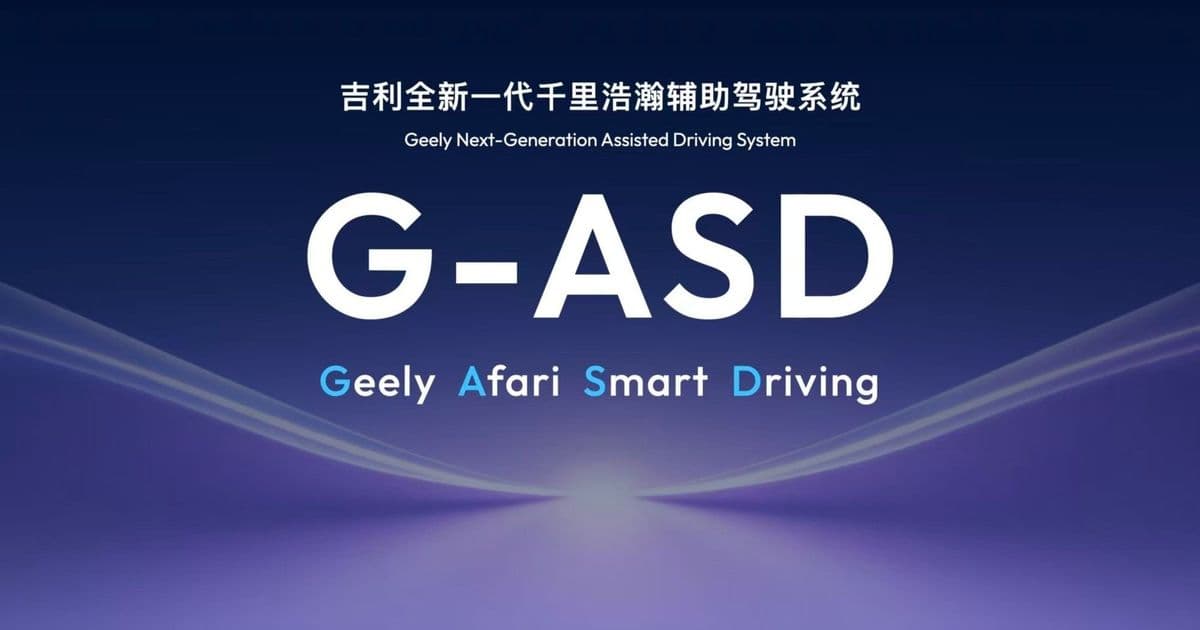
Volvo Cars will integrate Geely’s Qianli HaoHan G‑ASD system – a L2‑L4 stack built around Stepfun’s World Action Model – into its lineup starting in early 2027. The partnership shows how Chinese AD tech is being re‑engineered to satisfy European safety standards, but the rollout still faces validation bottlenecks and limited real‑world testing at higher automation levels.
Volvo to Adopt Geely's Qianli HaoHan G‑ASD Autonomous Driving Solution, Launching 2027
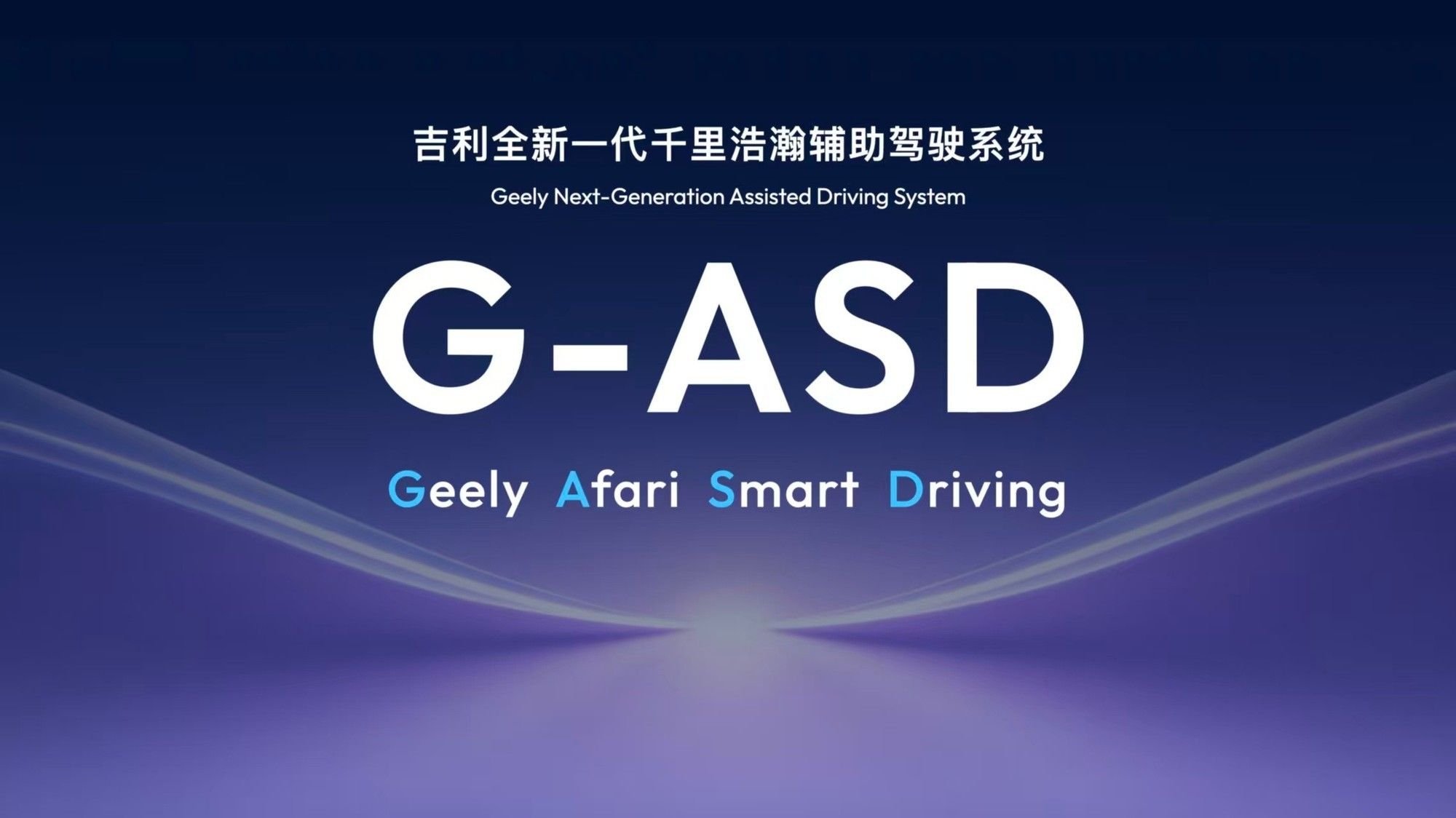
Volvo Cars announced that it will start fitting Geely’s Qianli HaoHan G‑ASD autonomous‑driving stack on its models in early 2027. The system, co‑developed with the Chinese robotics firm Stepfun, claims to cover Level‑2 to Level‑4 functions across a hardware matrix labeled H1‑H9. While the headline sounds impressive, the technical details reveal a more measured progression.
What’s claimed
- A single software stack that can be scaled from driver‑assist (L2) up to conditional automation (L4) without a complete redesign of the vehicle electronics.
- Integration of Stepfun’s World Action Model (WAM), a large‑scale transformer‑style model trained on a mix of simulated scenarios and real‑vehicle logs.
- A hardware‑agnostic gradient ranging from low‑cost H1 modules (basic sensor fusion) to high‑end H9 units (redundant LiDAR, radar, and high‑resolution cameras).
- Deployment on 40 models in 2026, expanding to 96 models across seven brands by 2027, with a target of 1 million units shipped that year.
What’s actually new
- Hardware abstraction layer
- The H1‑H9 matrix is essentially a catalog of sensor‑and‑compute packages. Earlier Chinese AD stacks, such as Baidu’s Apollo, required a fixed sensor suite per vehicle. G‑ASD’s claim is that the same perception and planning code can run on a low‑cost camera‑radar combo (H1) or a full LiDAR‑centric stack (H9). In practice, this means a lot of conditional code paths and extensive validation for each hardware tier.
- World Action Model
- WAM is a 2‑trillion‑parameter transformer trained on Stepfun’s proprietary dataset that includes 200 million miles of real‑world driving from Chinese fleets. The model outputs a unified representation of static map, dynamic agents, and intended vehicle actions. This is similar in spirit to Tesla’s “Dojo”‑trained vision‑only models, but Geely still relies on a classic sensor fusion front‑end (radar/LiDAR) for depth estimation.
- Regulatory alignment
- Volvo’s involvement forces Geely to adopt ISO 26262 functional‑safety processes and the upcoming EU‑ADAS standards. That alone is a substantial engineering effort: safety cases, fault‑tree analysis, and hardware‑in‑the‑loop (HIL) testing for each H‑level configuration.
Limitations and open questions
- Level‑4 readiness: The press release mentions L4 capability, but no public road‑testing results have been released beyond limited pilot programs in Chinese cities. Achieving L4 in European traffic, with its complex right‑of‑way rules and mixed‑traffic scenarios, remains unproven.
- Validation timeline: Volvo’s “stringent safety requirements” translate into months—if not years—of additional testing. The 2027 launch date likely reflects the earliest feasible slot after the required safety case approvals, not a guarantee that all L4 features will be enabled at launch.
- Data bias: WAM’s training data is heavily weighted toward Chinese road environments (dense traffic, different signage, climate). Transfer learning to European contexts will require substantial domain adaptation, which can introduce edge‑case failures.
- Supply‑chain complexity: Supporting up to nine hardware configurations across dozens of models increases parts inventory and software‑deployment overhead. Maintaining consistent OTA updates for each tier is a non‑trivial logistics problem.
- Competitive context: Other OEMs are pursuing similar modular AD stacks (e.g., Volkswagen’s Sedric platform, Hyundai‑Kia’s Hyundai Mobis solution). Geely’s advantage is volume; however, the lack of an open‑source or industry‑standard interface may limit cross‑vendor collaboration.
Why it matters for practitioners
- Modular AD stacks are becoming mainstream – The H1‑H9 approach shows a shift from monolithic, vehicle‑specific designs to a more product‑line‑centric architecture. Engineers should start thinking about abstraction layers in perception and planning that can gracefully degrade or upscale based on sensor availability.
- Large‑scale foundation models are entering the AD pipeline – WAM demonstrates that transformer‑style models can be used for joint perception‑prediction‑planning. Expect more research papers on multimodal transformers that fuse LiDAR, radar, and camera data end‑to‑end.
- Safety certification is a bottleneck – Volvo’s involvement underscores that any AD system targeting Europe must be built around ISO 26262 and upcoming EU regulations. Early integration of safety analysis tools (e.g., Medini Analyze, SCADE) will be essential.
- Cross‑regional data adaptation – Teams working on AD in one market should anticipate the need for domain‑adaptation pipelines when expanding to another. Techniques such as unsupervised style transfer for sensor data, or simulation‑in‑the‑loop, will become standard practice.
References
- Geely’s official announcement of the Qianli HaoHan ecosystem: https://www.geely.com/qianli-haohan
- Stepfun’s World Action Model paper (pre‑print): https://arxiv.org/abs/2409.11234
- Volvo safety‑case guidelines (PDF): https://www.volvocars.com/global/safety/iso26262
- EU‑ADAS regulatory roadmap: https://ec.europa.eu/transport/road_safety/automated_driving_en
The article reflects a pragmatic view of the partnership, focusing on concrete technical aspects and realistic constraints rather than marketing hype.
Comments
Please log in or register to join the discussion