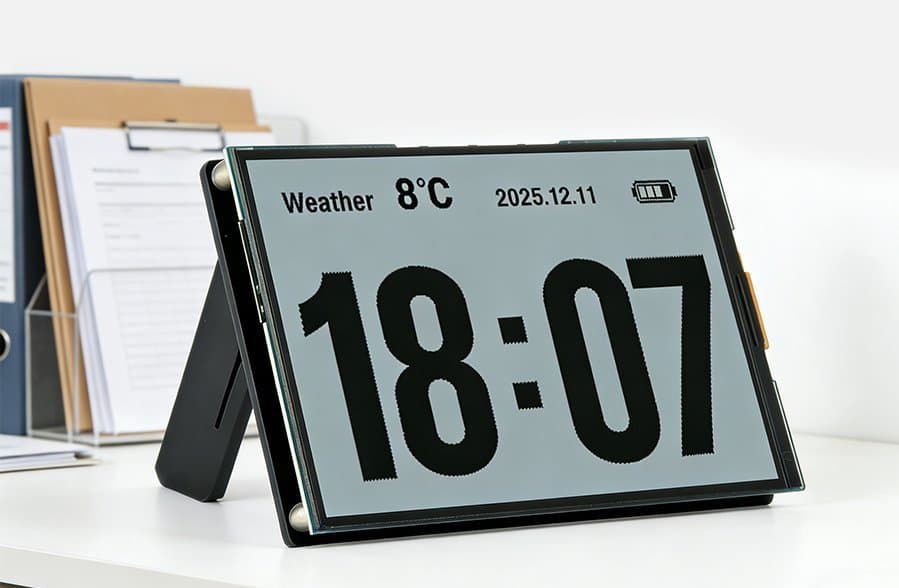
Waveshare has launched an affordable development board featuring a 4.2-inch RLCD display paired with an ESP32-S3 processor, offering a sunlight-readable, ultra-low-power display solution for IoT and signage applications.
Waveshare has introduced an intriguing new development board that combines a 4.2-inch, 400 x 300 pixel RLCD (Reflective Liquid Crystal Display) with an ESP32-S3 processor, creating a sunlight-readable, ultra-low-power display solution that could serve as an alternative to E Ink displays for various applications.
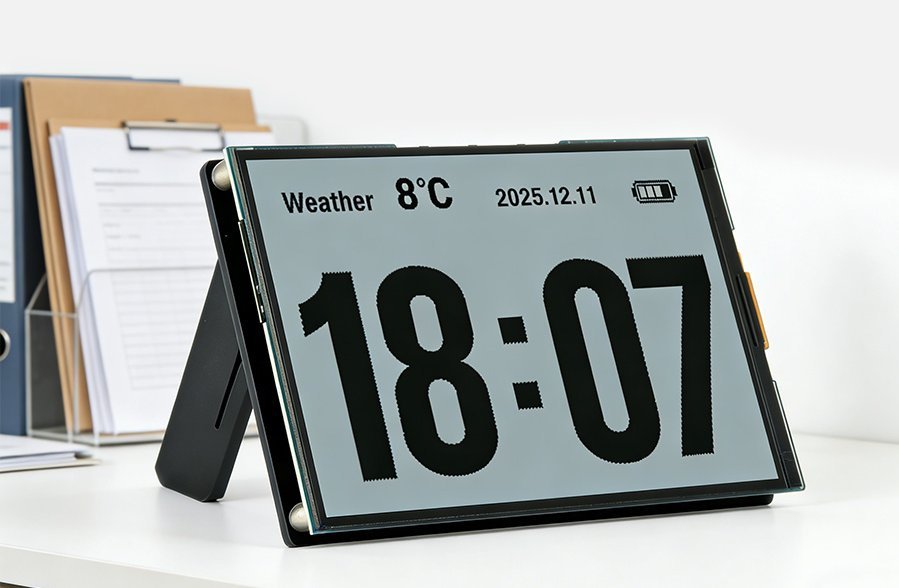
The board is available in two configurations: with a battery for $27 or without one for $25, making it an accessible option for developers and hobbyists looking to create always-on displays, digital signage, or other low-power applications.
What Makes This Display Special?
The RLCD technology used in this display is particularly noteworthy because it uses ambient light instead of a backlight. This means the display reflects surrounding light to create visible content, similar to how E Ink displays work. The result is an extraordinarily low-power device that can operate continuously without draining significant battery life.
The 4.2-inch display offers a resolution of 400 x 300 pixels, which while not high-definition, is perfectly adequate for text-based information, simple graphics, and basic user interfaces. The black and white nature of the display further contributes to its low power consumption and excellent visibility in direct sunlight.
ESP32-S3 Integration
The display is paired with an ESP32-S3 processor, which brings WiFi and Bluetooth capabilities to the package. The ESP32-S3 is a powerful microcontroller that supports both classic Bluetooth and Bluetooth LE, as well as WiFi connectivity. This makes the board suitable for IoT applications where wireless connectivity is essential.
The ESP32-S3 also features a dual-core 240 MHz processor with support for AI acceleration, making it capable of handling more complex tasks than traditional microcontrollers. This opens up possibilities for applications that require local processing power, such as voice recognition or edge computing tasks.
Voice Interaction Capabilities
One of the more interesting features of this development board is the inclusion of two built-in microphones. These microphones add support for voice interaction, allowing developers to create voice-controlled applications or integrate voice commands into their projects. This could be particularly useful for creating smart home devices, interactive displays, or accessibility-focused applications.
Potential Applications
The combination of low power consumption, sunlight readability, and wireless connectivity makes this board suitable for a wide range of applications:
- Always-on displays: Digital clocks, calendars, weather stations, or information displays that can run 24/7 with minimal power consumption
- Digital signage: Information displays for retail, offices, or public spaces that remain visible in bright environments
- IoT devices: Smart home controllers, environmental monitors, or other connected devices that need to display information
- Educational tools: Interactive learning devices or simple computing platforms for teaching programming
- Industrial applications: Control panels or monitoring displays in environments with bright lighting
Comparison to E Ink
While E Ink displays have dominated the low-power, sunlight-readable display market, this RLCD solution offers some potential advantages:
- Lower cost: At $25-27, it's significantly cheaper than many E Ink development boards
- Color support: While this particular model is black and white, RLCD technology can support color displays
- Faster refresh rates: RLCD displays typically offer faster refresh rates than E Ink, making them more suitable for dynamic content
- Built-in processing: The integrated ESP32-S3 eliminates the need for a separate microcontroller
However, E Ink displays still have advantages in terms of ultra-low power consumption for static content and wider availability in various form factors.
Developer Considerations
For developers interested in this board, there are several factors to consider:
- Development environment: The ESP32-S3 is well-supported by the Arduino IDE and ESP-IDF, making it accessible to developers familiar with these platforms
- Display library: Waveshare typically provides libraries for their displays, which should simplify integration
- Power management: The low-power nature of the display requires careful power management programming to achieve optimal battery life
- Connectivity: The built-in WiFi and Bluetooth capabilities open up numerous possibilities but also require proper security considerations
The Future of Low-Power Displays
The introduction of affordable RLCD development boards like this one suggests a growing market for low-power, sunlight-readable displays beyond traditional E Ink technology. As IoT devices become more prevalent and the demand for always-on displays increases, we can expect to see more innovation in this space.
This development board represents an interesting option for developers looking to create low-power, connected devices with sunlight-readable displays. Its combination of affordability, integrated processing, and wireless connectivity makes it a compelling choice for a variety of applications, from simple information displays to more complex IoT devices.
For those interested in exploring this technology, the Waveshare RLCD development board is available now through Waveshare's website and various electronics distributors. Whether you're building a smart home device, creating digital signage, or experimenting with new display technologies, this affordable board offers an accessible entry point into the world of low-power, sunlight-readable displays.
Comments
Please log in or register to join the discussion