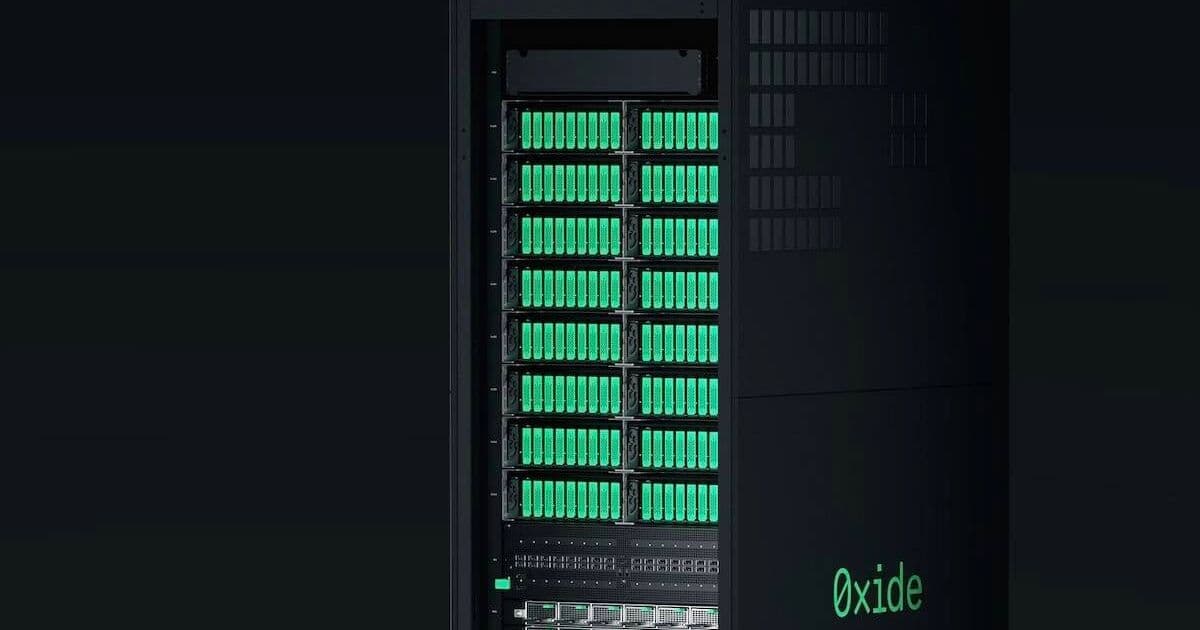
Oxide Computer is upgrading its custom rack servers with AMD's latest Turin EPYC processors, DDR5 memory, and exploring new networking options as it continues its mission to build open, transparent datacenter hardware.
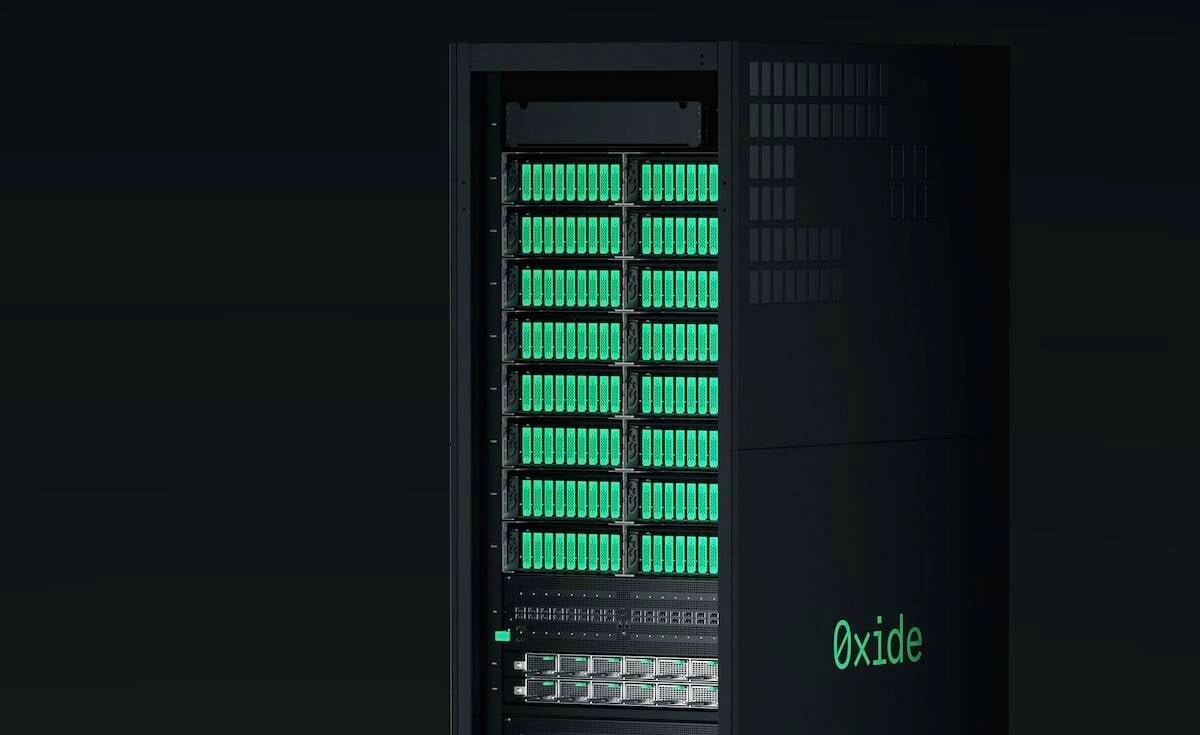
Oxide Computer, the startup building custom rack-scale servers, is preparing a major hardware refresh that will bring AMD's latest Zen 5-based Turin EPYC processors and DDR5 memory to its platform. The company, which has raised $200 million in Series C funding, is also evaluating new switch silicon to replace its aging Tofino-based networking hardware while continuing its commitment to open, well-documented components.
From Milan to Turin: A Generational Leap
The original Oxide rack, launched in 2023, was powered by AMD's Milan generation EPYC processors. While impressive for its time, these chips are now several years old. The upcoming refresh will feature Turin EPYC processors, which launched just over a year ago and offer substantial improvements across the board.
According to CEO Steve Tuck, the move to Turin represents a return to a "sweet spot" where the company gets lots of cores while minimizing power consumption. The architectural improvements from Zen 3 to Zen 5 alone deliver more than a 30 percent increase in instructions-per-clock. But the gains don't stop there.
Turin processors clock significantly higher than their Milan predecessors. Where the 64-core Milan-based EPYC 7713P topped out at 3.67 GHz, Turin can hit 5 GHz at the same core count, though this requires more power and only applies to a few cores at any given time. The new processors also bring AVX-512 support to Oxide's platform for the first time, a feature that has become increasingly important for agentic AI systems.
DDR5 Memory Finally Arrives
The memory upgrade is equally significant. The original Oxide rack shipped with DDR4 3200 MT/s memory, which Tuck describes as "comparatively glacial." The Turin-based refresh will embrace DDR5, specifically supporting speeds up to 6400 MT/s. However, the company acknowledges that finding adequate DDR5 supply remains a challenge in today's market.
Networking Evolution
Oxide's current rack uses Tofino 2-based switch silicon, which provides 200 Gbps (2x 100 GbE links) of bandwidth to each of the 32 compute blades. However, Intel quietly ended development of the Tofino switch line almost a year before Oxide revealed its rack to the world, creating uncertainty about the platform's long-term viability.
Rather than abandoning the platform, Intel made the unusual decision to open source the Tofino P4 compiler. "It's almost out of character with Intel, honestly. When Intel kills something, they just kind of want to forget that it ever happened," CTO Bryan Cantrill said. "It was the dedication of the folks inside of Intel that really believed in the programmability [of the platform] that got the P4 compiler open sourced, and that has been essential for us."
Despite having "no end in sight" to their Tofino hardware supply, Oxide is already evaluating long-term replacements. One option under consideration is Xsight Labs' X2 switch silicon, which offers similar programmability while consuming less than 200 watts under load. The company is exploring other options as well, though its preference for open hardware limits the field of potential candidates.
The Open Hardware Philosophy
What sets Oxide apart from other hardware vendors is its ground-up systems approach. Rather than rehashing reference designs, the company builds custom components where necessary. This philosophy extends from the service processor—which Oxide built from scratch rather than using an off-the-shelf ASPEED chip—to the compute sled motherboards, which required hiring an electrical engineering team to design from the ground up.
"We believe more strongly than ever that what we actually need to develop reliable, scalable systems are our parts silicon that are clearly documented at the lowest layers of interface," Cantrill explained. This commitment to transparency addresses a key frustration with proprietary hardware: when infrastructure issues arise, customers are often left in the dark about what's happening at the lowest levels.
While Oxide hasn't built its own SSDs ("We haven't done our own SSD," Cantrill noted), the company expects its platform will have fewer proprietary blobs, not more, as it evolves. The goal is to sidestep the limitations that come with proprietary hardware by prioritizing open, well-documented platforms.
AI Workloads and the CPU's Role
Despite the AI boom, Oxide has largely focused on general-purpose compute rather than chasing AI-specific hardware. However, the company acknowledges that GPUs are "for sure" on the radar and have been since the beginning.
What's been eye-opening for Oxide is the role that general-purpose CPUs play in AI workloads. While GPUs and AI accelerators are required for training and running models, many agentic features that grab headlines actually run on CPUs. "When you're on your chatbot of choice, and you're using it to search the web, and you get the little searching the web wheel going around, that is not a GPU that's searching the web," Cantrill explained.
This realization suggests that Oxide's focus on high-performance, well-documented CPU platforms remains relevant even as AI workloads evolve. The company plans to offer GPUs at some point, but argues it has plenty of work left to do with CPU, storage, and networking to keep it busy for now.
The upcoming refresh represents more than just a hardware upgrade—it's a continuation of Oxide's mission to build transparent, reliable infrastructure that gives customers visibility into every layer of their systems. As the company moves forward with Turin processors, DDR5 memory, and new networking options, it remains committed to the open hardware philosophy that sets it apart in the datacenter market.
Comments
Please log in or register to join the discussion